

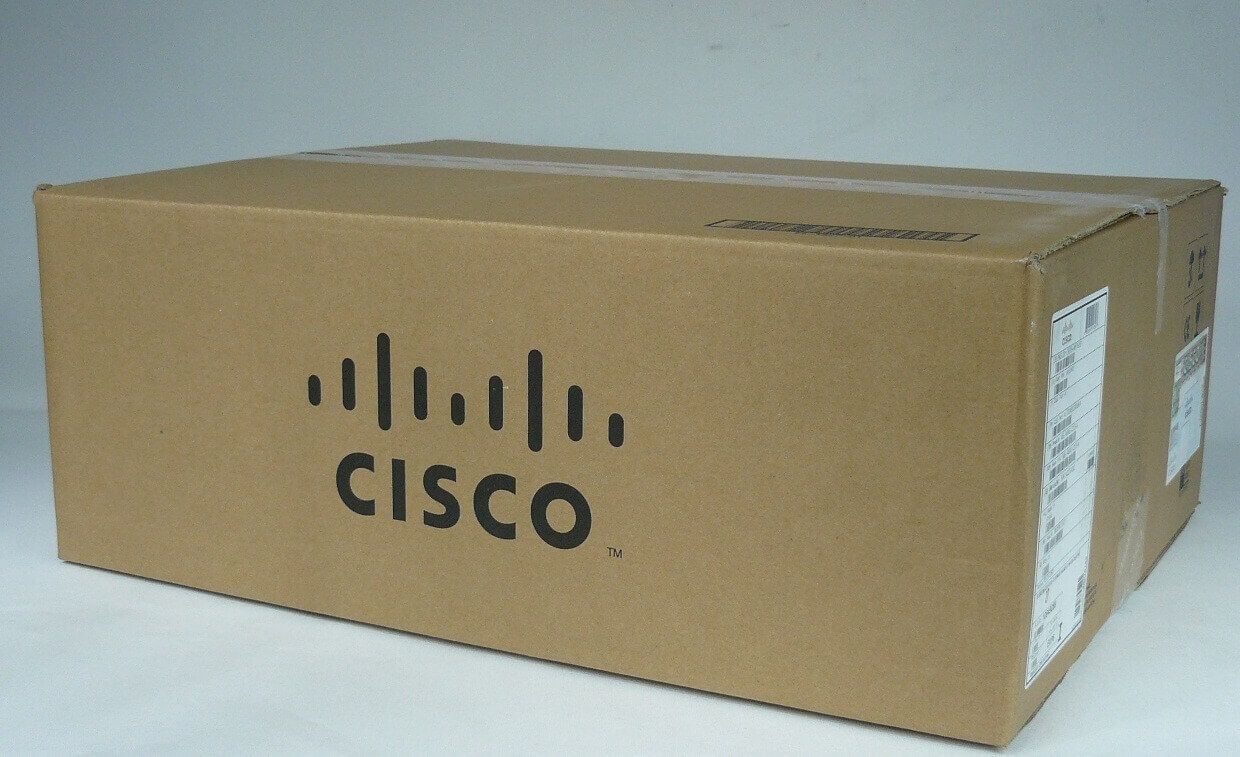
Description
Management of Network Bandwidth
The C2851-35UC-VSEC/K9 Cisco 2851 2 Ports Integrated Services Router can be configured to manage network bandwidth to ensure that network resources are used efficiently. Some ways to manage network bandwidth on the router include:
- Quality of Service (QoS): QoS is a set of techniques that can be used to manage network bandwidth by prioritizing different types of network traffic. The router can be configured to prioritize critical traffic, such as voice and video, over less critical traffic, such as file transfers.
- Traffic Shaping: Traffic shaping is a technique that can be used to manage network bandwidth by limiting the amount of traffic that is allowed to pass through the router. The router can be configured to limit the amount of traffic that is allowed to pass through specific interfaces or to specific destinations.
- Access Control Lists (ACLs): ACLs are a set of rules that can be used to manage network bandwidth by controlling access to network resources. The router can be configured to block or limit access to specific destinations or ports, which can help to prevent network congestion.
- Bandwidth Throttling: Bandwidth throttling is a technique that can be used to limit the amount of bandwidth that is available to specific users or devices. Router can be configured to limit the amount of bandwidth that is available to specific IP addresses or MAC addresses.
Security Management Systems
The C2851-35UC-VSEC/K9 Cisco 2851 2 Ports Integrated Services Router has a variety of security management systems that can be used to protect the network from threats. Some of the key security management systems include:
- Firewall: The router has a built-in firewall that can be used to control access to the network by blocking or allowing traffic based on predefined rules. The firewall can be configured to block specific types of traffic, such as malicious traffic, and to allow specific types of traffic, such as legitimate traffic.
- Access Control Lists (ACLs): ACLs are a set of rules that can be used to control access to network resources. The router can be configured to block or limit access to specific destinations or ports, which can help to prevent unauthorized access to the network.
- Virtual Private Network (VPN): The router can be configured to support VPNs, which allow remote users to securely access the network. VPNs use encryption to protect data as it is transmitted over the internet.
- Network Admission Control (NAC): NAC is a system that can be used to control access to the network by ensuring that only authorized devices are allowed to access the network. The router can be configured to block or limit access to devices that do not meet predefined security policies.
- Intrusion Prevention System (IPS): IPS is a security system that can be used to detect and prevent intrusions into the network. The router can be configured to detect and block specific types of malicious traffic, such as malware or denial-of-service (DoS) attacks.
High Routing Performance
The C2851-35UC-VSEC/K9 Cisco 2851 2 Ports Integrated Services Router is designed to deliver high routing performance by providing fast and efficient packet forwarding. Some of the key features that contribute to the router’s high routing performance include:
- High-Performance Processor: The router is equipped with a high-performance processor that is capable of handling large amounts of traffic and performing complex routing calculations.
- Large Memory: The router has large amounts of memory, which is used to store routing tables and other data that is used to perform routing calculations.
- Quality of Service (QoS): QoS is a set of techniques that can be used to manage network bandwidth by prioritizing different types of network traffic. The router can be configured to prioritize critical traffic, such as voice and video, over less critical traffic, such as file transfers.
- Traffic Shaping: Traffic shaping is a technique that can be used to manage network bandwidth by limiting the amount of traffic that is allowed to pass through the router. The router can be configured to limit the amount of traffic that is allowed to pass through specific interfaces or to specific destinations.
- Flexible Network Design: The router supports a variety of routing protocols, including Interior Gateway Routing Protocol (IGRP), Routing Information Protocol (RIP), and Open Shortest Path First (OSPF) which can be used to design a flexible and scalable network.
- Hardware-accelerated IPsec: The router supports hardware-accelerated IPsec, which enables fast and efficient encryption and decryption of packets, minimizing the impact on the router’s performance.
- Multiple Gigabit Ethernet ports: The router has multiple Gigabit Ethernet ports, which can be used to connect to high-speed networks and to provide fast and efficient packet forwarding.
It is recommended to consult the Cisco documentation and guides for detailed instructions on how to use these features to design a complete routing strategy for your network.
General Information
- Manufacturer Cisco
- Manufacturer Part Number C2851-35UC-VSEC/K9
- Product Series 2800
- Product Name 2851-35UC-VSEC/K9 Integrated Services Router
- Product Type: Integrated Services Router
Interfaces/Ports
- Total Number of Ports 2
- USB Yes
- Management Port Yes
- Number of Network (RJ-45) Ports 2
I/O Expansions
- Number of Total Expansion Slots 13
- Expansion Slot Type AIM
- Expansion Slot Type HWIC
- Expansion Slot Type NME
- Expansion Slot Type PVDM
Network & Communication
- Network Technology 10/100/1000Base-T
- Ethernet Technology Fast Ethernet
Management & Protocols
- Security Features-
- DES
- 3DES
- AES 128
- AES 192
- AES 256
Memory
- Standard Memory 256 MB
- Maximum Memory 1 GB
- Memory Technology DRAM
- Flash Memory 256 MB
- Memory Card Supported CompactFlash
Power Description
- Input Voltage 110 V AC
- Input Voltage 220 V AC
- Power Source Power Supply
- Redundant Power Supply Yes


