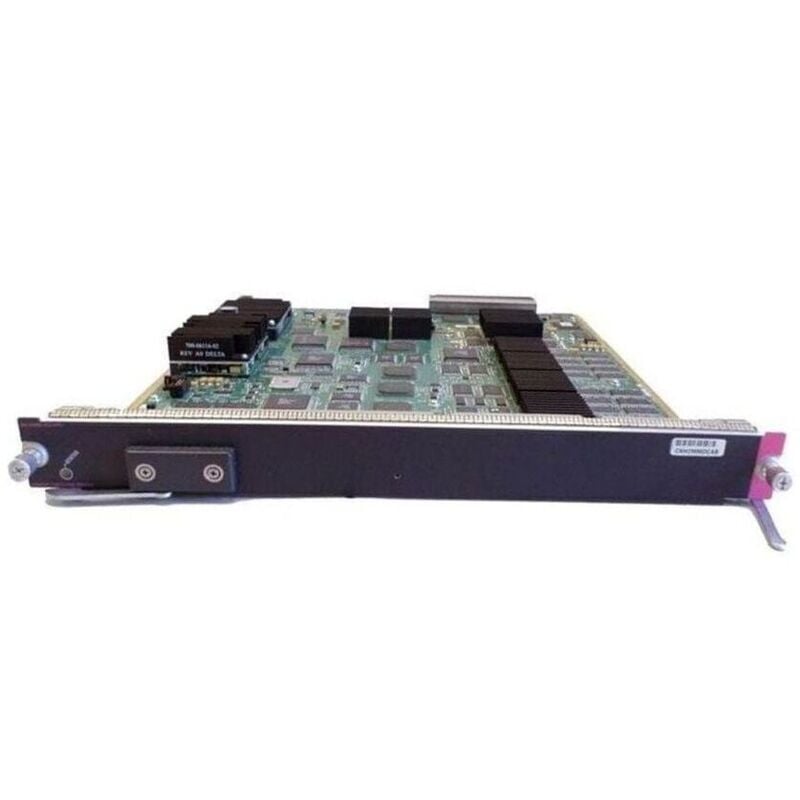


Description
Routing and Switching Protocols
Routing protocols determine the routes that packets take through a network. The XM60 supports various routing protocols such as Open Shortest Path First (OSPF), Routing Information Protocol (RIP), and Border Gateway Protocol (BGP), which allow for dynamic routing and the efficient exchange of routing information between routers.
Switching protocols refer to the methods used to manage data flow within a network. The XM60 supports protocols such as Spanning Tree Protocol (STP), Rapid Spanning Tree Protocol (RSTP), and Multiple Spanning Tree Protocol (MSTP) for creating loop-free topologies in network designs, as well as Link Aggregation Control Protocol (LACP) for bundling physical links to increase bandwidth and improve network resiliency.
Virtual Router Redundancy Protocol (VRRP) and Hot Standby Router Protocol (HSRP) allow for the creation of virtual routers for increased network availability. Dynamic Host Configuration Protocol (DHCP) provides automatic IP address assignment to devices, while Network Address Translation (NAT) enables communication between a private network and the internet.
Access Control Lists (ACLs) provide network security by allowing administrators to define and enforce specific traffic flow rules, based on factors such as source IP address, destination IP address, and protocol type.
Powerful and Reliable Switching
The MGX-XM60 Cisco Fabric Card Switch Module is designed to provide powerful and reliable switching for large-scale networks. Here are some features that contribute to its performance and reliability:
- High-Speed Switching Fabric – The switch features a high-speed switching fabric that provides line-rate performance, even under heavy network traffic conditions.
- Scalable Performance – The switch is designed to scale with growing network demands, allowing administrators to add more interfaces as needed.
- High Availability – The switch features a redundant switching fabric, which helps to ensure high availability by providing failover protection in the event of a switch failure.
- Quality of Service (QoS) – The switch supports advanced QoS features, such as class-based weighting, marking, and policing, which allow administrators to prioritize network traffic and ensure that critical applications receive the bandwidth they need.
- Link Aggregation Control Protocol (LACP) – LACP allows administrators to bundle multiple physical links into a single logical link, providing increased bandwidth and network resiliency.
- Spanning Tree Protocol (STP) – STP helps to prevent loops in the network by disabling links that could cause network loops. This helps to ensure stable and reliable network operation.
- Virtual Local Area Network (VLAN) Support – The switch supports VLANs, which allow administrators to logically segment the network and increase network security and performance.
Quality of Service (QoS) Capabilities
The Cisco Fabric Card XM60 supports Quality of Service (QoS) capabilities to prioritize network traffic based on user-defined criteria, such as IP address, port number, and protocol type. The following are some of the QoS features supported by the XM60:
- Class-Based Weighted Fair Queuing (CBWFQ): This allows for the allocation of bandwidth to specific traffic types based on priority.
- Low Latency Queuing (LLQ): This provides priority to specific types of network traffic, such as voice or video, to minimize delay.
- Weighted Random Early Detection (WRED): This helps prevent network congestion by randomly dropping lower-priority packets when the network becomes congested.
- Traffic Shaping and Policing: This regulates the rate at which traffic is transmitted, to ensure that no single traffic flow dominates the network bandwidth.
- Quality of Service Marking: This involves marking packets with specific values to indicate their priority level, allowing network devices to identify and treat traffic accordingly.
General Information about MGX-XM60
- Manufacturer: Cisco
- Model Number or SKU# MGX-XM60
- Product Type: Switch Module
Miscellaneous
- Cisco Mgx 8950 Advanced Atm Multiservice Switch
- Provides 60 Gbps Of Full-duplex Nonblocking Switching Capacity
- Each Cisco Mgx 8950 Can Be Configured With Up To 4
- Cisco Xm-60s To Provide 240 Gbps Of Switching Capacity For The System