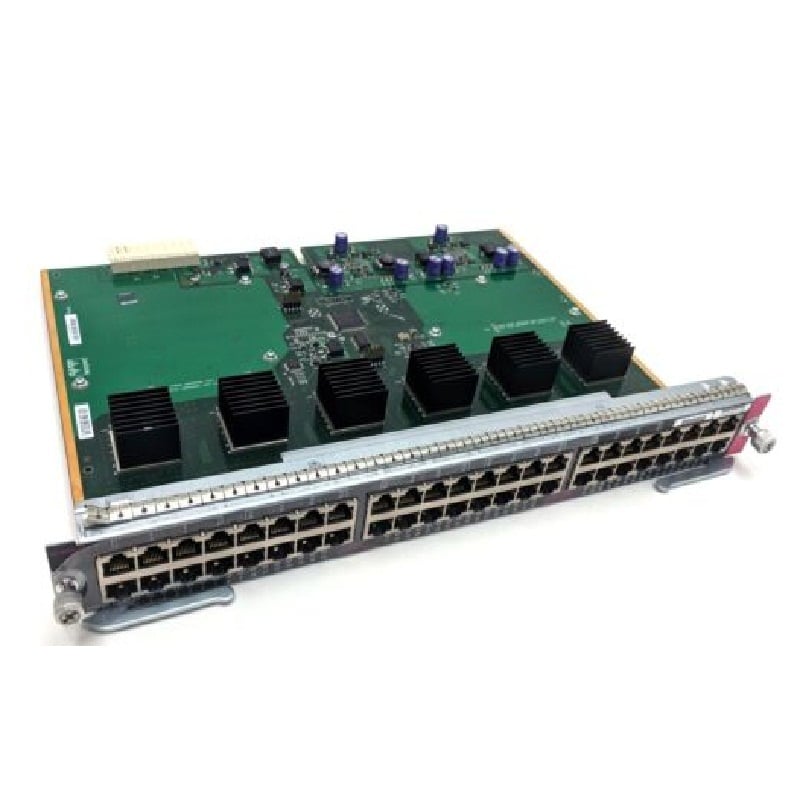


Description
Product Overview for the Cisco MS390-48U-HW 48 Ports Switch
Cisco, a renowned name in the networking industry, offers a wide range of products, including the Cisco MS390-48U-HW Meraki Cloud MS390-48P Layer3 Switch. This managed switch is a powerhouse, equipped with advanced features to cater to the demands of modern businesses and organizations. Cisco has consistently delivered innovative solutions to meet the evolving needs of businesses and organizations. One of their notable products is the Cisco MS390-48U-HW Meraki Cloud MS390-48P Layer3 (L3) 48 X 10/100/1000 Ethernet 2 X Network Stack Device Quad Small Form-Factor Pluggable (QSFP) Uplink Universal Power Over Ethernet (UPoE) 48 Ports Rack-mountable Managed Switch.
Understanding the Cisco MS390-48U-HW Meraki Cloud MS390-48P Switch
The name “MS390-48U-HW” consists of several elements:
- MS390: This denotes the product series or model. In this case, it’s the MS390 series of switches.
- 48: This refers to the number of ports on the switch. The Cisco MS390-48U-HW has 48 ports, which are used for connecting various devices to the network.
- U: The “U” in the name stands for Universal. This suggests that this switch is compatible with various power over Ethernet (PoE) standards, which allows it to power a wide range of devices, including security cameras, access points, and IP phones.
- HW: “HW” is short for Hardware. This indicates that this is a hardware-based device, as opposed to a software or virtual solution.
Meraki Cloud
Meraki is a cloud-managed networking solution that Cisco acquired. The inclusion of “Meraki Cloud” in the name suggests that the MS390-48U-HW can be managed and monitored through the Meraki cloud platform. Cloud management makes it easier for IT administrators to configure and monitor network devices remotely.
MS390-48P Layer3
- MS390-48P: This part of the name indicates that this is a PoE (Power over Ethernet) switch, and it has a total of 48 PoE ports. PoE allows you to power compatible devices over the Ethernet cable, eliminating the need for separate power sources. This is particularly useful for devices like IP phones and security cameras.
- Layer 3 (L3): In networking, devices operate at different layers. “Layer 3” refers to the network layer of the OSI model, where routing and IP addressing take place. This switch supports Layer 3 functionality, making it capable of routing and directing traffic between different subnets or networks.
48 X 10/100/1000 Ethernet
- 48: As mentioned earlier, this indicates the number of Ethernet ports on the switch. In this case, there are 48 Ethernet ports.
- 10/100/1000: This denotes the speed of the Ethernet ports. The switch supports speeds of 10, 100, and 1000 Mbps, also known as 1 Gigabit Ethernet. This flexibility allows you to connect devices with different speed requirements to the switch.
2 X Network Stack Device
- 2 X: This signifies that the switch has 2 network stack device ports. These ports are used for connecting multiple switches together to create a stacked switch configuration. Stacking simplifies network management and provides redundancy.
Quad Small Form-Factor Pluggable Uplink
- Quad Small Form-Factor Pluggable (QSFP): QSFP is a type of transceiver module used for high-speed data transmission. In this context, it indicates that the switch has uplink ports capable of high-speed data transfer.
- Uplink: Uplink ports are used to connect the switch to the core of the network. These ports are typically used to link multiple switches together or to connect to routers and other core network devices.
Universal Power Over Ethernet
- Universal Power Over Ethernet (UPoE): UPoE is an advanced form of Power over Ethernet that provides even more power to connected devices. This is particularly useful for devices with higher power requirements, such as video conferencing systems and access points with advanced features.
48 Ports
As previously mentioned, the switch has a total of 48 ports. These ports are where you connect devices to the network. The switch supports a combination of regular Ethernet ports and Power over Ethernet (PoE) ports for powering compatible devices.
Managed Switch
A managed switch is a network switch that provides advanced features and control over network traffic. These switches can be configured and monitored, making them suitable for complex network environments where fine-tuning and optimization are required.
Key Features and Benefits of the Cisco MS390-48U-HW
Now that we’ve deciphered the product name, let’s explore the key features and benefits of the Cisco MS390-48U-HW managed switch.
High Port Density
With a total of 48 ports, the MS390-48U-HW offers a high port density. This makes it an ideal choice for medium to large-sized networks where numerous devices need to be connected. Whether you’re setting up workstations, IP cameras, VoIP phones, or access points, this switch has you covered with ample ports.
Power Over Ethernet Support
The “48P” in the name signifies that this switch provides Power over Ethernet (PoE) on all 48 ports. PoE simplifies the deployment of network devices by delivering both data and power over a single Ethernet cable. This feature is particularly valuable for IP phones, security cameras, and access points as it eliminates the need for additional power sources and simplifies cable management.
Layer 3 Routing Capability
The “Layer3 (L3)” designation indicates that the MS390-48U-HW is a Layer 3 switch, which means it is capable of routing traffic between different subnets or VLANs. Layer 3 switches are essential for creating efficient and segmented networks, optimizing traffic flow, and enhancing network security.
High-Speed Connectivity
The switch offers support for 10/100/1000 Mbps Ethernet speeds, commonly referred to as Gigabit Ethernet. This versatility in speed accommodates a wide range of devices and applications, from standard workstations to high-bandwidth servers and data-intensive tasks. Gigabit Ethernet provides data transfer speeds of up to 1,000 Mbps, making it suitable for bandwidth-intensive applications, such as video streaming and large file transfers.
Uplink Ports for High-Speed Data Transfer
With the Quad Small Form-Factor Pluggable (QSFP) uplink ports, the MS390-48U-HW provides high-speed data transfer capabilities. Uplink ports are used to connect the switch to the core of the network, ensuring that data can flow smoothly and quickly to and from the switch.
Universal Power Over Ethernet
UPoE support is a remarkable feature that allows the switch to deliver even more power to connected devices. This is beneficial for devices that demand higher power levels, such as video conferencing equipment, advanced security cameras, and access points with multiple radios and additional features.
Cloud Management with Meraki
The inclusion of “Meraki Cloud” in the name signifies that this switch is designed to be managed and monitored through the Cisco Meraki cloud platform. Cloud management simplifies network administration by providing a centralized and accessible interface for configuration, monitoring, and troubleshooting. IT administrators can make changes and keep an eye on the network from virtually anywhere with an internet connection.
Rack-Mountable Design
The rack-mountable design of the MS390-48U-HW is perfect for organizations with data centers, server rooms, or network closets. It enables easy installation in standard network racks, optimizing space and ensuring a neat and organized network setup. Rack-mountable means that the switch is designed to be installed in a standard network equipment rack. This is common in data centers and server rooms where space is at a premium, and organization is crucial.
Advanced Network Management
Being a managed switch, the MS390-48U-HW offers advanced network management features. These include the ability to set up Virtual LANs (VLANs), Quality of Service (QoS) configurations, traffic monitoring, and security features. These features provide IT administrators with the tools they need to create a reliable and secure network.
Use Cases for the Cisco MS390-48U-HW
The Cisco MS390-48U-HW’s impressive array of features and capabilities makes it a versatile networking solution suitable for various use cases. Let’s explore some scenarios where this managed switch can shine.
Enterprise Networks
Large enterprises with numerous departments and demand for network resources will benefit from the MS390-48U-HW. Its high port density, Layer 3 routing capabilities, and PoE support make it well-suited for creating efficient and segmented networks.
Data Centers
In data center environments, where speed, reliability, and efficient cable management are paramount, the MS390-48U-HW’s high-speed connectivity and rack-mountable design are significant advantages. The switch’s UPoE support is valuable for powering data center equipment.
Main Specifications for the Cisco MS390-48U-HW Managed Switch
- Manufacturer: Cisco
- Part Number or SKU# MS390-48U-HW
- Product Type: Managed Switch
- Enclosure Type: 1U (Rack-Mountable)
Technical Information of the 48 Ports Rack-mountable Switch
- Total Number of Ports: 48
- PoE Budget: 822W
- Max Units in a Stack: Up to 8
- Routing Protocols: OSPF, VRRP, OSPFv2, Static IP Routing, RSTP, STP
- Remote Management Protocols: DHCP, IPv4, IPv6, RSTP, Radius
- Authentication Method: Radius
Performance
- Switching Capacity: 256 Gbps
- Stacking Bandwidth: 480 Gbps
- Forwarding Rate: 190.48 Mpps
Features
- Auto-negotiation
- IGMP Snooping
- Syslog Support
- Port Mirroring
- E-mail Alert
- Broadcast Storm Control
- Per-VLAN Spanning Tree (PVST)
- DHCP Snooping
- Access Control List (ACL) Support
- Quality of Service (QoS)
- DHCP Server
- Uni-directional Link Detection (UDLD)
- DHCP Relay
- Port Security
- Hot-swappable fan
- Cisco StackPower Technology
- Crossover Detection
- Cloud Managed
- 3 Fans
- Role-based Access Control (RBAC)
- Root Guard
- Loop Guard
- MAC Access Bypass (MAB)
- BPDU Guard
- Cisco Discovery Protocol (CDP)
Compliant Standards
- IEEE 802.1Q
- IEEE 802.1p
- IEEE 802.3ad (LACP)
- IEEE 802.1x
- IEEE 802.1s
- IEEE 802.1AB (LLDP)
Expansion/Connectivity
- 48 x 1000BASE-T RJ-45 with UPoE
- 2 x Network Stack Device QSFP Uplink
- 1 x Management
Power
- Power Device: Internal Hot-plug Power Supply
- Power Redundancy: Optional
- Power Redundancy Scheme: 1+1 (with optional power supply)
- Power Provided: 1100 Watts
- Voltage Required: AC 120/230V (50-60Hz)
- Operational: 844.9 Watts
- Standby: 145 Watts
In summary, the Cisco MS390-48U-HW is a feature-rich and versatile managed switch designed to meet the demands of modern networks. Its name may seem complex at first, but breaking it down into its components reveals a wealth of capabilities. From high port density to PoE support, Layer 3 routing, and cloud management, this switch offers an array of features that make it suitable for a wide range of use cases, including enterprise networks, data centers, education, healthcare, and retail.
Universal Power Over Ethernet (UPoE) and high-speed uplink ports further enhance its appeal, ensuring that it can power a wide variety of devices and handle high-speed data transfer. Its rack-mountable design is perfect for environments where space optimization is essential, and its managed capabilities provide advanced network management tools for IT administrators.
The Cisco MS390-48U-HW is a noteworthy addition, offering the reliability and innovation that Cisco is renowned for. Whether you’re a network administrator looking to upgrade your organization’s infrastructure or an IT decision-maker searching for a reliable networking solution, this managed switch is worth considering for its impressive features and versatility.