

Description
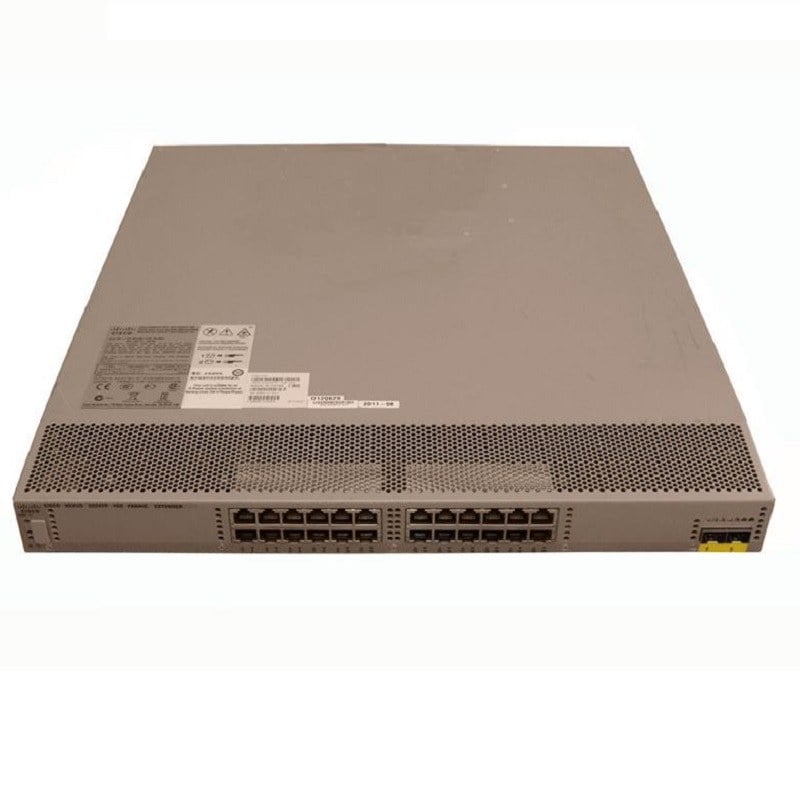
Unveiling the Cisco N2K-C2224TP-1GE Nexus 2000 Series Fabric Extender
The N2K-C2224TP-1GE Nexus 2000 Series is a networking device designed to expand and enhance network capabilities. With 24 ports supporting 10 Gigabit Small Form-Factor Pluggable Plus (SFP+), along with 2 Fabric Extender 1 Gigabit Ethernet ports, this device offers high-speed connectivity suitable for various networking needs. In this article, we will delve into the features, benefits, and applications of the N2K-C2224TP-1GE Nexus 2000 Series, exploring its significance in modern networking infrastructure.
Understanding the Nexus 2000 Series Rack-mountable Expansion Module
The Nexus 2000 Series is a family of networking devices manufactured by Cisco Systems, a leading provider of networking solutions globally. These devices are known for their scalability, performance, and reliability, making them suitable for enterprise-level deployments. The N2K-C2224TP-1GE model is part of this series, offering specific features tailored to meet the demands of modern networks.
Features of the N2K-C2224TP-1GE Nexus 2000 Series24 Ports Supporting 10 Gigabit SFP+
The N2K-C2224TP-1GE model comes equipped with 24 ports that support 10 Gigabit Small Form-Factor Pluggable Plus (SFP+). These ports enable high-speed data transfer, ideal for bandwidth-intensive applications such as data center networking, high-performance computing, and cloud computing.
2 Fabric Extender 1 Gigabit Ethernet Ports
In addition to the 24 SFP+ ports, this Nexus 2000 Series model features 2 Fabric Extender and 1 Gigabit Ethernet ports. These ports facilitate connectivity to fabric extenders, allowing for flexible and scalable network expansion.
Rack-Mountable Design
The N2K-C2224TP-1GE device is designed to be rack-mountable, enabling easy integration into existing network infrastructure. Its compact form factor optimizes space utilization in data center environments, making it suitable for deployments with a limited physical footprint.
Expansion Module Compatibility
As an expansion module, the N2K-C2224TP-1GE Nexus 2000 Series integrates seamlessly with compatible networking equipment, enhancing overall network performance and functionality. This compatibility ensures interoperability with existing network architecture, simplifying deployment and management processes.
Benefits of the N2K-C2224TP-1GE Nexus 2000 Series
- Enhanced Performance: With support for 10 Gigabit SFP+ ports, the N2K-C2224TP-1GE model delivers high-speed connectivity, enabling faster data transfer rates and reduced latency. This enhanced performance is critical for demanding applications that require real-time data processing and rapid response times.
- Scalability: The N2K-C2224TP-1GE Nexus 2000 Series offers scalability, allowing organizations to expand their network infrastructure seamlessly as their business needs evolve. Additional ports and fabric extender connectivity enable flexible expansion without compromising performance or reliability.
- Reliability and Redundancy: Cisco Systems is renowned for its commitment to reliability and redundancy in networking solutions. The N2K-C2224TP-1GE Nexus 2000 Series upholds this reputation by incorporating features such as redundant power supplies and hot-swappable components, minimizing downtime and ensuring continuous operation.
- Simplified Management: With intuitive management interfaces and comprehensive software support, the N2K-C2224TP-1GE device streamlines network management tasks. Centralized management capabilities enable administrators to monitor, configure, and troubleshoot the network efficiently, enhancing overall operational efficiency.
Applications of the N2K-C2224TP-1GE Nexus 2000 Series
- Data Center Networking: In data center environments, the N2K-C2224TP-1GE Nexus 2000 Series plays a crucial role in connecting servers, storage systems, and networking infrastructure. Its high-speed connectivity and scalability make it well-suited for handling the demands of modern data center workloads.
- High-Performance Computing (HPC): For organizations engaged in high-performance computing tasks such as scientific simulations, financial modeling, and engineering analysis, the N2K-C2224TP-1GE device provides the necessary network infrastructure to support large-scale computational requirements.
- Cloud Computing: In cloud computing environments, where agility, scalability, and performance are paramount, the N2K-C2224TP-1GE Nexus 2000 Series facilitates seamless integration and connectivity within cloud architectures. Its robust features and flexible design make it an ideal choice for cloud service providers and enterprises adopting cloud technologies.
- Virtualization: With the proliferation of virtualization technologies in modern IT environments, the N2K-C2224TP-1GE Nexus 2000 Series supports virtualized workloads by providing high-speed network connectivity to virtual machines and virtualized infrastructure components. This enables efficient resource utilization and dynamic workload provisioning.
Large-Scale Network Deployments
Large-scale network deployments refer to the process of deploying network infrastructure to support large and complex networks. These networks can include thousands of devices and cover large geographical areas, making the deployment process challenging and complex. Here are some key steps to consider when deploying large-scale networks:
- Planning: The planning phase is critical for large-scale network deployments. This includes defining the scope of the network, determining the hardware and software requirements, and identifying the network architecture and topology. A detailed project plan should be developed that outlines the timeline, budget, and resources required for the deployment.
- Site Survey: Site surveys are conducted to assess the physical locations where network equipment will be installed. This includes assessing the physical infrastructure, such as cabling, power, and cooling, as well as identifying any potential obstacles or challenges that may affect the deployment.
- Hardware Procurement: Procuring hardware is a critical aspect of large-scale network deployments. This includes selecting the appropriate switches, routers, firewalls, and other devices required to support the network. Careful consideration should be given to factors such as scalability, reliability, and cost.
- Configuration and Testing: Once the hardware is installed, it must be configured and tested to ensure it is functioning properly. This includes configuring network protocols, security settings, and performance monitoring tools. Testing should be conducted to validate the network design and ensure it is meeting the performance and reliability requirements.
- Implementation: Implementation involves deploying the network infrastructure at each location and connecting it to the existing network. This includes installing hardware, configuring network settings, and testing connectivity. Careful coordination is required to ensure that each site is deployed according to the project plan and timelines.
- Monitoring and Maintenance: Once the network is deployed, it must be monitored and maintained to ensure it continues to function properly. This includes monitoring network performance, identifying and addressing issues, and performing regular maintenance activities such as firmware updates and hardware replacements.
Enhanced Data Management
Enhanced data management refers to the process of improving the storage, processing, and retrieval of data in an organization. With the exponential growth of data in recent years, organizations need to adopt advanced data management techniques to ensure data is properly managed, secured, and utilized. Here are some examples of enhanced data management techniques:
- Data Integration: Data integration is the process of combining data from multiple sources into a single view. This can help organizations gain a holistic view of their data, eliminate data silos, and improve data accuracy and consistency.
- Data Warehousing: Data warehousing involves the collection, storage, and analysis of large volumes of data. This can help organizations to analyze historical data, identify trends, and make informed decisions.
- Data Governance: Data governance refers to the process of managing data quality, security, and compliance. This involves defining policies and procedures for data management and ensuring that data is managed per these policies.
- Data Analytics: Data analytics involves the use of advanced algorithms and tools to analyze large volumes of data and extract insights. This can help organizations identify patterns, trends, and anomalies in their data, which can be used to make informed decisions.
- Data Security: Data security involves protecting data from unauthorized access, use, disclosure, or destruction. This includes implementing access controls, encryption, and other security measures to protect data both at rest and in transit.
- Data Lifecycle Management: Data lifecycle management involves managing data throughout its lifecycle, from creation to deletion. This includes defining data retention policies, archiving data, and disposing of data in a secure and compliant manner.
- Master Data Management: Master data management involves managing critical data elements across multiple systems and applications. This can help organizations ensure data consistency and accuracy across the organization.
Ensuring Reliability and Security
Ensuring reliability and security is critical for any organization that relies on technology to operate its business. Here are some key steps that organizations can take to ensure reliability and security:
- Risk Assessment: Conducting a risk assessment is a critical first step in ensuring reliability and security. This involves identifying potential threats, vulnerabilities, and risks to the organization’s technology infrastructure, data, and operations. The risk assessment should be used to develop a comprehensive plan to mitigate these risks.
- Network Security: Network security involves securing the organization’s network infrastructure to prevent unauthorized access and cyber-attacks. This includes implementing firewalls, intrusion detection and prevention systems, and secure access controls.
- Data Security: Data security involves protecting sensitive and confidential data from unauthorized access, use, disclosure, or destruction. This includes implementing access controls, encryption, and other security measures to protect data both at rest and in transit.
- Disaster Recovery and Business Continuity: Disaster recovery and business continuity planning involves preparing for and responding to unexpected events such as natural disasters, cyber-attacks, and hardware failures. Organizations should develop a comprehensive plan for backing up and recovering data, restoring systems, and resuming operations in the event of a disruption.
- Regular Updates and Maintenance: Regular updates and maintenance of hardware and software are critical for ensuring reliability and security. Organizations should ensure that all systems are updated with the latest security patches and software updates and that regular maintenance is conducted to ensure systems are functioning properly.
- Employee Training and Awareness: Employee training and awareness is critical for ensuring reliability and security. Employees should be trained on proper security protocols and procedures and should be aware of potential threats and risks to the organization’s technology infrastructure.
- Third-Party Vendor Management: Third-party vendors can pose a risk to an organization’s technology infrastructure and data. Organizations should ensure that third-party vendors are properly vetted and that contracts include provisions for data security and reliability.
General Information for the Cisco 24 + 10 Gigabit SFP+ Fabric Extender
- Manufacturer: Cisco
- Part Number or SKU# N2K-C2224TP-1GE
- Product Line Nexus
- Product Series; 2000
- Product Name: Nexus 2000 Series 1GE Fabric Extender
- Product Type: Fabric Extender
Networking Details of 1 Gigabit Ethernet Expansion Module
- Ports: Gigabit Ethernet x 24 + 10 Gigabit SFP+ x 2
- Connectivity Technology: Wired
- Cabling Type: Ethernet 100Base-TX, Ethernet 1000Base-T
- Data Link Protocol: Fast Ethernet, Gigabit Ethernet
- Auxiliary Ports: 2 x SFP+ (uplink)
- Network / Transport Protocol: TCP/IP, UDP/IP, ICMP/IP
- Remote Management Protocol: SNMP 1, SNMP 2, RMON, SNMP 3
- Status Indicators: Port status, power, system
Expansion / Connectivity
- Expansion Slots: 2 (total) / 2 (free) x SFP+
- Interfaces: 24 x 1000Base-T – RJ-45
Power
- Power Device: Power supply – hot-plug / redundant – plug-in module
- Voltage Required: AC 120/230 V (50/60 Hz)
- Power Consumption Operational: 95 Watt
Miscellaneous
- Compliant: CISPR 22 Class A, BSMI CNS 13438 Class A, CISPR 24, EN 61000-3-2, VCCI Class A ITE, EN 61000-3-3, EN55024, EN55022 Class A, EN50082-1, EN 61000-6-1, AS/NZS 60950-1, ICES-003 Class A, RoHS, FCC CFR47 Part 15, UL 60950-1, IEC 60950-1, EN 60950-1, CSA C22.2 No. 60950-1, EN 300 386
- IEEE 802.3, IEEE 802.3u, IEEE 802.1Q, IEEE 802.3ab, IEEE 802.1p, IEEE 802.3x, IEEE 802.1x, IEEE 802.3ae
In general, the N2K-C2224TP-1GE Nexus 2000 Series represents a versatile and reliable networking solution designed to meet the evolving needs of modern enterprises. With its high-speed connectivity, scalability, and robust feature set, this device enhances network performance, reliability, and flexibility across a variety of applications. Whether deployed in data centers, high-performance computing environments, cloud infrastructures, or virtualized environments, the N2K-C2224TP-1GE Nexus 2000 Series provides a solid foundation for building resilient and efficient networks in today’s digital era.


