

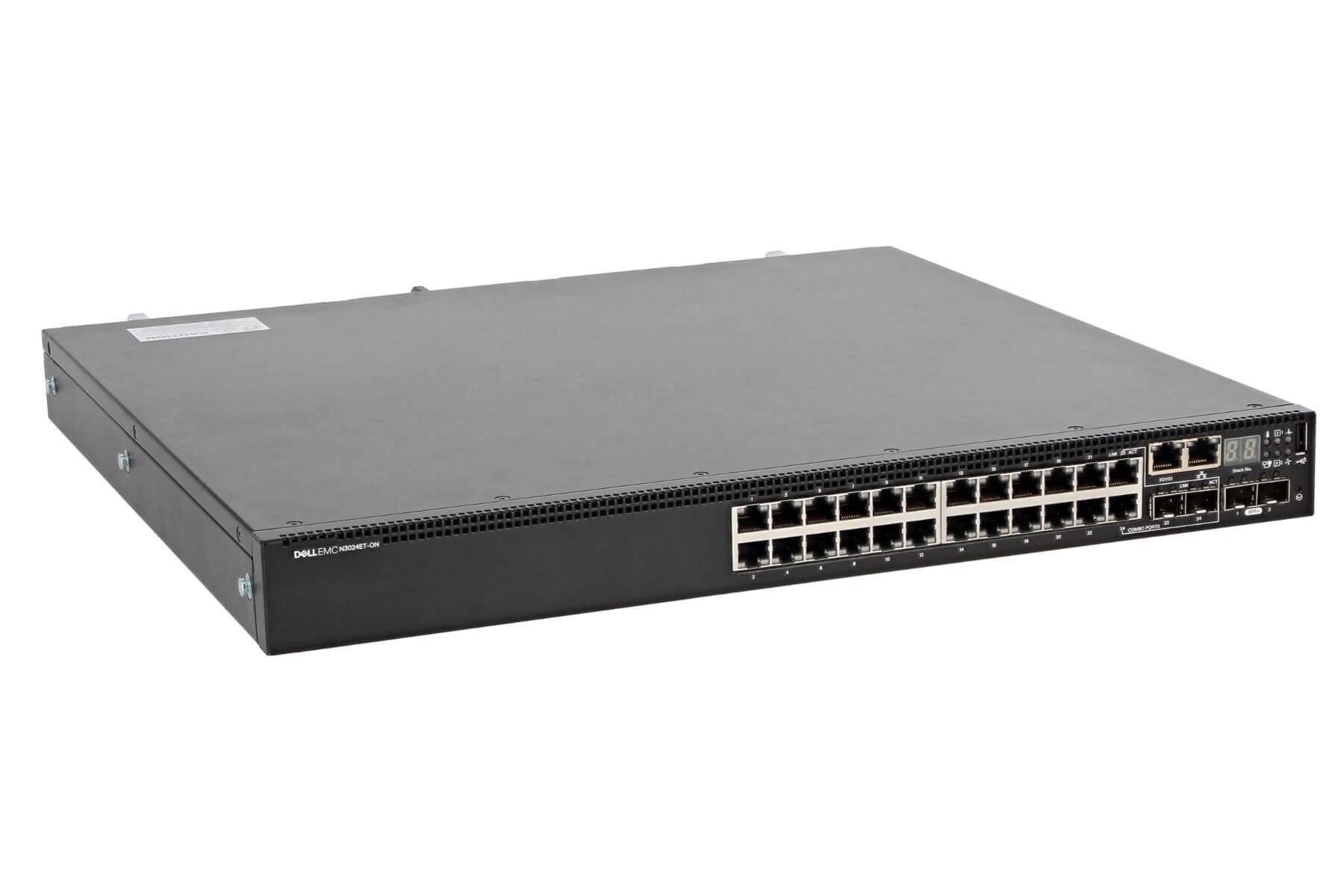

Description
Advanced Management Features
Advanced management features refer to a set of functions and capabilities that allow network administrators to manage and monitor their network infrastructure more efficiently and effectively. These features provide network administrators with greater visibility and control over the network, allowing them to quickly identify and resolve issues, optimize network performance, and make informed decisions about network configuration and design.
Some of the common advanced management features found in modern networking switches include:
- Network Monitoring and Analysis: This feature provides real-time visibility into network traffic patterns and performance, allowing administrators to quickly identify and resolve network issues.
- Traffic Management: Advanced traffic management features allow administrators to control and prioritize network traffic to ensure that critical applications receive the bandwidth they need to operate effectively.
- Quality of Service (QoS): This feature allows administrators to classify network traffic into different priority levels, ensuring that high-priority traffic, such as voice and video, receive the necessary bandwidth to maintain quality.
- Security: Advanced security features, such as firewalls, VPNs, and access control lists, help administrators to protect the network from malicious activity and unauthorized access.
- Remote Management: This feature allows administrators to manage the switch remotely, saving time and improving efficiency.
- Firmware Management: Advanced firmware management features make it easier to upgrade switch firmware and ensure that switches are running the latest software version.
Large-Scale Network Deployments
Large-scale network deployments refer to the implementation of a network infrastructure that spans multiple locations, devices, and users. This type of network deployment requires careful planning, design, and implementation to ensure that all devices are integrated and work together seamlessly.
Some key considerations for large-scale network deployments include:
- Scalability: The network must be designed with scalability in mind, allowing it to accommodate growth as the organization expands.
- Reliability: The network must be designed with redundancy and high availability in mind to ensure that it remains operational even in the event of a failure.
- Security: Security is a critical concern in large-scale network deployments, as the network will likely contain sensitive information and must be protected from malicious activity.
- Network Management: A network management solution must be in place to monitor and manage the network, allowing administrators to quickly identify and resolve issues.
- Standardization: To ensure that the network is easy to manage and maintain, it is important to standardize on hardware, software, and protocols.
- Integration: The network must be integrated with existing systems and applications, such as directory services and email systems, to ensure that all components work together seamlessly.
Large-scale network deployments can be complex and time-consuming, but they provide organizations with the infrastructure they need to support critical business processes and applications. Working with experienced network engineers and vendors can help ensure that the deployment is successful and meets the organization’s needs.
Enhanced Data Management
Enhanced data management refers to the use of advanced technologies and processes to improve the storage, retrieval, and analysis of data. The goal of enhanced data management is to provide organizations with a more efficient and effective way to manage the vast amounts of data they generate and collect.
Some of the key components of enhanced data management include:
- Data Warehousing: Data warehousing refers to the central storage of data for reporting and analysis. Data warehousing allows organizations to store data in a centralized location, making it easier to access, analyze, and use.
- Data Mining: Data mining involves the use of algorithms and statistical models to extract information from large datasets. Data mining can be used to identify patterns, relationships, and trends in data, providing valuable insights into business operations.
- Big Data Analytics: Big data analytics refers to the use of advanced technologies, such as Hadoop and Spark, to process and analyze large and complex datasets. Big data analytics can be used to gain new insights into business operations, improve decision-making, and drive innovation.
- Data Visualization: Data visualization is the representation of data in graphical or pictorial form, making it easier to understand and analyze. Data visualization can be used to identify patterns, relationships, and trends in data, providing valuable insights into business operations.
- Cloud Computing: Cloud computing is a model for delivering computing resources and services over the internet. Cloud computing can be used to store and manage data, making it easier to access, analyze, and use.
General Information
- Manufacturer : Dell
- MPN : 210-APWX
- Type : Networking
- Sub Type : Switch
- SKU: 210-APWX
Key Features
- Device Type : Switch – 24 Ports – L3 – Managed – Stackable
- Enclosure Type : Rack-mountable 1u
- Subtype : Gigabit Ethernet
- Ports : 24 X 10/100/1000 (POE+) + 2 X 10 Gigabit SFP+ + 2 X Combo Gigabit SFP
- Performance : Switching Fabric Bandwidth: 212 GBPS ¦ Forwarding Performance: 158 Mpps ¦ Stacking Bandwidth: 21 GBPS
- Capacity : Ipv4 Routes (static): 1024 ¦ Ipv6 Routes (static): 1024 ¦ Ipv4 Routes (dynamic): 8160 ¦ Ipv6 Routes (Dynamic): 4096 ¦ Maximum Member Ports Per Lag: 8 ¦ Maximum Dynamic Ports Per Switch Stack: 144 ¦ Lag Groups: 128 ¦ Ospf Routes: 8160 ¦ Rip Routes: 512 ¦ Ecmp Next Hops Per Route: 4 ¦ Ecmp Groups: 64 ¦ Vlan Routing Interfaces: 128 ¦ Vlans Supported: 4094 ¦ Multicast Entries (ipv4): 1536 ¦ Multicast Entries (ipv6): 512 ¦ Arp Entries: 6144 ¦ Ndp Entries: 400 ¦ Acl: 100 ¦ Maximum Rules Per Acl: 1023 ¦ Max Acl Rules System-wide: 4096 ¦ Maximum Acl Rules Per Interface (ipv4) Egress Rules: 1024 ¦ Maximum Acl Rules Per Interface (ipv4) Ingress Rules: 3072 ¦ Maximum Acl Rules Per Interface (ipv6) Egress Rules: 512 ¦ Maximum Acl Rules Per Interface (ipv6) Ingress Rules: 1021 ¦ Maximum Vlan Interfaces With Acls Applied: 24
- Mac Address Table Size : 32k Entries
- Routing Protocol : Ospf, Rip-1, Rip-2, Igmpv2, Igmp, Vrrp, Ospfv2, Pim-sm, Pim-dm, Igmpv3, Ospfv3, Mldv2, Mld
- Remote Management Protocol : Snmp 1, Snmp 2, Rmon 1, Rmon 2, Rmon 3, Rmon 9, Telnet, Snmp 3, Http, TFTP, Ssh-2
- Encryption Algorithm : Md5, Aes, Ssl, Tls
- Authentication Method : Radius, Tacacs+, Secure Shell V.2 (ssh2)
- Features : Flow Control, Mdi/mdi-x Switch, Auto-negotiation, Arp Support, Vlan Support, Port Mirroring, Diffserv Support, Weighted Round Robin (WRR) Queuing, Broadcast Storm Control, Ipv6 Support, Rapid Spanning Tree Protocol (RSTP) Support, Multiple Spanning Tree Protocol (MSTP) Support, Access Control List (ACL) Support, Quality Of Service (QOS), Stp Root Guard, Ipv4 Support, Lldp Support, Link Aggregation Control Protocol (LACP), Energy Efficient Ethernet, Management Information Base (MIB), Dynamic Vlan Support (GVRP), Dual Firmware Images, Network Access Control (nac), Neighbor Discovery Protocol (NDP), Tagged Vlan, Redundant Fans, Protocol-based Vlans Support
- Compliant Standards : Ieee 802.2, Ieee 802.3, Ieee 802.3u, Ieee 802.3z, Ieee 802.1d, Ieee 802.1q, Ieee 802.3ab, Ieee 802.1p, Ieee 802.3x, Ieee 802.3ad (lacp), Ieee 802.1w, Ieee 802.1x, Ieee 802.3ae, Ieee 802.3ac, Ieee 802.1s, Ieee 802.1v, Ieee 802.1ag, Ieee 802.1ab (lldp), Ieee 802.3at, Ieee 802.3az, Ieee 802.3ax
- RAM : 2 GB
- Flash Memory : 1 GB
Expansions And Connectivity
- Interfaces :24 X Gigabit Lan Rj-45 12 Ports (POE+) / 12 Ports (POE) – 30.8 W ¦ 2 X 10gbit Lan SFP+ ¦ 2 X Gigabit Lan RJ-45/SFP ¦ 1 X Serial (RS-232) Rj-45 Management ¦ 1 X USB Type A ¦ 2 X Network Stack Device
Power
- Power Device : Internal Power Supply – Hot-Plug
- Installed Qty : 1 (Installed) / 2 (Max)
- Power Redundancy : Optional
- Power Redundancy Scheme : 1+1 (With Optional Power Supply)


