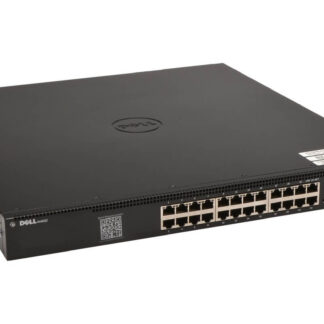


Description
Easy Deployment and Management
Easy deployment and management refers to the ability of a network solution to be quickly and easily deployed and managed, with minimal effort and complexity. This is an important consideration for organizations that need to rapidly scale their network infrastructure to meet growing business demands.
Easy deployment and management can be achieved through several key features and capabilities, including:
- Plug-and-play design: The ability to quickly and easily connect devices and services to the network without the need for complex configurations or manual setup procedures.
- Centralized management: Centralized management tools, such as network management systems (NMSs), can provide a single console from which network administrators can manage multiple devices and services.
- Automation tools: Automation tools, such as software-defined networking (SDN) and network automation, can simplify routine network tasks and reduce the time and effort required to manage the network.
- User-friendly interfaces: User-friendly interfaces, such as graphical user interfaces (GUIs) and command-line interfaces (CLIs), can make it easier for network administrators to manage the network.
Easy deployment and management is essential for organizations that need to quickly scale their network infrastructure, improve network performance, and reduce the cost and complexity of network management. By providing simple, streamlined, and efficient network deployment and management, organizations can focus on their core business activities and improve overall business performance.
High-Speed 10GBase-T Connectivity
High-speed 10GBase-T connectivity refers to the ability of a network to support fast data transfer rates using 10GBase-T technology. 10GBase-T is a standard for transmitting Ethernet frames at a rate of 10 gigabits per second (Gbps) over twisted-pair copper cabling. It offers several benefits over other high-speed Ethernet standards, including wider cable compatibility, longer reach, and lower power consumption.
10GBase-T connectivity provides organizations with a high-speed, low-latency network infrastructure that can support demanding applications and services, such as data centers, cloud computing, and video conferencing. With 10GBase-T connectivity, organizations can improve network performance and reduce the time and effort required to manage the network.
High-speed 10GBase-T connectivity can be achieved through the use of 10GBase-T switches, such as the Dell Networking N4032. These switches provide 24 ports of 10GBase-T connectivity, enabling organizations to connect multiple devices and services to the network and support fast data transfer rates. In addition, these switches also provide advanced features, such as energy-efficient design, advanced security, and Quality of Service (QoS) support, to help organizations improve network performance and security.
Advanced Security Features
Advanced security features refer to a set of security-related capabilities and technologies that provide organizations with greater protection against cyber threats and data breaches. These features are designed to help organizations prevent unauthorized access to sensitive information, protect against data loss and theft, and ensure the confidentiality and integrity of data.
Advanced security features can include:
- Access control: Access control mechanisms, such as access control lists (ACLs) and port security, can be used to control which users and devices are allowed to access the network and its resources.
- Encryption: Encryption technologies, such as Secure Sockets Layer (SSL) and Virtual Private Network (VPN) protocols, can be used to protect sensitive information as it travels over the network.
- Firewall: Firewalls are security systems that enforce network access controls and protect against unauthorized access and network-based threats.
- Intrusion detection and prevention: Intrusion detection and prevention systems (IDS/IPS) monitor network traffic for signs of malicious activity and can take action to prevent or mitigate security incidents.
- Virtual LAN (VLAN) support: VLANs can be used to segment the network into different virtual networks, providing a way to logically isolate different parts of the network for security purposes.
These advanced security features can help organizations improve their overall security posture and better protect against cyber threats and data breaches. The Dell Networking N4032 24 Ports 10GBase-T LLW Switch provides several advanced security features to help organizations secure their network and ensure the confidentiality and integrity of their data.
By incorporating advanced security features into their network infrastructure, organizations can improve their overall security posture and better protect against cyber threats and data breaches. This can help organizations maintain the trust of their customers and partners, and ensure the confidentiality and integrity of sensitive information.
Key Features
- Manufacturer: Dell
- Manufacturer Part Number: 463-7697
- Device Type : Switch – 24 Ports – L3 – Managed – Stackable
- Enclosure Type : Rack-Mountable 1u
- Subtype : 10 Gigabit Ethernet
- Ports : 24 X 10gbase-T
Features
- Layer 3 Switching, Layer 2 Switching, Mdi/Mdi-X Switch, Auto-Negotiation, Port Mirroring, Stackable, Broadcast Storm Control, Ip Address Filtering, Access Control List (Acl) Support, Quality Of Service (Qos), Dynamic Arp Inspection (Dai), Lldp Support, Remote Switch Port Analyzer (Rspan), Management Information Base (Mib), Dual Firmware Images, Redundant Fans, Mac And Ip-Based Acls Support, Time-Controlled Acls Support, Protocol-Based Vlans Support
Compliant Standards
- IEEE 802.2, IEEE 802.3, IEEE 802.3U, IEEE 802.3Z, IEEE 802.1D, IEEE 802.1Q, IEEE 802.3AB, IEEE 802.1P, IEEE 802.3X, IEEE 802.3AD (LACP), IEEE 802.1W, IEEE 802.1X, IEEE 802.3AE, IEEE 802.3AC, IEEE 802.1S, IEEE 802.1V, ANSI/TIA-1057, IEEE 802.1AG, IEEE 802.1AB (LLDP), IEEE 802.3AZ, IEEE 802.1QBB, IEEE 802.1QAZ
- Power Redundancy:
- Yes