


Description
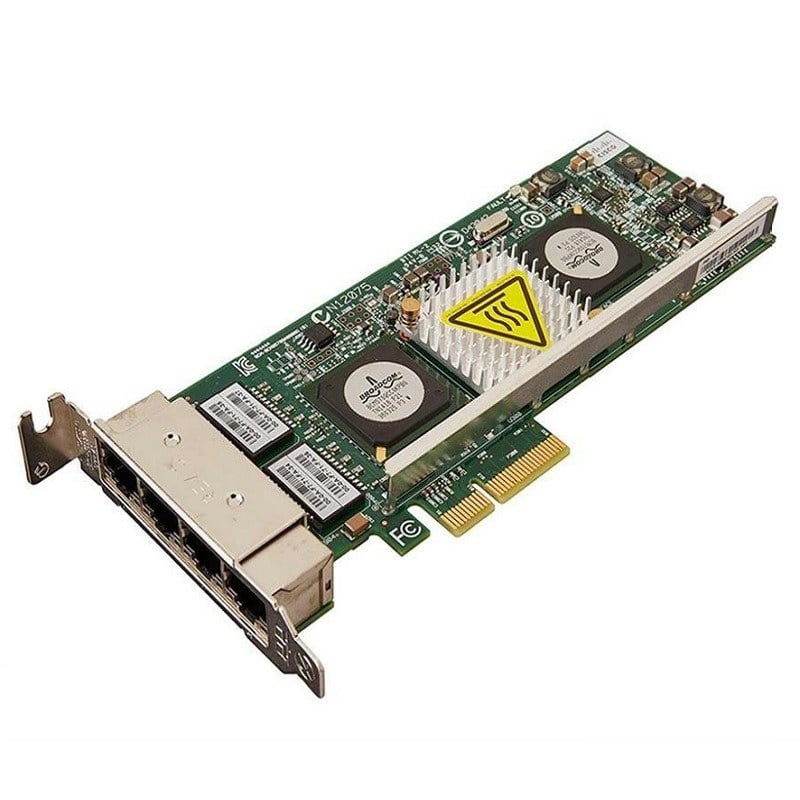
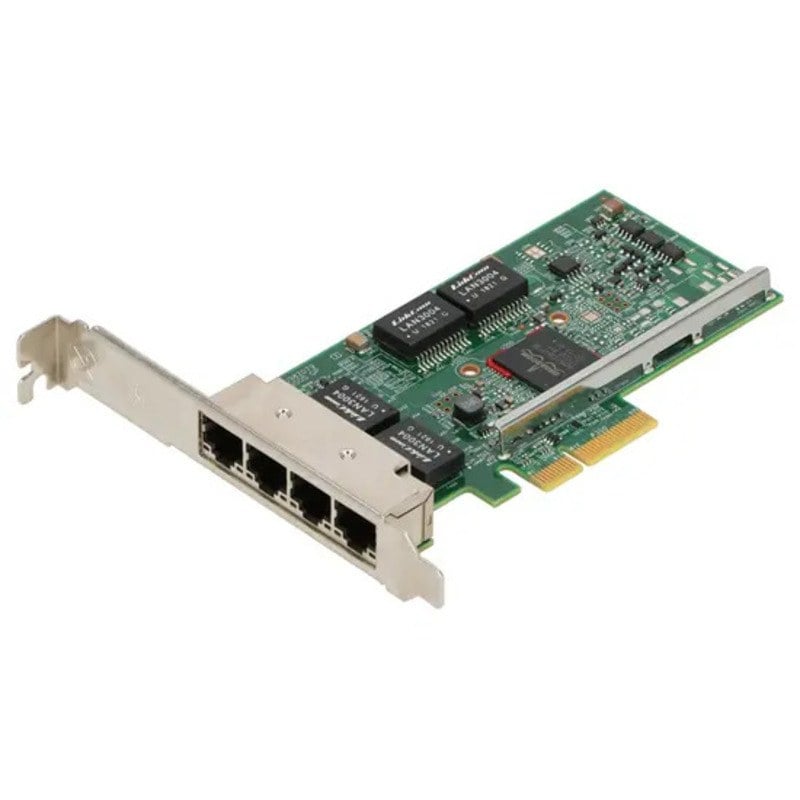
Dell 540-BDDJ 25 Gigabit Ethernet Adapter
In today’s digital age, the demand for high-speed and reliable networking solutions has never been greater. With the advent of cloud computing, big data, and the Internet of Things (IoT), businesses and data centers require cutting-edge network infrastructure to meet their growing connectivity needs. One such innovation in the realm of networking is the Dell 540-BDDJ 57504 Quad Ports 25 Gigabit Ethernet (GbE) Small Form-Factor Pluggable (SFP) 28, which adheres to the Open Compute Project (OCP) 3.0 standard. This comprehensive guide explores the various aspects of this product, from its specifications to its significance in modern networking environments.
Product Overview of 4 Ports Adapter
In the digital age, where data flows like a river, networks form the backbone of communication. Whether it’s for sharing information, accessing cloud-based services, or managing a data center, a robust and high-speed network infrastructure is a necessity. Dell, a renowned name in the IT industry, has introduced the Dell 540-BDDJ 57504, a Quad Ports 25 Gigabit Ethernet (GbE) Adapter Small Form-Factor Pluggable (SFP) 28 network solution, designed in line with the Open Compute Project (OCP) 3.0 standards.
This product takes a deep dive into the various aspects of this innovative networking solution, from understanding the core technologies it incorporates to exploring its applications and benefits in today’s digital landscape.
Understanding 25 Gigabit Ethernet (GbE)
25 Gigabit Ethernet
Ethernet has been a stalwart of network communication for decades, evolving from the humble 10 Megabit per second (Mbps) Ethernet to 25 Gigabit Ethernet (GbE) and beyond. 25 GbE is a high-speed network technology that offers significantly faster data transfer rates compared to its predecessors.
With 25 GbE, data can be transmitted at a rate of 25 gigabits per second, which is five times faster than the more common 10 GbE. This higher data rate is particularly beneficial in scenarios where large volumes of data need to be transferred quickly, such as data centers, cloud computing, and storage area networks (SANs). The technology is also backward compatible, which means it can work seamlessly with existing 10 GbE and 1 GbE infrastructure.
Why 25 GbE Matters
The importance of 25 GbE lies in its ability to meet the increasing demands of modern networks. Here are some key reasons why this technology is gaining traction:
- Bandwidth Requirements: As data-hungry applications and services become more prevalent, traditional 10 GbE connections often struggle to provide sufficient bandwidth. 25 GbE bridges this gap, offering higher throughput without a complete infrastructure overhaul.
- Cost Efficiency: 25 GbE is a cost-effective solution, providing substantial bandwidth increases without requiring the costly replacement of existing cabling or networking equipment.
- Data Center Efficiency: Data centers benefit from 25 GbE by improving network efficiency and reducing latency, which is crucial for high-performance computing and storage applications.
- Scalability: 25 GbE is highly scalable, making it adaptable to the ever-growing network requirements of businesses and data centers.
Small Form-Factor Pluggable (SFP) 28
What Are SFPs?
Small Form-Factor Pluggable (SFP) modules are compact, hot-pluggable network transceivers commonly used in networking equipment. They allow for flexible connectivity by supporting various types of optical and electrical interfaces.
SFP modules are used to connect network devices, such as switches, routers, and network interface cards, to optical or copper cabling. These modules enable the conversion between optical and electrical signals, making them essential components in modern network infrastructure.
SFP28: The Next Level of Speed
SFP28 is an extension of the SFP form factor, designed specifically for 25 GbE and 100 GbE applications. It features 28 electrical lanes that allow it to handle the higher data rates associated with 25 GbE and 100 GbE. The SFP28 module is backward compatible with standard SFP modules, making it a versatile and efficient solution for upgrading network equipment to support higher speeds.
Advantages of SFP28
- Higher Data Rates: SFP28 supports data rates of up to 28 Gbps, making it ideal for high-speed network connections.
- Compatibility: SFP28 modules can be used in the same ports that accept standard SFP modules, offering flexibility and ease of integration.
- Low Power Consumption: SFP28 modules are designed to be energy-efficient, reducing power costs and heat generation in networking equipment.
- Hot-Swappable: SFP28 modules are hot-swappable, meaning they can be replaced or inserted without disrupting network operations.
- Versatility: SFP28 modules can support both optical and copper connections, making them suitable for various networking scenarios.
The Open Compute Project (OCP) 3.0
- A Paradigm Shift in Data Center Hardware: The Open Compute Project (OCP) is an initiative that aims to redesign open-source data center hardware, making it more efficient, flexible, and cost-effective. OCP was founded by Facebook in 2011 and has since gained support from various technology companies and organizations.
- OCP focuses on reimagining the design of servers, storage, and networking equipment, to create open hardware standards that allow for greater customization and optimization. The project encourages the sharing of hardware specifications and designs, fostering innovation and collaboration within the data center industry.
- OCP 3.0 Standard: OCP 3.0 is the latest evolution of the Open Compute Project’s standards for network hardware. This standard introduces significant improvements in terms of speed, efficiency, and flexibility. It sets the stage for cutting-edge networking solutions like the Dell 540-BDDJ 57504.
Key features of the OCP 3.0 standard include
- Increased Network Speed: OCP 3.0 supports high-speed network interfaces, such as 25 GbE and 100 GbE, ensuring that data centers can keep up with the growing demands of modern applications.
- Improved Energy Efficiency: OCP 3.0 promotes energy-efficient designs, helping data centers reduce their power consumption and environmental footprint.
- Advanced Customization: The open hardware standards of OCP 3.0 allow for greater customization and adaptability to specific use cases and workloads.
- Interoperability: OCP 3.0 hardware is designed with interoperability in mind, ensuring that different components and devices can work seamlessly together.
Dell 540-BDDJ 57504: Features and Specifications
Now that we’ve covered the foundational concepts of 25 GbE, SFP28, and OCP 3.0, let’s delve into the specifics of the Dell 540-BDDJ 57504 Quad Ports 25 Gigabit Ethernet (GbE) Small Form-Factor Pluggable (SFP) 28 network solution.
Features
The Dell 540-BDDJ 57504 is designed to meet the high-performance networking needs of modern data centers and businesses. Here are some of its key features:
- Quad Ports: The Dell 540-BDDJ 57504 boasts four 25 GbE ports, allowing for multiple high-speed connections simultaneously. This makes it an excellent choice for environments that require a high degree of network traffic and redundancy.
- SFP28 Compatibility: As an SFP28 module, the Dell 540-BDDJ 57504 is fully compatible with other SFP28 devices and standard SFP modules. This compatibility ensures that it can be seamlessly integrated into existing network infrastructures.
- OCP 3.0 Compliance: The Dell 540-BDDJ 57504 adheres to the OCP 3.0 standard, which means it complies with the latest open hardware specifications for network equipment. This makes it an ideal choice for data centers looking to embrace the efficiency and flexibility offered by OCP.
- High Data Transfer Rates: With each port supporting 25 Gbps, the Dell 540-BDDJ 57504 delivers a total data transfer rate of 100 Gbps. This high throughput is crucial for bandwidth-intensive applications and scenarios.
- Low Power Consumption: Efficiency is a key focus of the Dell 540-BDDJ 57504. It is designed to be energy-efficient, reducing power costs and the environmental impact of data center operations.
- Hot-Swappable: The hot-swappable design of the Dell 540-BDDJ 57504 ensures minimal network disruption when replacing or inserting modules.
Technical Specifications
For those interested in the nitty-gritty technical details, here are some specifications of the Dell 540-BDDJ 57504:
- Form Factor: SFP28
- Data Rate: 25 Gbps per port
- Number of Ports: 4
- Compliance: OCP 3.0
- Operating Temperature Range: 0°C to 70°C (32°F to 158°F)
- Cable Type: SFP28 Direct Attach Copper (DAC) or SFP28 Optical Transceivers
Benefits of Dell 540-BDDJ 57504
The Dell 540-BDDJ 57504 offers a range of benefits that can significantly enhance networking infrastructure in various settings, from data centers to enterprise networks. Here are some of the key advantages:
- High Performance: With 100 Gbps of total throughput, the Dell 540-BDDJ 57504 provides the performance needed to support data-hungry applications and services. It’s well-suited for high-performance computing, cloud environments, and big data processing.
- Scalability: Data center requirements are constantly evolving. The quad ports of the Dell 540-BDDJ 57504 can be a valuable asset when you need to scale your network capacity to accommodate growth.
- Cost Efficiency: This networking solution offers cost savings in multiple ways. It’s energy-efficient, reducing power consumption and associated costs. Moreover, it’s compatible with existing SFP modules, minimizing the need for infrastructure changes.
- OCP 3.0 Compliance: By adhering to the OCP 3.0 standard, the Dell 540-BDDJ 57504 ensures that your network hardware is in line with the latest open standards. This compliance allows for greater customization, interoperability, and future-proofing.
- Redundancy and Reliability: The four ports provide redundancy and failover capabilities, ensuring network reliability. In the event of a port failure, traffic can be seamlessly rerouted to maintain connectivity.
- Ease of Maintenance: The hot-swappable design of the Dell 540-BDDJ 57504 simplifies maintenance procedures. Network administrators can replace or add modules without causing downtime or disruptions.
Applications of Dell 540-BDDJ 57504
The Dell 540-BDDJ 57504 can be applied in a variety of scenarios where high-speed, efficient, and reliable networking is essential. Here are some notable applications:
- Data Centers: Data centers are the heart of modern computing. The Dell 540-BDDJ 57504 is well-suited for data centers, where high-performance networking is critical for managing massive amounts of data and applications.
- Cloud Computing: Cloud service providers rely on robust networking to deliver services to customers. This networking solution enables cloud providers to handle the demands of cloud computing efficiently.
- Enterprise Networks: Enterprises with substantial network traffic can benefit from the Dell 540-BDDJ 57504 to support their internal and external communication needs. Its cost-effective design is advantageous for businesses of all sizes.
- High-Performance Computing: The world of high-performance computing (HPC) demands the fastest and most reliable network connections. This Dell solution is ideal for HPC clusters and applications.
- Content Delivery: Content delivery networks (CDNs) require high-speed, low-latency connections to deliver content to users around the world. The Dell 540-BDDJ 57504 supports these requirements.
- Telecommunications: Telecommunications providers rely on high-speed networking for their services. The Dell 540-BDDJ 57504 is suitable for building the infrastructure needed to support telecommunications networks.
Compatibility and Integration
A significant advantage of the Dell 540-BDDJ 57504 is its compatibility and ease of integration. It can seamlessly fit into existing network infrastructures, whether you have SFP28 devices or standard SFP modules. Here are some integration considerations:
- Interoperability: The Dell 540-BDDJ 57504 is designed to work smoothly with other SFP28 devices and standard SFP modules. This means you can integrate it into your existing network without concerns about compatibility.
- Configuration: Network administrators can configure the Dell 540-BDDJ 57504 to suit specific networking requirements. This flexibility ensures that it can be adapted to various use cases.
- Switch and Router Compatibility: Ensure that your network switches and routers support SFP28 modules if you plan to integrate the Dell 540-BDDJ 57504. Most modern networking equipment is designed to accommodate these modules, but it’s always wise to check for compatibility.
- Cabling: Depending on your networking needs, you may choose either SFP28 Direct Attach Copper (DAC) or SFP28 Optical Transceivers for cabling. The choice should align with the distances and environmental conditions in your network.
General Information about this Dell 540-BDDJ
- Manufacturer: Dell
- Part Number or SKU# 540-BDDJ
- Product Name: Network Adapter
- Product Type: 4 Ports Adapter
In summary, the Dell 540-BDDJ 57504 Quad Ports 25 Gigabit Ethernet (GbE) Small Form-Factor Pluggable (SFP) 28, designed by the Open Compute Project (OCP) 3.0 standards, is a significant advancement in networking technology. With its high-speed capabilities, energy efficiency, and compatibility with existing infrastructure, it offers a solution that can meet the demands of modern data centers, cloud computing, and various other networking scenarios.
The evolution of 25 Gigabit Ethernet (GbE) and Small Form-Factor Pluggable (SFP) 28 modules has ushered in a new era of network connectivity, enabling higher data rates, improved efficiency, and scalability. Furthermore, the OCP 3.0 standard aligns the Dell 540-BDDJ 57504 with the latest open hardware specifications, paving the way for a more flexible and customizable networking experience.
Whether you’re running a data center, managing an enterprise network, or operating in the cloud, the Dell 540-BDDJ 57504 is a versatile and cost-effective solution that can help you stay ahead in the fast-paced world of modern networking. Its reliability, ease of maintenance, and compatibility make it a valuable addition to any networking environment, promising high performance and a strong return on investment.