

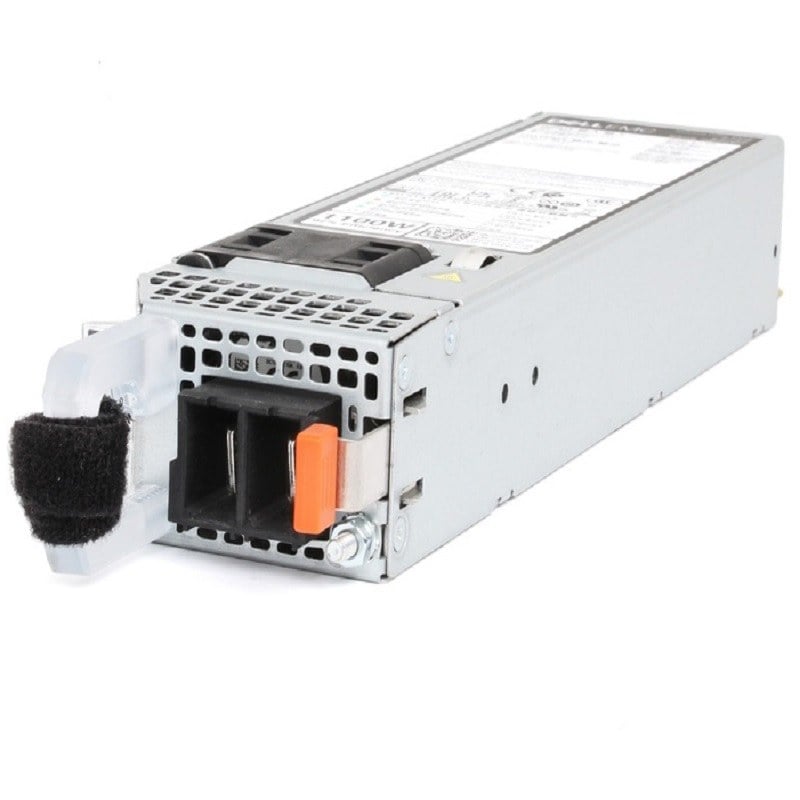

Description
Product Overview
In the realm of server infrastructure, power supply is a critical component that ensures the smooth functioning of servers. The Dell D1100D-S0, an 1100 Watt Direct Current (DC) Power Supply, has gained prominence for its reliability and efficiency, particularly for servers like the T550 and R750. In this comprehensive guide, we’ll explore the intricacies of the Dell D1100D-S0, shedding light on its features, applications, and the benefits it brings to the world of data centers.
Unraveling the Dell D1100D-S0
The Dell D1100D-S0 is a power supply unit specifically designed to meet the power requirements of servers, particularly the T550 and R750 models. Let’s delve into the key features that make this DC power supply a noteworthy choice.
1100 Watt Power Output
At the core of the Dell D1100D-S0 is its substantial power output of 1100 watts. This robust power capacity ensures that it can meet the energy demands of high-performance servers, providing a reliable and consistent power source.
Direct Current (DC) Technology
The D1100D-S0 operates on Direct Current (DC), a technology known for its efficiency and suitability for data center environments. DC power supplies offer advantages in terms of energy conservation and reduced heat generation, contributing to a more sustainable and cost-effective operation.
Compatibility with T550 and R750 Servers
Designed with precision, the D1100D-S0 is tailor-made for compatibility with Dell servers, specifically the T550 and R750 models. This ensures a seamless integration, optimizing performance and reliability within these server configurations.
Hot-Swap Capability
One standout feature of the Dell D1100D-S0 is its hot-swap capability. This means that the power supply can be replaced or added without shutting down the server. This feature is crucial in maintaining uninterrupted server operation and minimizing downtime during maintenance or upgrades.
5. Efficient Cooling Mechanism
Efficient cooling is paramount in data center environments to prevent overheating and ensure the longevity of components. The D1100D-S0 is equipped with a robust cooling mechanism that helps maintain optimal operating temperatures, contributing to the overall reliability of the server system.
Applications and Use Cases
Understanding where the Dell D1100D-S0 fits into the broader landscape of server infrastructure is essential. Let’s explore the various applications and use cases for this DC power supply.
Data Centers and Enterprise Servers
In the heart of data centers and enterprise server rooms, the D1100D-S0 finds its primary application. Its high power output and compatibility with specific Dell server models make it a reliable choice for organizations handling critical data and applications.
High-performance computing (HPC) Clusters
In environments where high-performance computing is essential, such as scientific research or complex simulations, the D1100D-S0 plays a crucial role. Its robust power capacity caters to the energy demands of HPC clusters, contributing to efficient and seamless operations.
Server Farms and Cloud Infrastructure
Server farms and cloud infrastructure rely on a multitude of servers working in tandem. The D1100D-S0, with its hot-swap capability, becomes a valuable asset in these environments, allowing for streamlined maintenance and scalability without disrupting overall operations.
General Information about this Dell D1100D-S0
- Manufacturer: Dell
- Model Number or SKU# D1100D-S0
- Product Type: 1100 Watt Power Supply
- Compatibility: Poweredge T550/r750
In summary, the Dell D1100D-S0 1100 Watt DC Power Supply stands as a robust and reliable component in the world of server infrastructure. Its high power output, direct current technology, and compatibility with specific Dell server models make it a valuable asset in data centers, enterprise servers, and high-performance computing environments. By understanding its features, applications, and best practices for installation and operation, organizations can leverage the D1100D-S0 to enhance the reliability and efficiency of their server systems.


