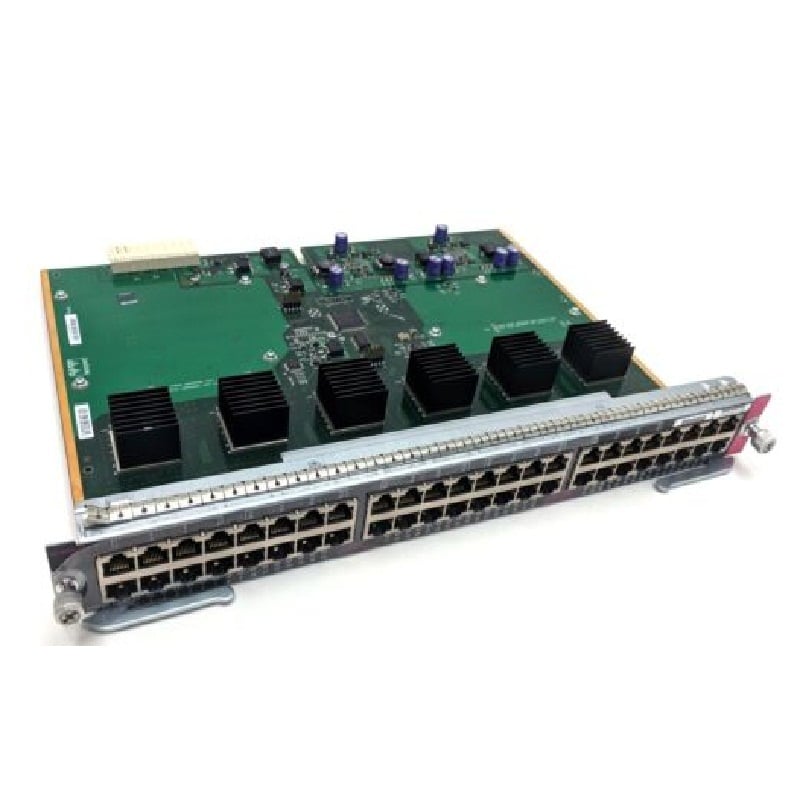


Description
Product Introduction of the Dell F16J9
In the ever-evolving landscape of networking solutions, the Dell F16J9 S5200-ON Series S5248F-ON stands out as a powerful and versatile 48-port Gigabit Ethernet network switch. This comprehensive guide aims to provide an in-depth analysis of its key features, specifications, and applications. Whether you are an IT professional seeking insights or someone exploring network switches for the first time, this guide will break down the technical details in simple terms.
Detailed Specifications
Let’s delve deeper into the detailed specifications of the Dell F16J9 S5200-ON Series S5248F-ON to gain a more comprehensive understanding of its capabilities.
Port Details
- 48 x Ports 25Base-X SFP28: These ports support data rates of 25 gigabits per second (Gbps) and use small form-factor pluggable connectors. They are suitable for high-performance applications, contributing to efficient data transfers within the network.
- 4 x QSFP28: These ports use Quad Small Form-Factor Pluggable connectors, providing even higher data rates than the SFP28 ports. QSFP28 ports are commonly used for aggregating traffic in data center networks.
- 2 x Ports QSFP-DD: The Double Density of QSFP ports signifies an advanced level of connectivity, supporting ultra-fast data rates. These ports are designed to handle the increasing demand for bandwidth in modern networks.
Airflow Configuration:
- Normal Airflow IO to PSU: The switch is configured for normal airflow from Input/Output to the Power Supply Unit. This airflow design is important for maintaining optimal operating temperatures and ensuring the longevity of the switch’s components.
Management and Layer Capabilities
- Layer 3 Managed: Being Layer 3 managed, the switch has the capability to operate at the network layer of the OSI model. This implies advanced routing functionalities, making it suitable for complex network setups where routing decisions are essential.
Form Factor
- 1U Rack-Mountable: The 1U form factor allows the switch to be easily mounted in standard server racks. This form factor is commonly used in data centers and networking environments where space efficiency is a priority.
Gigabit Ethernet Technology
- Gigabit Ethernet: The switch operates on Gigabit Ethernet technology, ensuring high-speed data transfers. With a gigabit-per-second data rate, it meets the demands of modern networking applications, providing a reliable and efficient network backbone.
Key FeaturesNormal Airflow IO to PSU
The airflow configuration specifies how air moves within the switch. In this case, the switch has normal airflow from the Input/Output (IO) to the Power Supply Unit (PSU). This information is vital for proper installation, ensuring that cooling is optimized for the switch’s components.
Layer 3 Managed
The switch is Layer 3 managed, signifying its capability to operate at the network layer of the OSI model. This allows for advanced routing and networking functionalities, providing more control over data traffic and network optimization.
Form Factor- 1U Rack-Mountable
The switch is designed to fit into standard server racks, and its 1U form factor denotes its size, occupying one rack unit of vertical space. This form factor is space-efficient, making it suitable for various networking environments.
Gigabit Ethernet Technology
The switch operates on Gigabit Ethernet technology, ensuring high-speed data transmission across the network. This is essential for applications that demand swift and reliable data transfers, such as video streaming, large file transfers, and real-time communication.
Data Centers
The switch’s high port density, advanced connectivity options, and Layer 3 management make it well-suited for data center environments. It can efficiently handle the large volumes of data traffic characteristic of data centers, contributing to seamless operations.
Enterprise Networks
In enterprise settings, where complex networking requirements are common, the Layer 3 managed capabilities of the switch become valuable. It can support intricate routing configurations, ensuring efficient data flow within the enterprise network.
High-Performance Computing
For applications involving high-performance computing, such as scientific research or simulations, the switch’s high-speed ports and advanced connectivity options are advantageous. It facilitates the rapid exchange of data between computing nodes.
Cloud Infrastructure
In cloud computing environments, where scalability and performance are paramount, the Dell F16J9 switch can play a vital role. Its Layer 3 management capabilities contribute to the efficient routing of data within cloud networks.
Network Aggregation
The switch’s diverse port configurations, including QSFP28 and QSFP-DD ports, make it suitable for network aggregation. Aggregating multiple network connections into these high-speed ports optimizes bandwidth usage.
BenefitsHigh Port Density for Scalability
With 48 ports supporting various data rates, the switch offers high port density, providing scalability for growing network requirements. This is especially crucial in environments where additional devices need to be connected to the network.
Advanced Connectivity Options
The inclusion of QSFP28 and QSFP-DD ports brings advanced connectivity options to the switch. This is advantageous for applications demanding ultra-fast data rates and efficient network aggregation.
Layer 3 Management for Network Control
The Layer 3 managed capabilities empower administrators with greater control over network routing. This is essential for optimizing data flow, implementing security measures, and ensuring a well-organized network structure.
Efficient Cooling
The switch’s normal airflow configuration from IO to PSU ensures efficient cooling. Proper cooling is crucial for maintaining optimal operating temperatures and enhancing the reliability and lifespan of the switch.
Space-Efficient Design with 1U Form Factor
The 1U rack-mountable form factor makes the switch space-efficient, allowing it to be seamlessly integrated into standard server racks. This is beneficial in environments where space optimization is a priority.
High-Speed Data Transfers
Operating on Gigabit Ethernet technology, the switch ensures high-speed data transfers across the network. This is vital for applications that rely on swift and reliable data exchange, contributing to overall network efficiency.
General Information about this Dell F16J9
- Manufacturer: Dell
- Model Number or SKU# F16J9
- Device Type: Switch 48 Ports L3 Managed
- Drive Interface: 25 Gigabit Ethernet Switch
Key Features of the 48-Port Switch
- Enclosure Type: Rack-mountable 1u
- Number of Ports: 48 X 25 Gigabit Sfp28 + 4 X 100 Gigabit Qsfp28 + 2 X 200 Gigabit Qsfp28-dd
- Power over Ethernet (PoE)
- Transceivers: Not Included
- Airflow: Reverse (PSU to I/O)
- Default Operating System: Dell OS10 Enterprise
Expansion / Connectivity
- Interfaces :
- 48 X 25Gbit LAN SFP28
- 4 X 100Gbit LAN QSFP28
- 2 X 200Gbit LAN QSFP28-dd
- 1 X Serial (RS-232) RJ-45 Management
Power
- Power Device: Internal Power Supply – Hot-plug
- Power Consumption Operational: 310 watts
- Installed Quantity: 2 (installed) / 2 (max)
In summary, the Dell F16J9 S5200-ON Series S5248F-ON emerges as a robust and feature-rich 48-port Gigabit Ethernet network switch. Its advanced port configurations, Layer 3 management capabilities, efficient airflow design, and space-efficient form factor make it suitable for a variety of applications, ranging from data centers to cloud infrastructure. The switch’s ability to scale with high port density, provide advanced connectivity options, and offer efficient network control positions it as a valuable asset in the ever-expanding realm of networking solutions. Whether you are building a high-performance computing environment, enhancing your enterprise network, or optimizing cloud infrastructure, the Dell F16J9 stands ready to meet the demands of modern networking.