

Description
Increased Network Availability
Increased Network Availability refers to the improvement in the overall reliability and uptime of a network. In a network, availability refers to the amount of time that a network or its components are operational and accessible to users. The goal of increased network availability is to ensure that the network is up and running as much as possible, minimizing downtime and ensuring that users have uninterrupted access to network resources.
There are several ways to increase network availability, including:
- Redundancy: Implementing redundant components such as switches, routers, and servers can ensure that the network remains operational even if one component fails.
- Link Aggregation: Link aggregation is a method of combining multiple physical network connections into a single logical connection, providing increased bandwidth and improved network availability.
- High Availability Clustering: High Availability Clustering is a technology that provides automatic failover between redundant servers, ensuring that the network remains operational even if one server fails.
- Network Monitoring and Management: Regular monitoring and management of the network can help identify and resolve potential issues before they result in downtime.
- Regular Maintenance: Regular maintenance and upgrades of network components can help prevent issues from occurring and improve the overall reliability of the network.
Increased network availability is crucial for businesses and organizations that rely on the network for their day-to-day operations, as even a short period of downtime can result in significant financial losses and decreased productivity. By implementing various strategies to increase network availability, organizations can ensure that their network is always up and running, providing reliable and uninterrupted access to network resources.
Comprehensive Port Mirroring
Comprehensive Port Mirroring, also known as Port Spanning or Port Monitoring, is a feature found in some network switches that allows administrators to monitor network traffic by copying and forwarding packets from one port to another for analysis. This allows network administrators to monitor network traffic for troubleshooting purposes, network performance analysis, and security monitoring.
In Comprehensive Port Mirroring, the switch creates a copy of all the traffic that is flowing through the specified port(s) and forwards it to another port where it can be monitored by a network analyzer, intrusion detection system, or other monitoring tool. This provides a full view of the network traffic and allows the administrator to see exactly what is happening on the network, including the source and destination of each packet, the protocol being used, and the data payload.
Comprehensive Port Mirroring is a valuable tool for network administrators, as it allows them to quickly identify and resolve network issues, detect security threats, and optimize network performance. However, it should be used with caution as it can consume a lot of network resources and bandwidth, so it’s important to configure the feature properly and monitor its impact on the network.
Robust Network Protection
Robust Network Protection refers to the implementation of various security measures to protect a network from unauthorized access, malware, and other security threats. In today’s connected world, protecting networks is becoming increasingly important as the number of threats continues to grow.
Robust Network Protection typically includes the following measures:
- Firewalls: Firewalls are hardware or software-based security systems that control access to a network by monitoring and filtering incoming and outgoing network traffic.
- Intrusion Detection and Prevention Systems (IDS/IPS): IDS/IPS are security systems that detect and prevent intrusions and attacks on a network. They monitor network traffic and use signature-based detection to identify known threats and anomalies to detect and block new, unknown threats.
- Virtual Private Networks (VPNs): VPNs are secure, encrypted networks that allow remote users to securely access the network over the internet.
- Access Controls: Access Controls are security measures that regulate who has access to the network and what actions they can perform. This can include password policies, user authentication, and access controls for specific network resources.
- Encryption: Encryption is the process of converting plain text into a code to protect sensitive information from unauthorized access. Network encryption can be used to secure data in transit and data at rest.
- Security Awareness Training: Regular security awareness training can help educate employees on best practices for network security and reduce the risk of human error that could lead to security incidents.
Implementing robust network protection is critical for organizations of all sizes, as network security threats can result in data breaches, financial losses, and damage to reputation. By implementing a comprehensive security strategy that includes multiple layers of protection, organizations can ensure that their networks are protected from threats and secure from attacks.
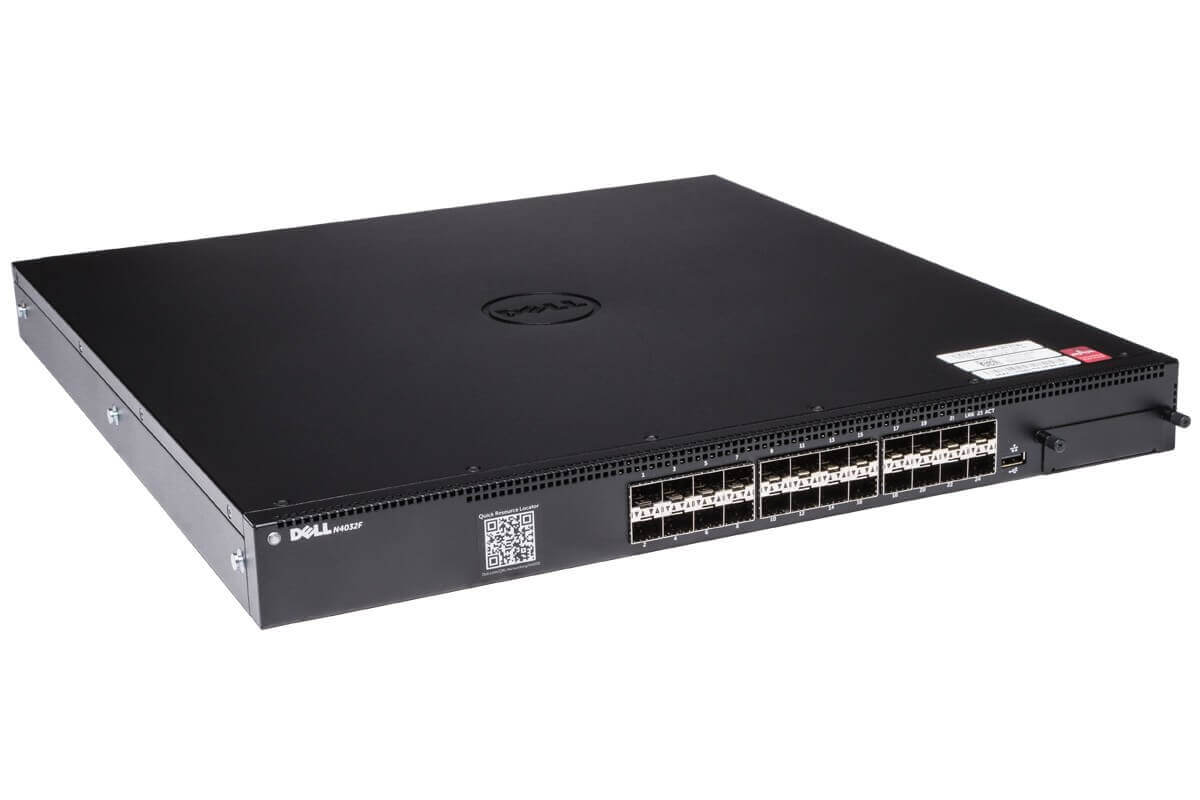
General Information:
- Manufacturer: Dell
- MPN: JH9TW
- Type: Switch
- Switch Type: L3 Managed Stackable Switch
- Total Number of Port: 24
Technical Information:
- Performance : Switching Fabric Bandwidth : 640 Gbps Forwarding Performance : 476 Mpps
- Capacity : Mac Addresses : 131072 IPV4 Routes (Static) : 1024 IPV6 Routes (Static) : 1024 IPV4 Routes (Dynamic) : 8160 IPV6 Routes (Dynamic) : 4096 Maximum Member Ports Per Lag : 8 Maximum Dynamic Ports Per Switch Stack : 144 LAG Groups : 128 Priority Queues Per Port : 8 OSPF Routes : 8160 RIP Routes : 512 ECMP Next Hops Per Route : 4 ECMP Groups : 1024 Vlan Routing Interfaces : 128 Vlans Supported : 4094 Multicast Entries (IPV4) : 512 Multicast Entries (IPV6) : 256 ARP Entries : 6144 NDP Entries : 400 ACL : 100 Maximum Rules Per ACL : 1023 Max ACL Rules System-Wide : 3072 Maximum ACL Rules Per Interface (IPV4) Egress Rules : 1023 Maximum Acl Rules Per Interface (IPV4) Ingress Rules : 2047 Maximum ACL Rules Per Interface (IPV6) Egress Rules : 512 Maximum ACL Rules Per Interface (Ipv6) Ingress Rules : 1021 Maximum Vlan Interfaces With Acls Applied : 24
- Mac Address Table Size : 131072 Entries
- Routing protocol : OSPF, RIP-1, RIP-2, IGMPV2, IGMP, VRRP, OSPFV2, PIM-SM, PIM-DM, IGMPV3, OSPFV3, MLDV2, MLD
- Remote management protocol : SNMP 2, SNMP, RMON, HTTP, SSH
- Features : layer 3 switching, layer 2 switching, mdi/mdi-x switch, auto-negotiation, port mirroring, stackable, broadcast storm control, IP address filtering, Access control list (acl) support, Quality of service (qos), Dynamic arp inspection (dai), Lldp support, remote switch port analyzer (rspan), Management information base (mib), Dual firmware images, Redundant fans, mac and IP-based acls support, Time-controlled acls support, Protocol-based vlans support
- Compliant standards : IEEE 802.2, IEEE 802.3, IEEE 802.3U, IEEE 802.3Z, IEEE 802.1D, IEEE 802.1Q, IEEE 802.3AB, IEEE 802.1P, IEEE 802.3X, IEEE 802.3AD (LACP), IEEE 802.1W, IEEE 802.1X, IEEE 802.3AE, IEEE 802.3AC, IEEE 802.1S, IEEE 802.1V, ANSI/TIA-1057, IEEE 802.1AG, IEEE 802.1AB (LLDP), IEEE 802.3AZ, IEEE 802.1QBB, IEEE 802.1QAZ.
- Power redundancy : Yes.