



Description
Quality of Service (QoS) Features
Quality of Service (QoS) is a network management technique that prioritizes different types of network traffic based on their relative importance. The goal of QoS is to ensure that critical applications receive the bandwidth they require to operate effectively, while minimizing the impact of less important traffic on the overall performance of the network.
In a network context, QoS features can be used to control the flow of traffic based on various criteria, such as source and destination IP address, port number, and protocol type. For example, an administrator may configure a QoS policy to prioritize voice over IP (VoIP) traffic over file transfers, to ensure that voice calls are not impacted by large file transfers.
QoS features can be implemented at various layers of the OSI model, including the data link, network, and transport layers. Common QoS techniques include traffic shaping, bandwidth reservation, and packet prioritization.
By using QoS features, network administrators can ensure that their networks operate efficiently and effectively, meeting the needs of their users and applications. This can lead to improved network performance, reduced network congestion, and a better overall user experience.
Spanning Tree Protocol
Spanning Tree Protocol (STP) is a network protocol that is used to prevent network loops and ensure that network traffic flows in a predictable manner. The main goal of STP is to ensure that there is only one active path between two devices in the network, avoiding the creation of multiple parallel paths that could lead to network loops and result in broadcast storms and other performance issues.
STP works by building a logical tree-like structure that spans across all switches in the network. This tree structure ensures that there is only one active path between two devices, while all other paths are blocked or put into a standby state. If a network link fails or becomes unavailable, STP can detect the failure and dynamically reconfigure the network to use an alternative path.
STP is an important component of modern networks and is supported by most switches and routers. By preventing network loops and ensuring predictable network behavior, STP helps to improve network performance, reliability, and stability. Additionally, by automatically reconfiguring the network in response to failures, STP can improve the overall resilience and fault tolerance of the network.
Layer 4 Management
Layer 4 management is a network management approach that focuses on controlling network traffic and connections at the transport layer (layer 4) of the OSI model. The transport layer is responsible for ensuring the reliable delivery of data between applications running on different devices.
In a network context, layer 4 management allows administrators to control the flow of traffic based on various criteria, such as source and destination IP address, port number, and protocol type. This helps to improve network performance, security, and scalability.
Examples of layer 4 management include TCP/UDP load balancing, traffic shaping, and Quality of Service (QoS) policies that prioritize certain types of network traffic. By managing network traffic at the transport layer, administrators can better control the flow of data across their networks, ensuring that critical applications receive the bandwidth they require while reducing the risk of network congestion.
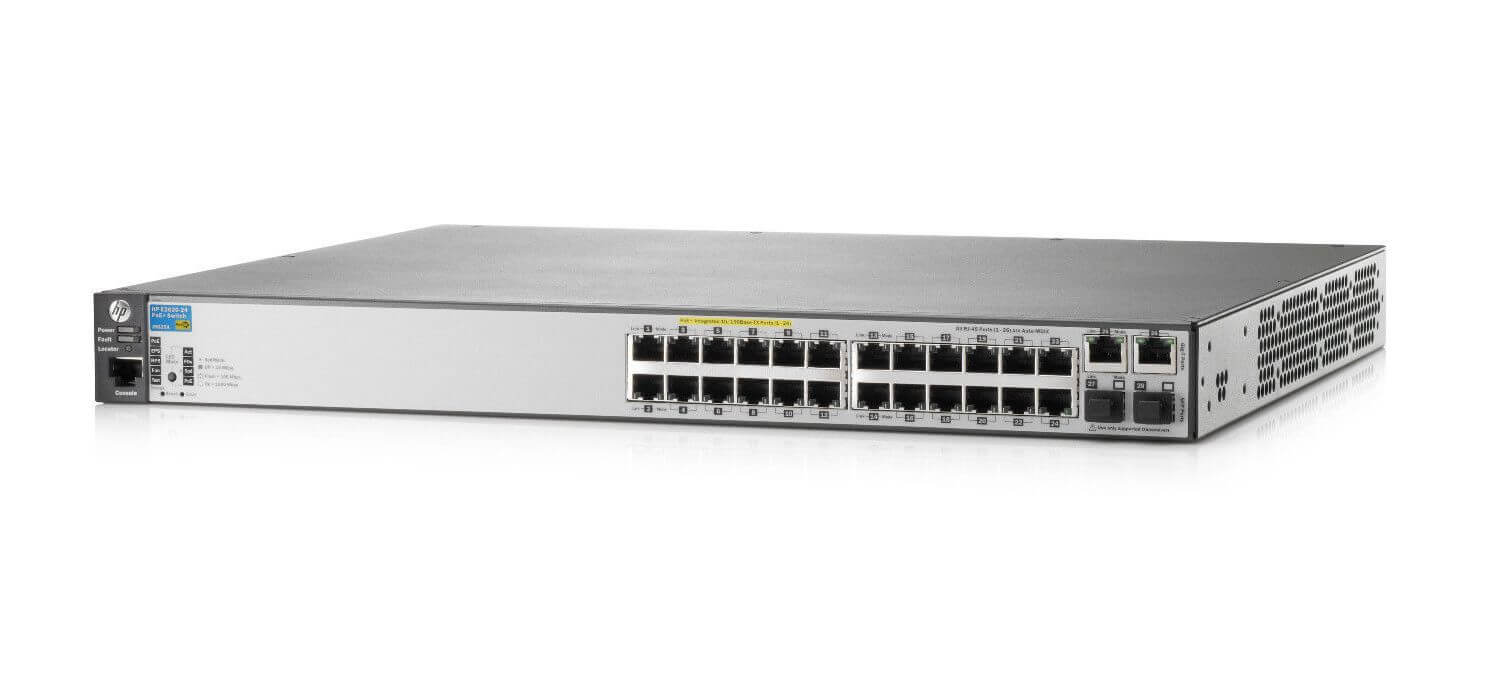
General Information about the HPE J9625-6100
- Manufacturer: HP
- Model Number or SKU#J 9625-61001
- Type: Networking
- Sub-Type: Switch 24 Ports
- Device Type : Switch – 24 Ports – L4 – Managed
- Enclosure Type : Desktop, Rack-Mountable – 1u
- Ports : 24 X 10/100 + 2 X 10/100/1000 + 2 X Sfp
- Power Over Ethernet (Poe) : Yes
Performance
- Routing/Switching Capacity : 12.8 Gbps ¦ Throughput : Up To 9.5 Mpps
- Mac Address Table Size : 16000 Entries
- Jumbo Frame Support : 9220
- Routing Protocol : Rip-1, Rip-2, Igmpv3, Mldv2, Mld
- Remote Management Protocol : Snmp 1, Rmon 2, Rmon, Telnet, Snmp 3, Snmp 2c, Https, Tftp, Smon
- Features : Flow Control, Auto-Sensing Per Device, Dhcp Support, Power Over Ethernet (Poe), Arp Support, Vlan Support, Auto-Uplink (Auto Mdi/Mdi-X), Igmp Snooping, Port Mirroring, Ipv6 Support, Half Duplex Mode, Full Duplex Mode, Sflow, Multiple Spanning Tree Protocol (Mstp) Support, Access Control List (Acl) Support, Quality Of Service (Qos), Jumbo Frames Support, Mld Snooping, Poe+, Stp Root Guard, Lldp Support, Mac Address Lockout, Dynamic Arp Protection, Dhcp Protection, Per-Port Broadcast Throttling
- Compliant Standards : Ieee 802.3u, Ieee 802.1d, Ieee 802.1q, Ieee 802.3ab, Ieee 802.1p, Ieee 802.3af, Ieee 802.3x, Ieee 802.3ad (Lacp), Ieee 802.1w, Ieee 802.1x, Ieee 802.1s, Ieee 802.1v, Ieee 802.1ab (Lldp), Ieee 802.3at
- Power : Ac 120/230 V ( 50/60 Hz )


