
Description
Prioritized Network Traffic
Prioritized network traffic is a mechanism that allows network administrators to assign different priorities to different types of network traffic. This helps to ensure that critical network applications and services receive the necessary bandwidth and resources to function properly, while less critical traffic is given a lower priority.
In the case of the HP 5930 JH182-61101 switch, prioritized network traffic can be used to ensure that critical network applications, such as voice over IP (VoIP) or video conferencing, receive the necessary bandwidth and resources to function properly. This can be especially important in high-speed network environments where large amounts of data need to be transmitted quickly and efficiently.
Prioritized network traffic works by assigning a priority to each type of network traffic, such as high, medium, or low. The switch then uses this information to determine which traffic to prioritize when there is competition for network resources.
For example, a network administrator may assign a high priority to VoIP traffic, ensuring that it receives the necessary bandwidth and resources to function properly. This can help to ensure clear, high-quality voice and video communication over the network.
2-Port Qsfp+ Connectivity Options
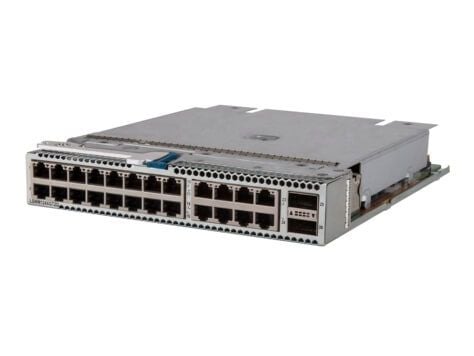
The HP 5930 JH182-61101 switch features 2-port QSFP+ connectivity options, which provide high-speed data transfer and connectivity options for network devices. QSFP+ (Quad Small Form-Factor Pluggable Plus) is a compact, high-density form factor that supports data rates of up to 100 Gbps.
The 2-port QSFP+ connectivity options in the HP 5930 JH182-61101 switch can be used for various purposes, including:
- High-speed data transfer: The QSFP+ ports in the HP 5930 JH182-61101 switch provide high-speed data transfer for large data transfers, such as in data centers or other high-performance network environments.
- Connecting to other network devices: The QSFP+ ports in the HP 5930 JH182-61101 switch can be used to connect to other network devices, such as switches, routers, or servers, providing a high-speed connection between devices.
- Connecting to other networks: The QSFP+ ports in the HP 5930 JH182-61101 switch can also be used to connect to other networks, such as storage area networks (SANs), providing high-speed connectivity between networks.
Improved Power Efficiency
Improved power efficiency refers to the reduction of power consumption by a device or system without sacrificing performance. In the case of the HP 5930 JH182-61101 switch, improved power efficiency is achieved through the implementation of Energy Efficient Ethernet (EEE).
EEE is a set of standards and technologies designed to reduce the power consumption of network devices, such as switches, by reducing the amount of time that the devices spend in the “on” state. For example, when there is no network traffic, EEE-compliant devices can transition to a low-power state, reducing their power consumption and reducing the heat generated by the device.
In the HP 5930 JH182-61101 switch, EEE helps to improve power efficiency by reducing the power consumed by the switch when there is no network traffic. This can result in significant energy savings and lower operating costs, especially in large network installations. Additionally, by reducing the power consumed by the switch, EEE can also help to extend the life of the switch and reduce the need for frequent maintenance.
Main Specification about the HPE JH182-61101
- Manufacturer: HPE
- Part Number or SKU # JH182-61101
- Device Type: Managed Switch
Technical Information
- Application/Usage: Data Networking
- Optical Network
Interfaces / Ports
- Interfaces/Ports Details: 24 x RJ-45 10GBase-T Network LAN
Media & Performance
- Media Type Supported: Twisted Pair
- Optical Fiber
- Ethernet Technology: 10 Gigabit Ethernet
- 40 Gigabit Ethernet
- Network Technology: 10GBase-T
- 40GBase-X
I/O Expansions
- Number of Total Expansion Slots: 2
- Expansion Slot Type QSFP+