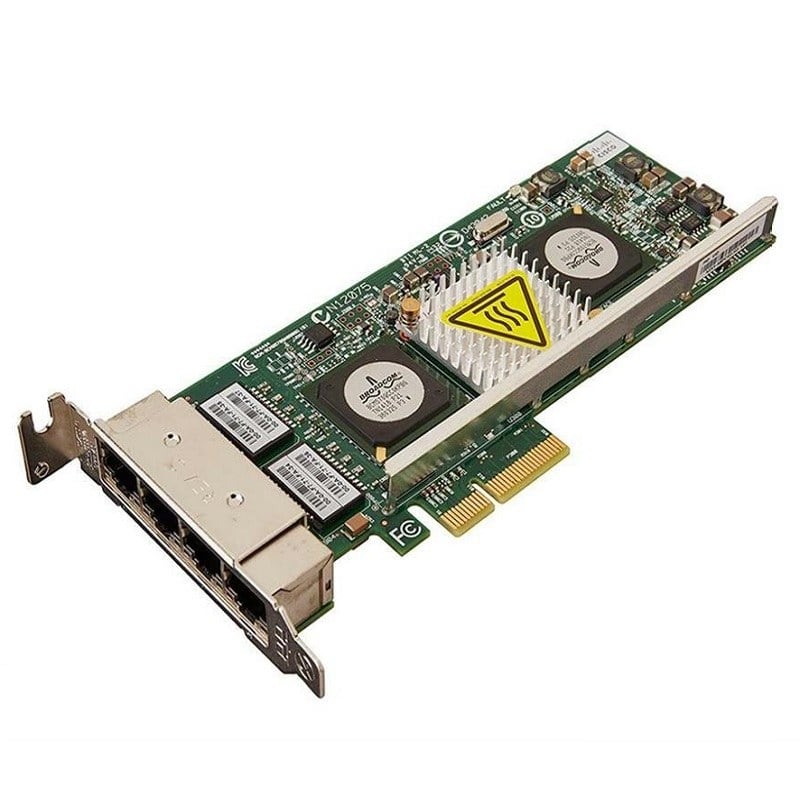


Description
VLAN and QoS Support
VLAN and QoS are two important features of network management that are designed to improve the efficiency and effectiveness of data transmission over a network.
VLAN, or Virtual Local Area Network, is a network partitioning method that enables administrators to segment a physical network into multiple logical networks. VLANs help to improve network performance and security by allowing different groups of users to be separated from one another, while still sharing a common physical network infrastructure. This is accomplished by assigning ports on network switches to specific VLANs, effectively creating multiple independent networks within a single physical network.
QoS, or Quality of Service, is a set of technologies and techniques used to prioritize network traffic and ensure that certain types of data packets receive higher priority than others. This helps to optimize network performance by ensuring that high-priority traffic, such as voice and video data, is delivered with minimal delay and packet loss. QoS is accomplished by assigning different levels of priority to different types of data packets, and then using network switches and routers to prioritize traffic based on those priority levels.
Configuration Process
The configuration process for the 717491-B21 HPE Ethernet 10GB 2 Port 570flr SFP Adapter involves several steps to ensure that it is properly set up and ready for use. Here are the general steps to configure the adapter:
- Install the adapter into an available PCIe slot on your server. Make sure the server is powered off before installation.
- Connect the SFP modules to the adapter’s SFP ports, if needed.
- Power on the server and boot into the operating system.
- Install the appropriate driver for the adapter, which can usually be downloaded from the manufacturer’s website. The driver installation process may vary depending on the operating system.
- Configure the adapter’s settings using the operating system’s network configuration tools. This may include assigning an IP address, setting up VLANs, and configuring link aggregation (if supported).
- Verify that the adapter is working properly by checking its status using the operating system’s network tools or the manufacturer’s management software.
- If necessary, update the adapter’s firmware using the manufacturer’s firmware update utility.
It is important to follow the manufacturer’s instructions carefully when configuring the adapter, as the process may vary depending on the specific model and operating system. Additionally, it is recommended to consult the manufacturer’s documentation or support resources if any issues arise during the configuration process.
Compatibility Operating Systems
Compatibility with operating systems refers to the ability of a hardware device or software application to work correctly with a particular operating system (OS). An operating system is the software that manages the hardware and software resources of a computer or other electronic device, and provides a platform for running other software applications.
When designing hardware devices or software applications, manufacturers need to ensure that they are compatible with a wide range of operating systems that are commonly used by their customers. This involves testing the device or application with different operating systems, and ensuring that it can work correctly with each of them.
Compatibility issues can arise when a hardware device or software application is not designed to work with a particular operating system, or when the operating system itself is not compatible with certain types of hardware or software. This can lead to problems such as crashes, errors, or other types of malfunctions.
To ensure compatibility with different operating systems, manufacturers typically provide drivers or software updates that are specific to each operating system. Users can download and install these drivers or updates to ensure that the hardware device or software application works correctly with their particular operating system.
Network Topologies
Network topologies refer to the arrangement of devices and connections that make up a computer network. In other words, it is the physical or logical layout of how devices are connected and communicate with each other within a network.
There are several different types of network topologies, including:
- Bus Topology: In this type of topology, all devices are connected to a common communication line (a cable), which is called a bus. Data travels along the bus in both directions, and all devices can see all the data transmitted on the bus.
- Star Topology: In a star topology, each device on the network is connected to a central device, such as a hub or switch. Data is transmitted from one device to another through the central device, and each device can only see the data that is meant for it.
- Ring Topology: In a ring topology, devices are connected in a circular manner, with each device connected to the device on either side of it. Data travels in one direction around the ring, with each device passing the data to the next device until it reaches its destination.
- Mesh Topology: In a mesh topology, every device on the network is connected to every other device. This provides redundant paths for data to travel in case one path fails, ensuring that data can always reach its destination.
- Tree Topology: A tree topology is a combination of bus and star topologies, where devices are arranged in a hierarchical structure, with multiple star networks connected to a main bus.
Each topology has its own advantages and disadvantages, and the choice of topology depends on the specific requirements of the network and the devices that are being used.
General Information
- Device Type : Network Adapter
- Form Factor : Plug-In Card
- Interface (Bus) Type : Pci Express 2.0 X8
- Pci Specification Revision : Pcie 2.0
Networking
- Ports : 10 Gigabit Sfp+ X 2
- Connectivity Technology : Wired
- Data Link Protocol : 10 Gigabit Lan
- Data Transfer Rate 10 : GBPS
- Features : Full Duplex Mode, Tcp/Ip Offloading, Jumbo Frames Support, Pxe Support, Large Send Offload (Lso), Receive Side Scaling (Rss), Tcp Segmentation Offload (Tso), Tagged Vlan, Extended Message-Signaled Interrupts (Msi-X), Udp/Ip Offloading, Accelerated Receive Flow Steering (Rfs)
- Compliant Standards : IEEE 802.3, IEEE 802.1q, IEEE 802.3x, IEEE 802.3ad (Lacp), IEEE 802.3ae, IEEE 802.3p