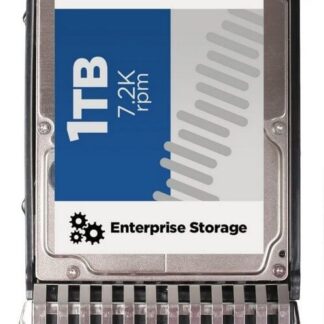


Description
Reliability and Durability Features
Reliability and durability features refer to the design and engineering aspects of a hard drive that enable it to operate consistently and without failure over an extended period of time. These features can be critical for ensuring that data is safe and secure and that systems remain operational, particularly in high-performance computing environments such as data centers, cloud computing, and virtualization.
Some of the key reliability and durability features to look for in a hard drive include:
- Error Correction: Hard drives with advanced error correction codes can help ensure data integrity and reduce the risk of data corruption or loss due to errors in the storage media.
- Vibration and Shock Resistance: Hard drives that are designed to withstand high levels of vibration and shock are more durable and reliable in high-performance computing environments, where equipment is often subjected to heavy use and harsh conditions.
- Temperature Range: Hard drives that can operate within a wide range of temperatures are more reliable and durable in a variety of environments, including those with extreme heat or cold.
- MTBF (Mean Time Between Failures): The MTBF of a hard drive is an estimate of the average time between failures. Hard drives with a higher MTBF are generally more reliable and durable over time.
- Warranty Information: The warranty offered by the manufacturer can be an indicator of the reliability and durability of the hard drive. A longer warranty period generally indicates that the manufacturer is confident in the product’s quality and durability.
Supported Servers and Systems
When selecting a hard drive, it is important to ensure that it is compatible with the server or system it will be installed in. The HPE 765453-K21 SATA 1TB 7.2K RPM hard drive is designed to be compatible with a variety of servers and systems. Some examples of supported servers and systems include:
- HPE ProLiant Gen8 and Gen9 Servers: These servers are designed for small and midsize businesses and provide a range of features and capabilities for various workloads.
- HPE ProLiant DL360 and DL380 Servers: These rack-mounted servers are designed for data center applications and provide high-performance computing power in a compact form factor.
- HPE Apollo Servers: These high-density servers are designed for cloud computing, Big Data analytics, and other high-performance computing workloads.
- HPE BladeSystem: This modular infrastructure platform includes blade servers, storage, and networking components, making it an ideal solution for virtualization and cloud computing.
It is important to note that this list is not exhaustive and that the HPE 765453-K21 SATA 1TB 7.2K RPM hard drive may be compatible with other servers and systems as well. To ensure compatibility, it is recommended to consult the manufacturer’s documentation or contact technical support. Additionally, it is important to ensure that the hard drive is compatible with the operating system being used in the server or system.
Random Read and Write Speeds
Random read and write speeds are measures of a hard drive’s ability to access and transfer small, random chunks of data rather than large, sequential blocks. Random read and write speeds are important for applications that require frequent access to small files or data, such as databases or virtual machines.
The HPE 765453-K21 SATA 1TB 7.2K RPM hard drive has a random read speed of up to 180 Input/Output Operations Per Second (IOPS) and a random write speed of up to 190 IOPS, depending on the workload and system configuration. These speeds are suitable for many data center and cloud computing applications that require a balance of performance and capacity.
It is important to note that random read and write speeds can vary depending on a variety of factors, including the workload, system configuration, and storage controller. In some cases, solid-state drives (SSDs) may offer higher random read and write speeds than traditional hard drives, although they may also have a lower capacity and a higher cost per gigabyte of storage.
The random read and write speeds of the HPE 765453-K21 SATA 1TB 7.2K RPM hard drive are suitable for many enterprise and data center applications that require a balance of performance and capacity. However, for applications that require higher performance or lower latency, an SSD or higher-performance hard drive may be more appropriate.
Detail Information about HPE 765453-K21
- HPE 765453-K21 1TB 7200RPM 2.5in DS SATA-6G SC Midline G9 G10 Hard Drive
- Part Number or SKU # 765453-K21
- Manufacturer : HPE
- Type : Hard Drive
- Interface Type : SATA-6GBPS
Technical Information of 1TB SATA-6GBPS
- Type of HDD : Hot-Swap Hard Drive
- Capacity : 1TB
- Form Factor : 2.5inch
- Bytes per Sector: 512
- Drive Technology (Fill): Air
- Plug Type: Hot Pluggable
- Format Type: 512e
- Carrier Type: Smart Carrier (SC)
- Workload Type: Midline
- Features: Digitally Signed Firmware, Advanced Format 512e
- Bundled with: HPE Smart Drive carrier
Product Dimensions & Weight of Hard Drive
- Width : 2.8 Inch
- Depth : 3.9 Inch
- Height : 0.6 Inch
- Weight : 0.50 lbs
Performance of HDD
- Spindle Speed: 7200 RPM
- External Data Transfer Rate: 600 MBps
- Seek Time: 17 ms (max)
- Bytes per Sector: 512e
- Track-to-Track Seek Time: 0.5 ms
Compatibility Information
- HPE ProLiant BL Series: BL420c (Gen8 Gen9) BL460c (Gen8 Gen9) BL465c (Gen8 Gen9) BL660c (Gen8 Gen9)
- HPE ProLiant DL Series: DL120 (Gen8 Gen9) DL160 (Gen8 Gen9) DL180 (Gen8 Gen9) DL320e (Gen8 Gen9) DL360 (Gen8 Gen9) DL360e (Gen8 Gen9) DL360p (Gen8 Gen9) DL380 (Gen8 Gen9) DL380e (Gen8 Gen9) DL380p (Gen8 Gen9) DL385p (Gen8 Gen9) DL560 (Gen8 Gen9) DL580 (Gen8 Gen9)
- HPE ProLiant ML Series: ML110 (Gen8 Gen9) ML150 (Gen8 Gen9) ML310e (Gen8 Gen9) ML350 (Gen8 Gen9) ML350e (Gen8 Gen9) ML350p (Gen8 Gen9)
- HPE ProLiant SL Series: SL230s (Gen8 Gen9) SL250s (Gen8 Gen9) SL270s (Gen8 Gen9)
- HPE Storage Systems: D3700 D2220sb
- HPE StoreEasy: 1830 1840
Contact us or ask for live chat/help if you have any questions about the compatibility of this item to ensure the model’s matching features with your current system.