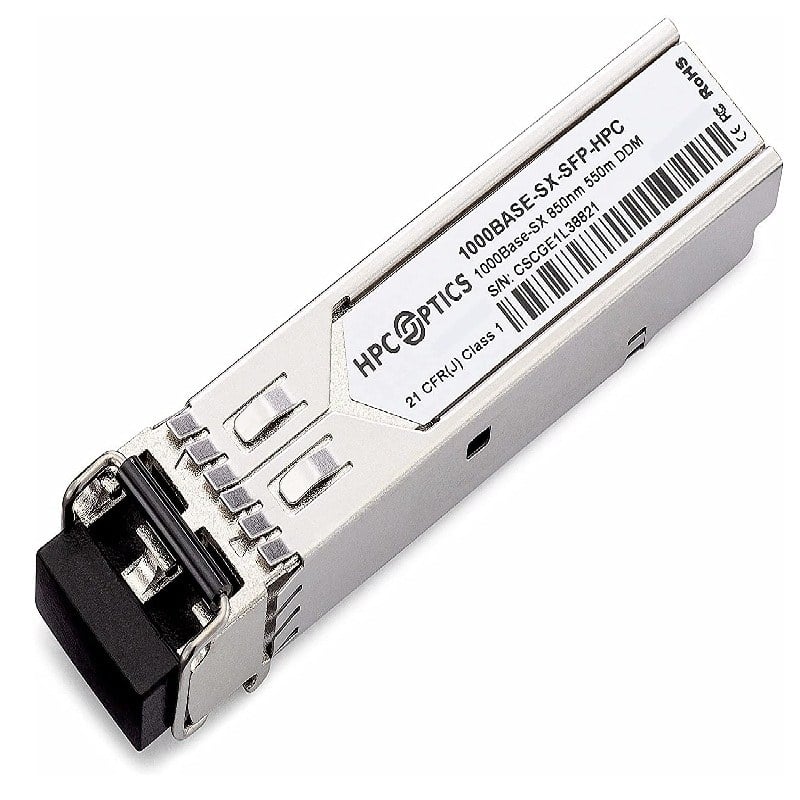


Description
Power Requirements and Consumption
The C8S75B HPE 1GB Short Wave iSCSI SFP+ Transceiver is designed to operate within a specific range of input voltages, typically between 3.3V and 5V. The power consumption of the transceiver varies depending on the specific configuration and usage scenario, but typically ranges from 1.5W to 1.8W per transceiver module.
To minimize power consumption and heat dissipation, the C8S75B HPE transceiver includes a range of power management features. These features include low-power modes and automatic power management, which allow the transceiver to dynamically adjust power consumption based on network traffic and other factors.
The C8S75B HPE transceiver is designed to meet a range of industry standards and certifications related to power consumption and efficiency. For example, the transceiver complies with the Restriction of Hazardous Substances (RoHS) directive, which restricts the use of certain hazardous materials in electronic and electrical equipment. The transceiver also complies with the Waste Electrical and Electronic Equipment (WEEE) directive, which requires manufacturers to take responsibility for the disposal of their products at the end of their lifecycle.
When deploying the C8S75B HPE transceiver in a storage network, it is important to carefully consider power requirements and consumption, and to ensure that power supplies and other components are capable of meeting the needs of the network. By leveraging the power management features provided by the transceiver, organizations can help to minimize power consumption, reduce heat dissipation, and extend the lifespan of the transceiver and other network components.
Integration with Virtualized Environments
The C8S75B HPE 1GB Short Wave iSCSI SFP+ Transceiver is designed to integrate seamlessly with virtualized environments, allowing organizations to deploy and manage their storage networks more efficiently and effectively.
One key benefit of the C8S75B HPE transceiver in virtualized environments is its support for a range of virtualization technologies, including VMware and Microsoft Hyper-V. This allows organizations to leverage the benefits of virtualization, such as improved resource utilization and simplified management, while also ensuring that their storage networks are highly available and performant.
In addition, the C8S75B HPE transceiver is designed to support a range of software-defined storage (SDS) solutions, which allow organizations to virtualize and abstract their storage infrastructure, and manage it through a single pane of glass. This includes solutions such as HPE StoreVirtual VSA and HPE SimpliVity, which provide highly scalable and resilient storage architectures that are ideal for virtualized environments.
The C8S75B HPE transceiver also supports a range of network virtualization technologies, such as VXLAN and NVGRE, which allow organizations to create logical networks that span physical boundaries, and to isolate and secure network traffic more effectively.
The C8S75B HPE transceiver provides a highly flexible and scalable solution for organizations looking to deploy storage networks in virtualized environments, and can help to improve performance, efficiency, and manageability.
Network Topology Considerations
The C8S75B HPE 1GB Short Wave iSCSI SFP+ Transceiver is designed to support a range of network topologies, including traditional Ethernet LANs, storage area networks (SANs), and converged network infrastructures. When deploying the transceiver, there are several key topology considerations to keep in mind:
- Distance: The C8S75B HPE transceiver is designed to support short-range optical connections, typically up to 300 meters. When designing a network topology, it is important to ensure that the distance between transceivers does not exceed this limit.
- Bandwidth: The C8S75B HPE transceiver provides high-speed, low-latency connectivity, with support for data rates up to 1 Gbps. When designing a network topology, it is important to consider the bandwidth requirements of the storage and application workloads being supported, and to ensure that the network is capable of meeting these requirements.
- Redundancy: To ensure high availability and resilience, it is important to design a network topology that includes redundant paths and failover mechanisms. This may include using redundant switches and NICs, as well as implementing technologies such as link aggregation and failover clustering.
- Network Segmentation: In many cases, it may be desirable to segment network traffic to improve security and performance. This may involve creating separate VLANs or subnets for different types of traffic, such as storage, management, and application traffic.
- Network Management: To ensure effective management and monitoring of the network, it is important to consider network management tools and technologies. This may include implementing network monitoring and analysis tools, as well as using centralized management platforms such as HPE OneView or HPE Intelligent Management Center.
By carefully considering these topology considerations, organizations can design and deploy highly effective and efficient storage networks using the C8S75B HPE transceiver, and ensure that their storage and application workloads are highly available and performant.
General Information
- Manufacturer: HPE
- Part Number or SKU # C8S75B
- Device Type : Sfp+ Transceiver Module
Technical Specification
- Form Factor : Plug-In Module
- Connectivity Technology : Wired
- Cabling Type : Scsi
- Data Link Protocol : Gigabit Ethernet
Expansion / Connectivity
- Interfaces : 1 X Ethernet 1000 ( Short Wave )