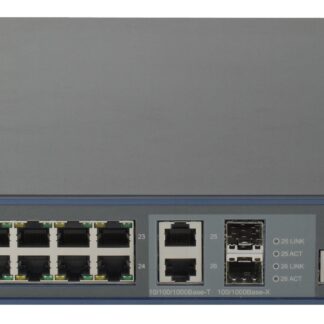


Description
Redundant Power Supply Option
Redundant power supply (RPS) is a feature in some network switches that provides a backup power source to ensure continuous operation in the event of a primary power supply failure. In the context of the HPE 1920-24G L3 Switch, the “redundant power supply option” refers to the availability of a secondary power source that can be installed in the switch to provide a backup in case the primary power supply fails.
Having a redundant power supply can increase the reliability and uptime of a network, as it minimizes the risk of downtime due to power failures or outages. In some cases, a redundant power supply can also improve the overall performance and efficiency of a network by distributing the load evenly between the primary and secondary power supplies.
The availability of a redundant power supply option in the HPE 1920-24G L3 Switch makes it an attractive choice for mission-critical applications where high availability and reliability are required.
Advanced Troubleshooting Features
Advanced troubleshooting features are tools and techniques that are designed to help network administrators quickly identify and resolve issues in their network. These features can include diagnostic tools, log files, alarms, and other methods for monitoring and managing the health and performance of a network.
In the context of the HPE 1920-24G L3 Switch, advanced troubleshooting features refer to the various tools and technologies built into the switch to help network administrators quickly identify and resolve issues that may arise. These may include features such as error logs, performance monitoring tools, diagnostic LED lights, and support for remote management and monitoring.
The availability of advanced troubleshooting features in the HPE 1920-24G L3 Switch makes it easier for network administrators to maintain the health and performance of their network, reducing the risk of downtime and ensuring that network issues are addressed quickly and effectively. This can help to improve the overall reliability and stability of a network, as well as increase the productivity of network administrators.
Environmental Certifications
Environmental certifications refer to certifications and standards that recognize a product’s compliance with regulations and guidelines related to environmental protection.
The certifications show that the product has been designed and manufactured in an environmentally responsible manner, and that it meets certain environmental standards, such as reducing its impact on air and water pollution, waste reduction, and energy efficiency.
Some of the common environmental certifications include Energy Star, RoHS, WEEE, and EPEAT. These certifications help to reduce the environmental impact of products, encourage sustainability in the manufacturing process, and provide customers with information about the environmental performance of the products they purchase.
Main Specification about the HPE JG924-61001
- Manufacturer: HPE
- Part Number or SKU # JG924-61001
- Device Type: Managed Switch
- Product Series 1920
- Product Model 1920-24G
- Product Name 1920-24G Switch
Interfaces / Ports
- Total Number of Network Ports 24
- Modular Yes
- Port/Expansion Slot Details 24 x Gigabit Ethernet Network
- 4 x Gigabit Ethernet Expansion Slot
Media & Performance
- Media Type Supported:
- Twisted Pair
- Optical Fiber
- Ethernet Technology Gigabit Ethernet
- Network Technology:
- 10/100/1000Base-T
- 1000Base-X
I/O Expansions
- Number of Total Expansion Slots 4
- Expansion Slot Type SFP
- Shared SFP Slot No
- Number of SFP Slots 4
Network & Communication
- Layer Supported 3
Management & Protocols
- Manageable Yes
Power Description
- Power Source Power Supply