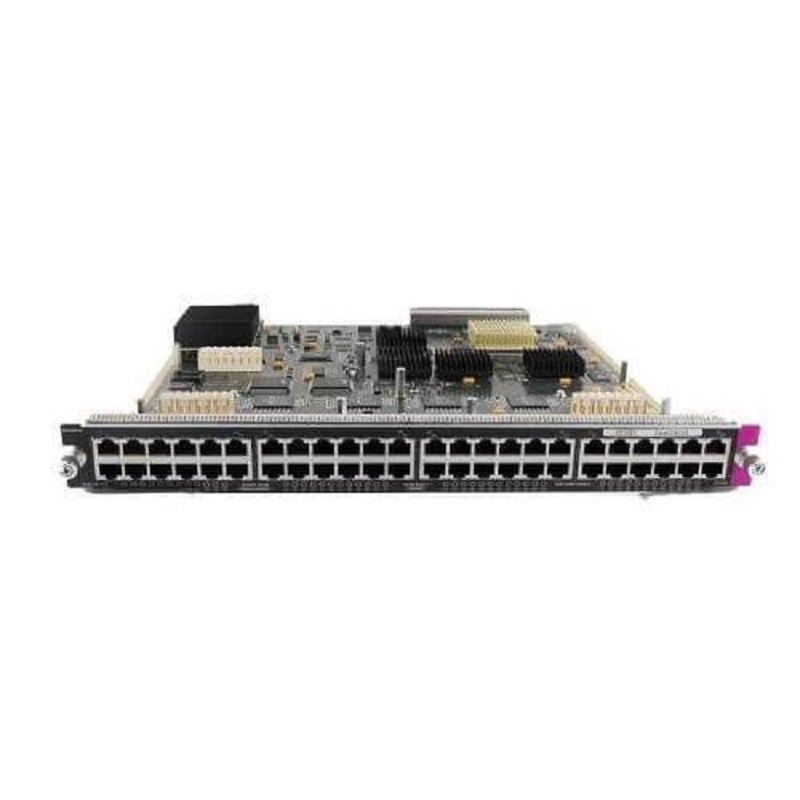


Description
Key Features of L3 Switch
- 48 Gigabit Ethernet ports: The HPE Aruba 2930f 48G 4 SFP Switch has 48 Gigabit Ethernet ports, providing high-speed network connectivity for devices such as servers, storage, and other network devices.
- 4 SFP ports: The switch also includes 4 SFP (small form-factor pluggable) ports, which allow for high-speed connectivity using fiber-optic cable. This allows for longer distance connections and higher bandwidth.
- Managed switch: The HPE Aruba 2930f 48G 4 SFP Switch is a managed switch, which means it can be configured and monitored remotely using a web interface or command-line interface. This allows for fine-grained control over network settings and troubleshooting.
- Layer 3 switching: The switch supports Layer 3 switching, which allows for advanced routing and traffic management capabilities. This can help to improve network performance and security.
- Quality of Service (QoS): The switch supports Quality of Service (QoS) which allows for prioritization of network traffic. This can be used to ensure that critical applications such as VoIP or video conferencing have the necessary bandwidth.
- Rack-mountable design: The HPE Aruba 2930f 48G 4 SFP Switch is designed for rack-mount installation, making it easy to integrate into existing network infrastructure.
- Advanced security features: The switch includes advanced security features such as access control lists (ACLs) and secure access policies to help protect against network threats.
- Energy Efficient Ethernet (EEE): The switch supports Energy Efficient Ethernet (EEE) which helps to reduce power consumption when network traffic is low.
- Virtual Switching Framework (VSF) support: The switch supports Virtual Switching Framework (VSF) which allows for the creation of virtual switches to provide high availability, scalability, and flexibility for the network infrastructure.
Rack Mountable Design for Easy Deployment
Rack Mountable Design for Easy Deployment JL260-61001 likely refers to a specific feature of a product or device, such as a switch or router, that is designed to be easily installed in a standard 19-inch server rack. This type of design allows for efficient use of space and organization of equipment in data centers and other environments where multiple devices need to be installed in a limited space.
A rack mountable device typically has mounting ears or brackets that can be attached to the device, allowing it to be securely fastened to the rack using screws or other hardware. This design allows for easy installation and removal of the device from the rack, making it easy to deploy and maintain.
The JL260-61001 product is likely a 48-port managed switch that has a rack mountable design. This feature allows the switch to be easily installed in a data center rack, saving space and making it easier to manage and maintain. Other benefits of rack mountable design include improved cable management, better airflow, and easier access to the front and rear panels of the device for maintenance and troubleshooting.
It’s important to note that the rack mountable design feature can vary depending on the device and manufacturer, it’s recommended to consult the manufacturer’s specifications and consult with the vendor or network administrator to ensure that the switch will meet the specific needs of the organization.
Performance of 48 Ports Managed Switch
The performance of a 48 ports managed switch, such as the JL260-61001, will depend on various factors such as the type of switch, the network traffic, and the configuration of the switch. Some of the key performance metrics to consider when evaluating the performance of a 48 ports managed switch include:
- Throughput: The amount of data that can be transmitted and received on the switch in a given period of time.
- Latency: The time it takes for a packet to be sent and received on the switch.
- Packet loss: The percentage of packets that are lost due to congestion or other issues.
- Jitter: The variation in the delay of packets arriving at the destination.
- Number of VLANs support: The number of virtual LANs that can be created on the switch.
- Quality of Service (QoS): The ability of the switch to prioritize different types of network traffic.
Additionally, the switch should support key features such as LACP, Link Aggregation Control Protocol, for link aggregation and redundancy, to increase the availability and bandwidth; VLANs and VLAN tagging, to segment the network and increase security; and Access control list, ACL, to control the network access.
It’s important to note that the performance of a 48 ports managed switch will depend on the specific model and its capabilities, as well as how it is configured and the type and amount of network traffic. It’s always recommended to consult the manufacturer’s specifications and consult with the vendor or network administrator to ensure that the switch will meet the specific needs of the organization.
General Information about the HPE JL260-61001
- Manufacturer: HPE
- Manufacturer Part Number: JL260-61001
- Product Type: Stackable Switch
Technical Information
- Enclosure Type : Rack-Mountable 1U
- Ports : 48 X 10/100/1000 + 4 X Gigabit Sfp (Uplink)
Performance
- Throughput : 77.4 Mpps ¦ Switching Capacity : 104 Gbps ¦ Latency (1 Gbps) : 3.8 µs
- Capacity : Jumbo Frame Size : 9220 ¦ Ipv4 Routing Table Entries : 10000 ¦ Ipv6 Routing Table Entries : 5000
- Mac Address Table Size : 32k Entries
Networking
- Routing Protocol : Ospf, Rip, Rip-1, Rip-2, Bgp, Igmpv2, Igmp, Ospfv2, Static Ip Routing, Igmpv3, Ospfv3, Static Ipv4 Routing, Static Ipv6 Routing, Ripng, Mld, Cidr
- Remote Management Protocol : Snmp 1, Snmp 2, Rmon 1, Snmp, Telnet, Snmp 3, Snmp 2c, Ssh, Ssh-2, Cli, Xrmon
- Encryption Algorithm : Md5, Ssl
- Authentication Method : Radius, Pap, Chap, Tacacs, Tacacs+
Features
- Flow Control, Full Duplex Capability, Dhcp Support, Bootp Support, Arp Support, Vlan Support, Igmp Snooping, Syslog Support, Diffserv Support, Ipv6 Support, Sntp Support, Sflow, Spanning Tree Protocol (Stp) Support, Multiple Spanning Tree Protocol (Mstp) Support, Access Control List (Acl) Support, Quality Of Service (Qos), Jumbo Frames Support, Dhcp Server, Stp Root Guard, Uni-Directional Link Detection (Udld), Lldp Support, Link Aggregation Control Protocol (Lacp), Management Information Base (Mib), Mac Address Lockout, Dynamic Arp Protection, Dhcp Protection, Dynamic Vlan Support (Gvrp), Multiple Vlan Registration Protocol (Mvrp), Neighbor Discovery Protocol (Ndp), Class Of Service (Cos), Type Of Service (Tos), Openflow Support, Cpu Protection, Internet Control Message Protocol (Icmp), Icmp Router Discovery Protocol (Irdp), Virtual Extensible Lan (Vxlan), Management Information Base (Mib) Ii
Processor/Memory
- Processor : 1 X Arm Cortex-A9 : 1.016 Ghz
- Ram : 1 Gb – DDR3 SDRAM
- Flash Memory : 4 Gb
Interfaces
- 48 X 1000base-T – Rj-45 ¦ 4 X Gigabit Lan – Sfp ¦ 1 X Serial (Console)
- Expansion Slots : 1 (Total) / 1 (Free) X Expansion Slot
- Installed Modules Qty (Max) : 0 (Installed) / 4 (Max)