


Description
Overview of the HPE JL384A 24GBE Managed Switch
In the ever-evolving landscape of networking equipment, the HPE JL384A Office Connect 1920S 24GBE Switch stands out as a powerful and versatile solution. This in-depth review will delve into its key features, capabilities, and applications, providing a detailed understanding for both beginners and seasoned professionals.
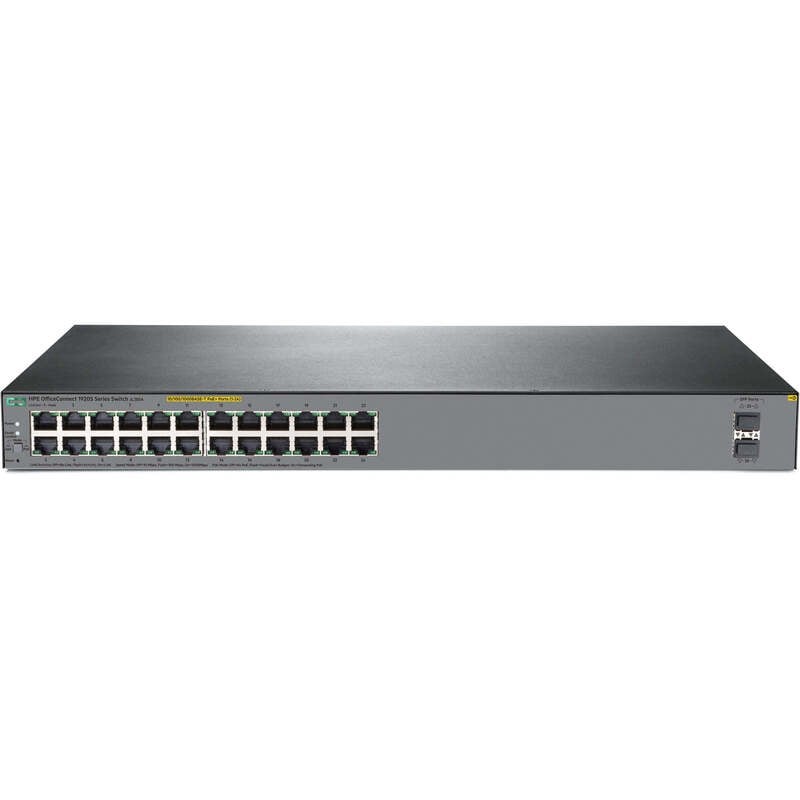
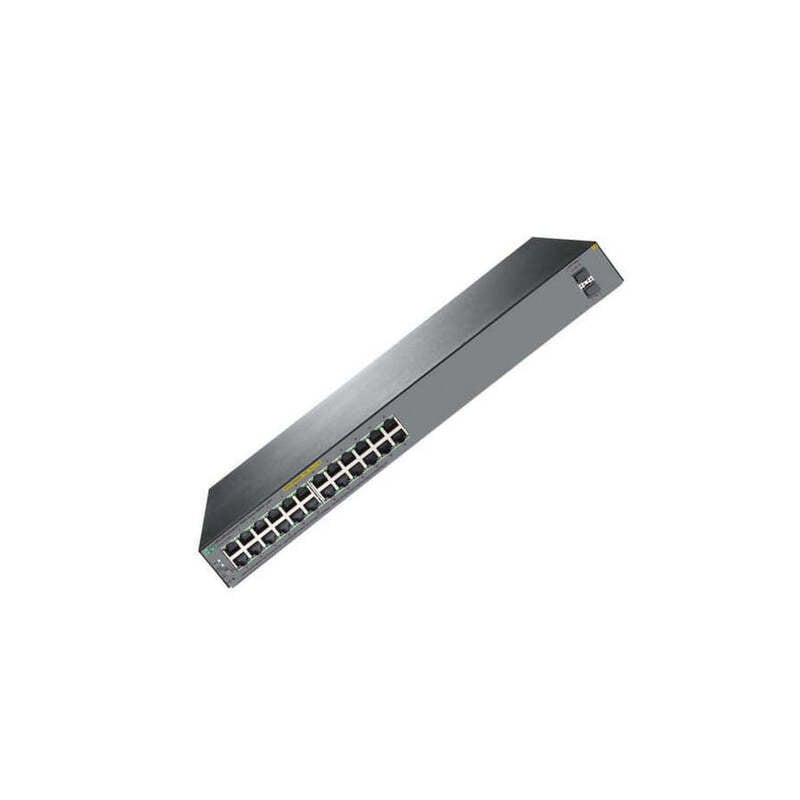
The HPE JL384A, belonging to the Office Connect 1920S series, is a 24-port Gigabit Ethernet switch designed to meet the demands of modern network environments. With its advanced features and robust design, this switch caters to the needs of businesses seeking reliable and efficient networking solutions.
Understanding Key Features of the SwitchLayer 3 Capabilities
The incorporation of Layer 3 functionality in the HPE JL384A sets it apart from traditional Layer 2 switches. Layer 3 switches, also known as multilayer switches, possess routing capabilities similar to routers. This means they can make decisions based on IP addresses, allowing for more intelligent traffic management.
In practical terms, the Layer 3 capabilities of the HPE JL384A enable it to route traffic between different subnets within a network. This is essential for optimizing data flows, enhancing network efficiency, and providing segmentation for improved security.
Power over Ethernet (PoE+) Advantages
Simplified Deployment
One of the primary advantages of PoE+ is the simplification of device deployment. Traditional setups would require separate power and data cables for each connected device. With PoE+, a single Ethernet cable can carry both data and electrical power to compatible devices.
Cost Savings
The integration of PoE+ eliminates the need for dedicated electrical outlets near each device, resulting in cost savings during installation. This is particularly advantageous in environments where adding new power infrastructure may be impractical or expensive.
Flexibility in Device Placement
PoE+ enables greater flexibility in the placement of devices. Devices such as IP cameras and wireless access points can be strategically located without being constrained by the availability of power outlets, improving overall network design and coverage.
Gigabit Small Form-Factor Pluggable Ports
The inclusion of Gigabit SFP ports enhances the connectivity options of the HPE JL384A. SFP ports accommodate small form-factor pluggable transceivers, providing flexibility in choosing the appropriate transceiver for specific networking needs.
Fiber Optic Connectivity
Gigabit SFP ports support the use of fiber optic transceivers, allowing for high-speed and long-distance connections. This is particularly beneficial in scenarios where traditional copper cabling may be impractical or where the network requires extended reach.
Interoperability
The use of SFP ports also enhances interoperability with other networking equipment. By supporting industry-standard transceivers, the HPE JL384A ensures compatibility with a wide range of networking devices, promoting a seamless and integrated network environment.
Rack-Mountable Design
The rack-mountable design of the HPE JL384A contributes to its adaptability in diverse network setups. Let’s explore the benefits of this design choice:
Space Optimization
In environments where space is at a premium, the ability to mount the switch in a standard server rack becomes crucial. This is common in data centers, network closets, and server rooms where multiple networking and server equipment are housed.
Organized Cable Management
Rack-mounted switches facilitate organized cable management. With cables neatly arranged within the rack, administrators can easily trace and manage connections, reducing the likelihood of errors and simplifying troubleshooting processes.
Scalability and Expansion
Rack-mounted switches are inherently scalable, allowing for easy integration of additional switches as the network expands. This scalability is essential for businesses experiencing growth or anticipating future increases in network infrastructure requirements.
Practical Applications
Understanding the technical specifications and features of the HPE JL384A is crucial, but it is equally important to explore its practical applications in real-world scenarios. The switch’s capabilities make it suitable for a variety of use cases across different industries.
Enterprise Networking
In large enterprises with extensive network requirements, the Layer 3 capabilities of the HPE JL384A come into play. The switch can efficiently route traffic between different departments, floors, or buildings, optimizing data flows and ensuring seamless communication.
The 24 Gigabit Ethernet ports provide the necessary connectivity for a multitude of devices, ranging from desktop computers and printers to IP phones and video conferencing systems. The inclusion of PoE+ further simplifies the deployment of power-hungry devices such as VoIP phones and security cameras.
Surveillance Systems
The HPE JL384A’s PoE+ support makes it an ideal choice for surveillance systems. IP cameras, often used in modern surveillance setups, can be conveniently powered and connected using a single Ethernet cable. This simplifies installation, reduces cable clutter, and ensures a reliable power source for critical security devices.
The switch’s Layer 3 capabilities are advantageous in scenarios where multiple surveillance subnets need to be managed. This segmentation enhances security and allows for efficient monitoring and control of network traffic associated with surveillance applications.
Educational Institutions
In educational institutions, where a large number of users and devices are connected, the HPE JL384A proves to be a valuable asset. The switch’s scalability allows for the accommodation of numerous wired devices, such as computers in computer labs and access points in classrooms.
The Layer 3 functionality becomes crucial in educational environments with diverse departments or buildings. The switch can route traffic between different segments of the network, facilitating efficient communication and resource sharing.
Small to Medium-sized Businesses
For SMBs, the HPE JL384A strikes a balance between advanced features and ease of use. The 24 Gigabit Ethernet ports cater to the networking needs of smaller organizations, while the Layer 3 capabilities provide room for growth and network expansion.
The switch’s PoE+ support is particularly beneficial for SMBs adopting IP telephony or deploying wireless access points. The ability to power these devices over the Ethernet cable simplifies installation and reduces the overall cost of ownership.
General Information about the HPE JL384A Managed Switch
- Manufacturer: HPE
- Part Number or SKU# JL384A
- Type: Managed Switch
- Switch Type: 24 Ports 2SFP Managed Switch
Technical Information of the HPE JL384A 24 Ports Switch
- Interface: Switch 24 Ports
- HP Officeconnect 1920s 24g 2sfp Ppoe+ 185w – Switch – 24 Ports – Smart – Rack-Mountable
- Enclosure Type: Rack-Mountable 1u
- Subtype: Gigabit Ethernet
- Ports: 12 X 10/100/1000 (Poe+) + 12 X 10/100/1000 + 2 X Gigabit Sfp
- Power Over Ethernet (Poe): Poe+
- Poe Budget: 185 W
Performance
- Throughput: 38.6 MPPS ¦ Switching Capacity: 52 GBPS ¦ Latency (100 MBPS): 7 µs ¦ Latency (1000base-T): 2 µs
- Capacity: Ipv4 Routing Table Entries: 32.
Compliant Standards
- IEEE 802.3, IEEE 802.3u, IEEE 802.1d, IEEE 802.1q, IEEE 802.3ab, IEEE 802.1p, IEEE 802.3af, IEEE 802.3x, IEEE 802.3ad (Lacp), IEEE 802.1w, IEEE 802.3at, IEEE 802.3az
Power
- Power Device: Internal Power Supply
- Voltage Required: Ac 120 V (60 Hz)
- Power Consumption Operational: 207.9 Watt
In summary, the HPE JL384A Office Connect 1920S 24G Switch emerges as a versatile and powerful networking solution. Its Layer 3 capabilities, Power over Ethernet support, Gigabit SFP ports, and rack-mountable design collectively make it a compelling choice for a wide range of applications.
Whether deployed in enterprise networks, surveillance systems, educational institutions, or SMBs, the HPE JL384A excels in providing reliable connectivity, scalability, and advanced features. As businesses continue to rely on robust networking infrastructure, the HPE JL384A proves to be a valuable asset in achieving seamless communication, efficient resource sharing, and overall network optimization.
As technology evolves and networking requirements continue to grow, the HPE JL384A remains a steadfast companion, adapting to the dynamic needs of modern connectivity and standing as a testament to Hewlett Packard Enterprise’s commitment to delivering innovative and reliable networking solutions.


