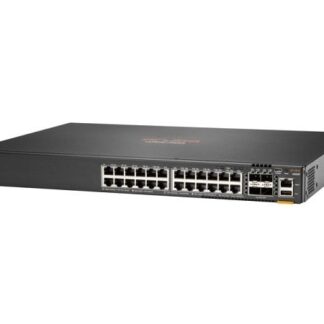


Description
Resilient Network Operations
Resilient network operations refer to the ability of a network to maintain its critical functions and services in the face of unexpected events or failures. A resilient network is one that can continue to operate and provide essential services, even in the event of hardware failures, network outages, or other unexpected events.
There are several strategies and technologies that organizations can use to enhance the resilience of their network operations, including:
- Redundancy: By implementing redundancy in key components of the network, organizations can ensure that critical functions and services can be maintained in the event of hardware failures or other disruptions.
- Disaster recovery planning: By developing and implementing disaster recovery plans, organizations can ensure that critical data and services can be quickly restored in the event of a network outage or other catastrophic event.
- Load balancing: By using load balancing technologies, organizations can distribute network traffic across multiple devices, reducing the risk of a single point of failure and enhancing network resilience.
- Network segmentation: By segmenting the network into smaller, more manageable components, organizations can limit the scope of disruptions and reduce the impact of network failures.
- Network monitoring and management: By implementing comprehensive network monitoring and management tools, organizations can proactively identify and address potential network issues, reducing the risk of network failures and enhancing network resilience.
Lower Power Costs
Lower power costs refer to the reduction in the amount of electricity consumed by network devices, which can result in significant cost savings over time. Power consumption is an important consideration for organizations, as it can represent a significant portion of the total cost of ownership for network devices.
There are several ways to lower power costs in network devices, including:
- Energy-efficient hardware: Some network devices are designed to be more energy-efficient, consuming less power than their traditional counterparts.
- Power-saving modes: Many network devices have power-saving modes that can be enabled to reduce power consumption, such as sleep modes or power-off modes.
- Virtualization: By using virtualization technologies, organizations can consolidate multiple physical devices into a single virtual device, reducing the total number of devices and associated power consumption.
- Power over Ethernet (PoE): By using PoE, organizations can power network devices through the Ethernet cable, reducing the need for separate power supplies and lowering power consumption.
- Automated power management: Some network devices include automated power management features that can automatically adjust power consumption based on network usage, reducing power consumption when not in use.
Lowering power costs in network devices can help organizations reduce their overall energy costs and increase their sustainability, while also contributing to a reduction in greenhouse gas emissions.
Robust Monitoring Central
Robust monitoring central refers to a centralized network monitoring platform that provides comprehensive network visibility and analysis capabilities. It is designed to help network administrators manage and monitor the health, performance, and security of their networks in real-time.
A robust monitoring central solution aggregates and integrates data from multiple sources, such as network devices, applications, and security tools, to provide a unified view of the network. This information is presented in a centralized console, allowing network administrators to easily access and analyze network performance data, identify potential issues, and respond to incidents quickly.
Some of the key features of a robust monitoring central solution include:
- Real-time monitoring: Provides real-time visibility into network performance, availability, and security, so that administrators can quickly identify and resolve issues.
- Customizable dashboards: Allows administrators to create custom dashboards that display relevant network performance data, making it easier to identify trends and potential issues.
- Alerts and notifications: Provides alerts and notifications to help administrators quickly respond to network incidents, such as performance degradation or security breaches.
- Reporting and analytics: Offers reporting and analytics capabilities to help administrators identify trends, track performance over time, and make informed decisions.
- Integration with other tools: Integrates with other network management tools, such as security tools, traffic analyzers, and performance monitors, to provide a comprehensive view of the network.
General Information
- Manufacturer: HPE
- Model Number or SKU# JL668A
- Product Type: 24 Ports Switch
Performance & Capacity
- Switching Capacity: 448 GBPS
- Throughput: 334 MPPS
- Latency (1 GBPS): 2.28 ?s
- Latency (10 GBPS): 1.46 ?s
- Latency (25 GBPS): 1.9 ?s
- Latency (50 GBPS): 3.49 ?s
- Stacking Bandwidth: 200 GBPS
- Capacity : Switched Virtual Interfaces (Svis): 1000 ¦ Ipv4 Host Table Capacity: 32000 ¦ Ipv6 Host Table Capacity: 32000 ¦ Ipv4 Routes (Unicast): 64000 ¦ Ipv6 Routes (Unicast): 32000 ¦ Ipv4 Routes (Multicast): 8000 ¦ Ipv6 Routes (Multicast): 8000 ¦ Igmp Groups: 8000 ¦ Mld Groups: 4000 ¦ Ipv4 Acl Entries (Ingress): 5000 ¦ Ipv6 Acl Entries (Ingress): 1250 ¦ Mac Acl Entries (Ingress): 5000 ¦ Ipv4 Acl Entries (Egress): 2000 ¦ Ipv6 Acl Entries (Egress): 500 ¦ Mac Acl Entries (Egress): 2000
- Mac Address Table Size : 32000 Entries
- Jumbo Frame Support : 9198 Bytes
Management & Protocol
- Routing Protocol : Egp, Bgp-4, Igmpv2, Igmp, Vrrp, Ospfv2, Igmpv3, Ospfv3, Msdp, Static Ipv6 Routing, Ecmp, Mld, Bidirectional Forwarding Detection (Bfd)
- Remote Management Protocol : Rmon, Telnet, Snmp 3, Snmp 2c, Https, Tftp, Ssh, Cli, Xrmon, Sftp
- Authentication Method : Secure Shell (Ssh), Radius, Tacacs+
Features
- Dhcp Support, Arp Support, Vlan Support, Auto-Uplink (Auto Mdi/Mdi-X), Igmp Snooping, Syslog Support, High Availability, Per-Vlan Spanning Tree (Pvst), Multiple Spanning Tree Protocol (Mstp) Support, Access Control List (Acl) Support, Quality Of Service (Qos), Jumbo Frames Support, Mld Snooping, Uni-Directional Link Detection (Udld), Rapid Per-Vlan Spanning Tree Plus (Pvrst+), Deficit Weighted Round Robin (Dwrr), Lldp Support, Management Information Base (Mib), Dhcp Protection, Dual Firmware Images, Multiple Vlan Registration Protocol (Mvrp), Packet Storm Protection, Class Of Service (Cos), Strict Priority (Sp), Broadcast Storm Protection, Type Of Service (Tos), Bridge Protocol Data Unit (Bpdu), Virtual Extensible Lan (Vxlan), Multicast Storm Protection, Network Timing Protocol (Ntp), Ra Guard, Zero-Touch Provisioning (Ztp), Protocol Independent Multicast (Pim), Vlan Tagging, Rapid Reconfiguration Of Spanning Tree (Rstp), Ipv4 And Ipv6 Dual Stack, Ip Multicast, Left/Front To Back Airflow, Aruba Virtual Switching Framework (Vsf), Dynamic Ipv6 Lockdown, Nd Snooping, Unicast Storm Protection, Microsoft Network Load Balancer (Nlb)
Compliant Standards
- IEEE 802.1d, IEEE 802.1q, IEEE 802.1p, IEEE 802.3ad (Lacp), IEEE 802.1w, IEEE 802.1x, Ieee 802.3ae, IEEE 802.1s, IEEE 802.1t, IEEE 802.1v, IEEE 802.1ab (Lldp), IEEE 802.1ak, IEEE 802.1ax
Processor
- 1 X Arm Cortex-A72: 1.78 GHz
- Ram : 8 Gb Ddr4 Sdram
- Flash Memory : 32 GB
Expansion / Connectivity
- Interfaces :
- 24 X 10/100/1000 Base-T Rj-45 Poe+
- 4 X 1gbit/10gbit/25gbit/50gbit Sfp56
- 1 X Usb-C Console
- 1 X Management
- 1 X Usb Type A