

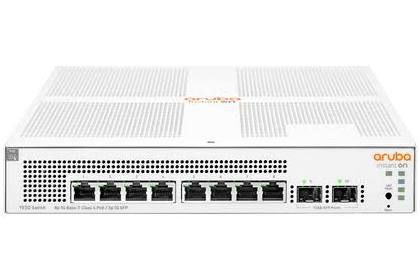
Description
Robust Security Features
Robust security features refer to a set of security measures and technologies that provide a high level of protection against potential cyber threats. These features are designed to prevent unauthorized access, protect sensitive data, and ensure the integrity and confidentiality of network communications.
In the context of networking, robust security features can include firewalls, intrusion detection and prevention systems, virtual private networks (VPNs), access control mechanisms, and encryption technologies. These features work together to provide multiple layers of security, making it harder for attackers to penetrate the network. Robust security features also help organizations comply with industry regulations and standards, such as HIPAA and PCI DSS.
Having robust security features in place is critical for organizations of all sizes, as cyber threats are constantly evolving and becoming more sophisticated. A network with robust security features can help organizations protect their critical assets and minimize the risk of data breaches, downtime, and other security-related incidents.
Network Monitoring
Network monitoring is the process of continually observing and analyzing the performance and status of a computer network. The goal of network monitoring is to ensure that the network is operating optimally, to detect and resolve any issues that may arise, and to prevent network downtime.
Network monitoring can involve monitoring various aspects of a network, such as:
- Network traffic: The amount of data being transmitted across the network.
- Network performance: The speed and efficiency of network operations.
- Network devices: The status and performance of individual network devices such as routers, switches, and servers.
- Network security: The security of the network against external threats, such as hacking attempts and malware.
- Network utilization: The amount of network resources being used and the availability of network resources.
With network monitoring, network administrators can detect and resolve issues before they become major problems, leading to improved network reliability, performance, and efficiency. The JL681A#ABA HPE Instant On 8G Class4 PoE switch supports SNMP management, which allows for efficient monitoring of the switch’s performance, status, and configuration, as part of a comprehensive network monitoring solution.
Increased Bandwidth
Increased bandwidth refers to the amount of data that can be transmitted over a network in a given amount of time. Bandwidth is a critical factor in determining network performance and can impact the speed and efficiency of network operations.
Increased bandwidth can be achieved through a number of methods, such as upgrading network devices, adding more bandwidth-intensive applications, or implementing load balancing techniques. Link aggregation is one such method used to increase bandwidth in a network.
Link aggregation is the process of combining multiple physical network connections into a single logical connection to increase the overall bandwidth. This is done by splitting network traffic across multiple connections, allowing for more data to be transmitted in a given amount of time. Link aggregation can provide increased bandwidth for network-intensive applications, such as data backup, file transfers, and video streaming, leading to improved network performance.
The JL681A#ABA HPE Instant On 8G Class4 PoE switch supports link aggregation, which provides increased bandwidth for network-intensive applications, leading to improved network performance and efficiency.
General Information about the HPE JL681A#ABA
- Manufacturer: HPE
- Part Number or SKU# JL681A#ABA
- Type: Networking
- Switch Type : 8 Port Switch
Performance
- Ports: 8 X 10/100/1000 (poe+) + 2 X Gigabit Sfp
- Throughput: 14.88 Mpps ¦ Switching Capacity: 20 Gbps ¦ Latency (100 Mbps): 5.2 ?s ¦ Latency (1 Gbps): 3 ?s
- Capacity: Routing Table Entries (static): 32
- Mac Address Table Size: 8000 Entries
- Jumbo Frame Support: 9216 Bytes
- Routing Protocol: Igmpv2, Igmp, Static Ipv4 Routing, Mstp, Rstp, Stp
- Remote Management Protocol: Snmp, Rmon, Snmp 3, Snmp 2c, Http, Https, Tftp, Scp, Dhcp, Ipv4, Ipv6
Features
- Flow Control, Dhcp Support, Arp Support, Trunking, Vlan Support, Auto-uplink (auto Mdi/mdi-x), Igmp Snooping, Port Mirroring, Manageable, Ipv6 Support, Half Duplex Mode, Full Duplex Mode, Spanning Tree Protocol (stp) Support, Rapid Spanning Tree Protocol (rstp) Support, Multiple Spanning Tree Protocol (mstp) Support, Access Control List (acl) Support, Quality Of Service (qos), Jumbo Frames Support, Trusted Platform Module (tpm), Ipv4 Support, Lacp Support, Lldp Support, Link Aggregation Control Protocol (lacp), Class Of Service (cos), Snmp Support, 1.5mb Packet Buffer, Bridge Protocol Data Unit (bpdu), Lldp-med, Energy-efficient Ethernet (eee)
- Compliant Standards: Ieee 802.3, Ieee 802.3u, Ieee 802.3z, Ieee 802.1d, Ieee 802.1q, Ieee 802.3ab, Ieee 802.1p, Ieee 802.3x, Ieee 802.3ad (lacp), Ieee 802.1w, Ieee 802.1x, Ieee 802.1s, Ieee 802.1ab (lldp), Ieee 802.3at, Ieee 802.3az, Ieee 802.2af
Processor
- 1 X Arm Cortex-a9: 800 Mhz
- Ram: 512 Mb
- Flash Memory: 256 Mb
Expansion / Connectivity
- Interfaces
- 8 X 1000base-t Rj-45
- 2 X Gigabit Lan Sfp
Power
- Power Device: Internal Power Supply
- Power Provided: 150.2 Watt
- Power Over Ethernet (poe): poe+
- Poe Budget: 124 W
- Voltage Required: Ac 120/230 V (50/60 Hz)


