


Description
More Information on the HPE JL686A#ABA Aruba
In the world of networking, the HPE JL686A#ABA Aruba 1930 stands out as a versatile and powerful managed switch. This comprehensive review will delve into the key features and functionalities of the Aruba 1930, providing an in-depth understanding of its capabilities. The HPE Aruba 1930 series is designed to meet the evolving needs of modern networks. As a managed switch, it offers advanced control and configuration options, making it suitable for a variety of applications. Let’s explore the essential aspects of this series.
Key FeaturesPorts and Power Over Ethernet (PoE) Capability
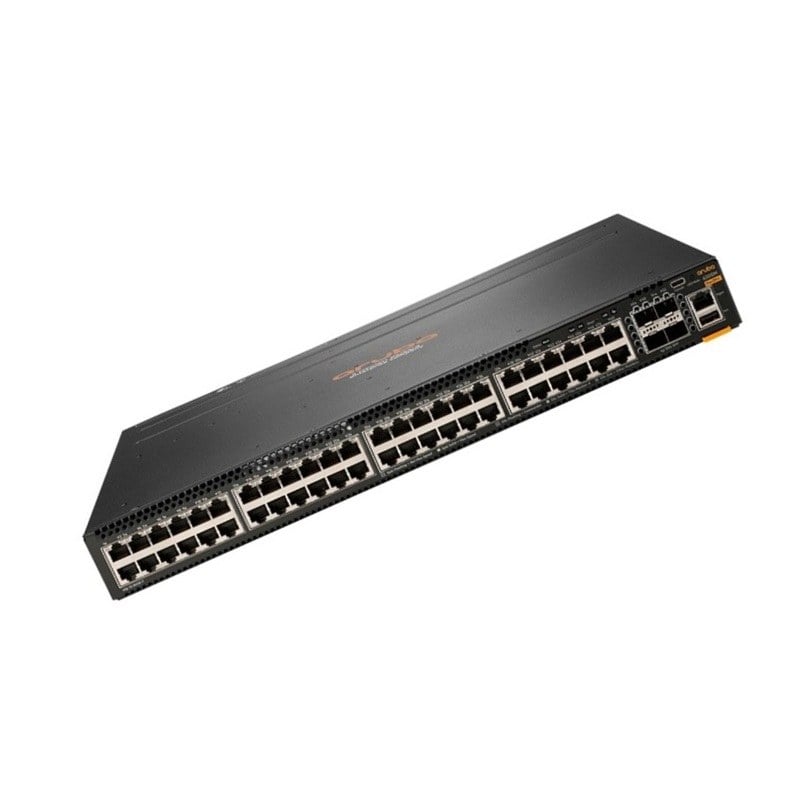
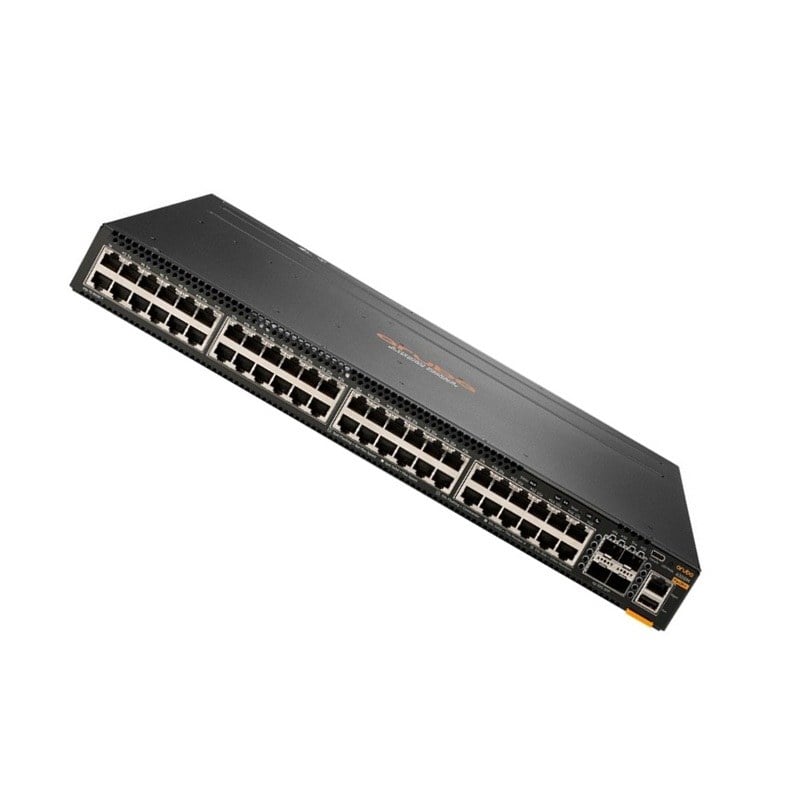
One standout feature of the JL686A#ABA model is its 48 Gigabit Ethernet ports, ensuring ample connectivity for various devices. Moreover, the inclusion of a Power Over Ethernet (PoE) networking switch with a substantial power budget of 370W enhances its utility. This is particularly beneficial for devices like IP cameras and VoIP phones, simplifying deployment and reducing cable clutter.
Gigabit to 10 Gigabit Connectivity
The Aruba 1930 doesn’t just stop at Gigabit speeds. With 4 additional 1 Gigabit to 10 Gigabit SFP (Small Form-Factor Pluggable) ports, it provides the flexibility to scale up bandwidth for specific applications or connect to high-speed networks.
Managed Capabilities
Being a managed switch, the Aruba 1930 empowers network administrators with granular control. This includes features such as VLAN (Virtual Local Area Network) support, QoS (Quality of Service) settings, and enhanced security protocols, contributing to a more secure and optimized network.
Rack Mountable Design
The switch’s rack-mountable design adds to its convenience, allowing it to be seamlessly integrated into existing network setups. This is especially crucial for organizations with limited space as it facilitates efficient use of rack space.
Use Cases and Applications
Understanding how the Aruba 1930 fits into real-world scenarios is vital. Let’s explore some common use cases where this switch excels.
Enterprise Networks
In large enterprises, the need for a robust and scalable network infrastructure is paramount. The Aruba 1930, with its multitude of ports and advanced management features, proves to be an ideal solution for creating a reliable and high-performance network backbone.
IP Surveillance Systems
The PoE capabilities of the Aruba 1930 make it a perfect choice for IP surveillance deployments. With 370W of power budget, it can efficiently power multiple IP cameras, eliminating the need for additional power sources and simplifying installation.
Voice over IP (VoIP) Deployments
For organizations implementing VoIP systems, having a switch with PoE is a game-changer. The Aruba 1930 not only provides the necessary power to VoIP phones but also ensures low-latency communication through its managed QoS settings.
Security Measures and Reliability
In the digital age, ensuring the security of a network is non-negotiable. The Aruba 1930 incorporates various security measures to safeguard against potential threats.
Access Control Lists (ACLs)
The implementation of Access Control Lists enhances the switch’s ability to control and filter traffic based on defined rules. This is a fundamental aspect of network security, preventing unauthorized access and potential attacks.
Secure Shell (SSH) Encryption
For secure remote management, the Aruba 1930 supports Secure Shell (SSH) encryption. This adds a layer of protection to the management interface, ensuring that sensitive configurations are transmitted securely over the network.
PoE Capabilities
- The HPE JL686A#ABA Aruba Switch is a managed, rack-mountable switch that offers Power over Ethernet (PoE) capabilities. PoE allows the switch to provide both power and data over a single Ethernet cable, eliminating the need for an additional power source for devices such as IP phones, wireless access points, and security cameras.
- The JL686A#ABA switch supports IEEE 802.3at PoE+ and can provide up to 30W of power per port. This allows the switch to power high-power devices such as pan-tilt-zoom cameras and wireless access points. The switch also supports PoE scheduling, which allows the administrator to set specific times for PoE to be enabled or disabled on certain ports.
VLAN and Link Aggregation Support
- The HPE JL686A#ABA is a switch model from Hewlett Packard Enterprise (HPE) that supports Virtual LANs (VLANs) and Link Aggregation.
- VLANs allow for the segmentation of a network into smaller, logical subnets, which can improve security and network management. VLANs can be used to separate different groups of users or devices, such as those in different departments or with different security requirements.
- Link aggregation, also known as NIC teaming, allows multiple network connections to be combined into a single, logical connection. This can provide increased bandwidth and redundancy, as well as the ability to balance network traffic across multiple connections. Link aggregation also allows network devices to continue to function even if one of the connections in the aggregation group fails.
- The HPE JL686A#ABA supports both VLANs and Link Aggregation, allowing for the creation of a secure and highly available network.
General Information about the HPE JL686A#ABA
- Manufacturer: HPE
- Part Number or SKU# JL686A#ABA
- Product Type: Managed Switch 48 Port
Key Feature for 48 Ports Switch
- Total Ports: 48 ports for 10/100/1000 connections
- Additional Ports: 4 ports for 1 Gigabit / 10 Gigabit SFP+ connections
- PoE Feature: Yes
- PoE Budget: 370 watts, providing power to connected devices like cameras or phones
- MDI/MDI-X Support: Yes
- IGMP Snooping: Enabled
- IPv6 Support: Yes
- Duplex Modes: Half and Full supported
- Spanning Tree Protocol (STP): Supported
- Multiple Spanning Tree Protocol (MSTP): Supported
- Access Control List (ACL): Supported
- Quality of Service (QoS): Enabled for prioritizing traffic
- Trusted Platform Module (TPM): Included for security
- LLDP Support: Yes
- Link Aggregation Control Protocol (LACP): Supported
- Energy Efficient Ethernet: Yes
- Class of Service (CoS): Included
- BPDU Filter: Yes
- PoE Class 4: Supported for efficient power delivery
Compliance Standards
- This switch adheres to various IEEE standards, including 802.3, 802.3u, 802.1d, 802.1q, 802.3ab, 802.1p, 802.3af, 802.3x, 802.3ad (LACP), 802.1w, 802.1x, 802.1s, 802.1ab (LLDP), 802.3at, 802.3az, and 802.2af.
Performance Metrics
- Switching Capacity: 176 Gbps
- Throughput: 130.95 MPPS
- Latency (1 Gbps): 2.2 ?s
- Latency (10 Gbps): 1.2 ?s
Capacity
- Link Aggregation Ports: 8
- IPv4 Routes (Static): 32
- VLANs Supported: 256
- Access Control Entries (ACEs) per ACL: 480
- Packet Buffer: Included
- Jumbo Frame Support: Yes, up to 9216 bytes
Routing and Management
- Routing Protocol: Static IP Routing
- Remote Management Protocols: SNMP 1, RMON, SNMP 3, SNMP 2c, HTTP, HTTPS, TFTP, RADIUS
Processor and Memory
- Processor: 1 x ARM Cortex-A9 at 800 MHz
- RAM: 512 MB SDRAM
- Flash Memory: 256 MB
Status Indicators
- LED indicators for Port Status, Power, and PoE
Expansion and Connectivity
- 48 x 10/100/1000 Base-T RJ-45 PoE ports: 370W power support
- 4 x 1/10Gbit LAN SFP+ ports: For high-speed connections
Power Requirements
- Power Device: Internal Power Supply
- Voltage Required: AC 120/230 V (50/60 Hz)
- Operational Power Consumption: 460 watts
In summary, the HPE JL686A#ABA Aruba 1930 is a powerful and versatile managed switch that caters to the diverse needs of modern networking environments. Its extensive port count, Power Over Ethernet capability, and advanced management features make it a reliable choice for enterprises, surveillance systems, and VoIP deployments. The inclusion of security measures and user-friendly management interfaces further solidifies its position as a comprehensive networking solution. Whether you’re looking to upgrade your existing network infrastructure or embark on a new deployment, the Aruba 1930 deserves careful consideration for its performance, flexibility, and security features.


