


Description
Product Overview for the HPE P42737-001 PCI-E Card
In the world of information technology, hardware components play a crucial role in the performance and functionality of computer systems. One such component is the HPE P42737-001 PCI-E Card NS204i-p, a specialized piece of equipment designed to enhance the capabilities of servers and other computing devices. We will delve into the intricacies of the HPE P42737-001 PCI-E Card NS204i-p, its features, and how it functions as an OS boot device without the need for a separate NVMe SSD.
Understanding the Basics
Before we dive into the specifics of the HPE P42737-001 PCI-E Card NS204i-p, let’s break down its name and understand what each part means:
- HPE: This stands for Hewlett Packard Enterprise, a renowned company in the IT industry known for its high-quality hardware and software solutions.
- P42737-001: This is the part number or model number of the PCI-E card. It helps in identifying the specific card and its features.
- PCI-E Card: This card utilizes the Peripheral Component Interconnect Express (PCI-E) interface, which is a high-speed data transfer standard commonly used for connecting various hardware components in computers.
- NS204i-p: The NS204i-p is a particular type or model of PCI-E card offered by HPE. Each model may have unique features and capabilities.
- x2 Lanes: This indicates the number of lanes that the PCI-E card can use for data transfer. In this case, the card supports two lanes.
- NVMe 3 x8: NVMe, or Non-Volatile Memory Express, is a protocol designed for fast storage devices like SSDs. The “3 x8” suggests that the card supports three NVMe devices with eight lanes each, providing high-speed data access.
- OS Boot Device: This card can be used to boot the operating system (OS) of a server or computer, meaning it can store and load the essential software required for the system to function.
- Without NVMe SSD: Interestingly, the card itself can be used as an OS boot device without needing a separate NVMe Solid-State Drive (SSD). This feature sets it apart from traditional storage solutions.
Features of the HPE P42737-001 PCI-E Card NS204i-p
Now that we’ve broken down the name and its components, let’s explore the various features of the HPE P42737-001 PCI-E Card NS204i-p:
- NVMe Support: This card is equipped with NVMe support, which is a protocol optimized for high-performance, low-latency storage devices. With three NVMe slots available, it can accommodate up to three NVMe SSDs, allowing for lightning-fast data access.
- Two Lanes: The card utilizes two PCI-E lanes for data transfer, providing ample bandwidth for data-intensive applications and tasks.
- OS Boot Capability: One of the standout features of this PCI-E card is its ability to function as an OS boot device. This means it can store the operating system and ensure that the system boots from it. Traditional boot devices often require a separate SSD, but the HPE P42737-001 can handle this crucial role on its own.
- Compatibility: HPE designs its hardware with compatibility in mind. This PCI-E card is designed to work seamlessly with HPE servers and other compatible systems, ensuring a smooth integration process.
- Hot Plug Support: The card supports hot-plug functionality, allowing for the replacement or addition of NVMe SSDs without the need to power down the server. This is a significant advantage in data center environments where uptime is critical.
- RAID Support: A redundant Array of Independent Disks (RAID) configurations can enhance data protection and performance. The HPE P42737-001 PCI-E Card NS204i-p supports RAID setups, allowing for various RAID levels to be configured.
- Management Tools: HPE provides management tools to monitor and control the PCI-E card, making it easier for administrators to maintain the system and troubleshoot any issues.
Understanding the Importance of an OS Boot Device
To appreciate the significance of the HPE P42737-001 PCI-E Card NS204i-p functioning as an OS boot device, let’s first understand what an OS boot device is and why it matters.
What is an OS Boot Device?
An OS boot device is the storage medium from which a computer or server loads its operating system. This storage medium holds the essential software and files required for the system to start and function. Without a proper OS boot device, a computer cannot initiate the operating system, rendering it non-operational.
Why is the OS Boot Device Important?
- System Initialization: The OS boot device is responsible for loading the operating system kernel into memory, which is the core of the operating system. Without a functioning OS boot device, a computer or server cannot even begin the startup process.
- Data Accessibility: The OS boot device often contains system files and configurations required for the operating system to function correctly. It also provides access to other storage devices and data repositories.
- Redundancy and Reliability: Using a dedicated OS boot device enhances system redundancy and reliability. If the primary boot device fails, administrators can switch to a backup boot device, ensuring minimal downtime.
- Performance: The speed and performance of the OS boot device significantly impact the system’s startup time. Fast boot devices lead to quicker system initialization.
- Management and Recovery: Separating the OS boot device from data storage simplifies management and recovery. It allows for focused backup and restoration processes.
Traditional OS Boot Devices vs. the HPE P42737-001 PCI-E Card
Traditionally, the OS boot device has been a separate Solid-State Drive (SSD) or Hard Disk Drive (HDD). These storage devices contain the operating system and are responsible for system initialization. However, the HPE P42737-001 PCI-E Card NS204i-p challenges this traditional approach by offering an innovative solution.
Traditional OS Boot Devices:
- Separate Hardware: Traditional boot devices are separate hardware components, requiring additional slots or connections on the motherboard.
- Additional Cost: Using a separate SSD or HDD for the OS boot device adds to the overall cost of the system.
- Limited Capacity: Traditional boot devices often have limited storage capacity since their primary role is to load the OS.
- Wiring and Cabling: Additional wiring and cabling are necessary to connect these devices, potentially cluttering the interior of the system.
- Power Consumption: Each additional hardware component consumes power, contributing to higher energy consumption.
- HPE P42737-001 PCI-E Card as an OS Boot Device:
- Integrated Solution: The HPE P42737-001 PCI-E Card integrates the OS boot device function directly into a single card, eliminating the need for a separate boot device.
- Cost-Efficiency: By eliminating the need for a separate boot device, the HPE card can lead to cost savings in terms of both hardware and setup.
- Scalability: The card supports multiple NVMe SSDs, allowing for a scalable solution with ample storage capacity.
- Cleaner Setup: The integrated design reduces clutter within the system, contributing to a cleaner and more organized hardware setup.
- Lower Power Consumption: Fewer hardware components result in lower power consumption, contributing to energy efficiency.
How the HPE P42737-001 PCI-E Card Functions as an OS Boot Device
Now, let’s explore how the HPE P42737-001 PCI-E Card NS204i-p functions as an OS boot device without the need for a separate NVMe SSD. Understanding the process is essential to grasping the card’s capabilities fully.
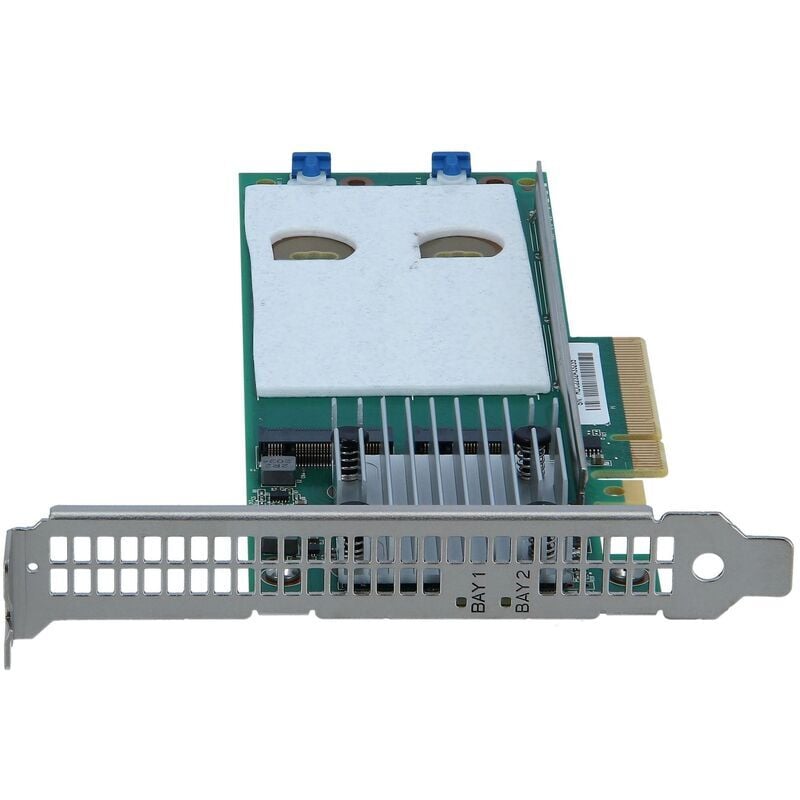
- Installation: The first step is to install the HPE P42737-001 PCI-E Card in a compatible server or computer. This involves plugging the card into a PCI-E slot on the motherboard.
- NVMe SSD Installation: The card supports up to three NVMe SSDs. These SSDs must be installed in the available slots on the card. These SSDs serve as the storage medium for the operating system.
- RAID Configuration (Optional): Administrators can configure the NVMe SSDs in a RAID setup for redundancy and performance. Various RAID levels, such as RAID 0, RAID 1, or RAID 5, can be chosen based on the specific requirements.
- OS Installation: Before using the card as an OS boot device, the operating system must be installed on the NVMe SSDs. This is typically done using an installation medium like a USB drive or DVD. During the installation process, the user selects the NVMe SSDs on the HPE P42737-001 card as the destination for the OS.
- BIOS/UEFI Configuration: To boot from the HPE P42737-001 card, the system’s BIOS or UEFI settings need to be configured. This involves setting the PCI-E card as the primary boot device. The BIOS/UEFI interface allows users to specify the boot order, and the card should be at the top of the list.
- Boot Process: When the system is powered on, it initiates the boot process. The BIOS/UEFI checks the boot order and loads the operating system from the NVMe SSDs on the HPE card. This process is seamless and efficient, providing a fast and reliable boot experience.
- Hot Swap and Maintenance: One of the advantages of the HPE P42737-001 card is its hot-swappable NVMe SSDs. If a drive fails, it can be replaced without shutting down the server. The RAID configuration, if used, can rebuild the data onto the new drive automatically.
Benefits of Using the HPE P42737-001 PCI-E Card as an OS Boot Device
Utilizing the HPE P42737-001 PCI-E Card as an OS boot device offers several notable benefits:
- Cost-Efficiency: By integrating the OS boot device into the card, you can save on the cost of purchasing a separate SSD or HDD for this purpose.
- Space Saving: The card’s design eliminates the need for extra slots and cabling, saving space within the system chassis.
- Scalability: With support for multiple NVMe SSDs, the card offers scalability, allowing you to expand your storage as needed.
- Speed and Performance: NVMe SSDs, known for their high-speed data access, ensure that the system boots quickly and efficiently.
- Redundancy: RAID configurations enhance data redundancy and reliability, reducing the risk of data loss due to drive failure.
- Hot Swap: The ability to hot-swap NVMe SSDs without powering down the server contributes to minimal downtime and easier maintenance.
- Energy Efficiency: Fewer hardware components result in lower power consumption, promoting energy efficiency.
- Simplified Management: The integrated solution simplifies system management as it consolidates the OS boot device and data storage onto one card.
Use Cases for the HPE P42737-001 PCI-E Card
The HPE P42737-001 PCI-E Card NS204i-p has a variety of use cases where it can shine:
- Data Centers: In data center environments, where uptime and reliability are paramount, the card’s hot-swap capabilities and RAID support are invaluable. It ensures that the server can continue to operate even if an NVMe SSD fails.
- Virtualization: Virtualization technologies, such as VMware or Hyper-V, often require high-speed storage for virtual machines. The HPE card can deliver the necessary performance while also serving as the OS boot device for the virtualization host.
- High-Performance Computing: Applications that demand significant computing power and fast data access can benefit from the card’s NVMe support. It can significantly accelerate data-intensive tasks.
- Cloud Servers: Cloud service providers that offer virtual server instances can use the HPE card to ensure rapid boot times for their virtual machines, enhancing the customer experience.
- Enterprise Servers: Large enterprises can deploy the HPE P42737-001 card in their servers to streamline hardware configurations, reduce costs, and improve system performance.
- Small and Medium-sized Businesses (SMBs): SMBs can benefit from the card’s cost-efficiency and scalability, allowing them to deploy high-performance servers without breaking the budget.
- High-Frequency Trading: In financial sectors, where high-frequency trading requires split-second data access, the HPE card’s NVMe SSD support ensures that the system can keep up with the rapid pace of trading.
- Scientific and Research Applications: Scientific research often involves processing vast datasets. The card’s high-speed NVMe SSDs make it an excellent choice for scientific computing applications.
- Content Delivery Networks (CDNs): CDNs that deliver web content, videos, and other digital assets rely on high-speed storage for quick content retrieval. The HPE card can accelerate content delivery.
General Information about this HPE P42737-001
- Manufacturer: HPE
- Part Number or SKU# P42737-001
- Product Type: SAS-SATA
- Product Name: Controller
Technical Specifications
- Type: OS Boot Device
- Drive Type(s) Supported: SSD (Solid State Drive)
- Form Factor: 2.5 inches
- Color: Multicolor
- Model: NS204i-p
- Storage Format: SSD
- MPN (Manufacturer Part Number): P12965-B21
- Features: PCIe3 x8, NVMe, x2 Lanes
- Interface: NVMe, PCI Express
In summary, the HPE P42737-001 PCI-E Card NS204i-p is a remarkable hardware solution that challenges traditional approaches to OS boot devices. By integrating the OS boot capability with NVMe SSD support, this card offers a cost-efficient, scalable, and high-performance solution for a variety of computing environments.
Its ability to serve as an OS boot device without the need for a separate NVMe SSD streamlines hardware configurations, saves space, and enhances system performance. Furthermore, its hot-swap capabilities and RAID support contribute to data reliability and uptime, making it an attractive option for data centers, virtualization, high-performance computing, and various other use cases.
However, potential users should be aware of compatibility considerations, SSD costs, and the need for proper configuration and maintenance. With the right planning and expertise, the HPE P42737-001 PCI-E Card NS204i-p can be a game-changer in the world of server hardware, delivering efficiency and performance in one integrated package.