

Description
Product Details of the Lsi Logic SAS SATA RAID Controller
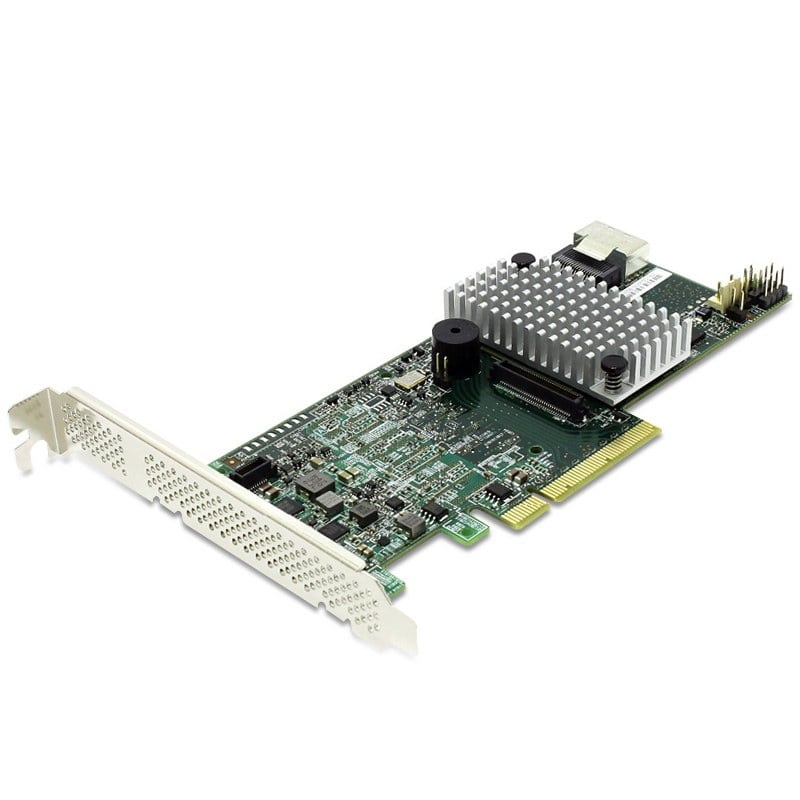
In the world of computer storage and data management, the LSI Logic SAS9670-24I SAS SATA RAID Controller, commonly known as the MegaRAID PCI-Express, stands out as a crucial component. This sophisticated hardware plays a pivotal role in ensuring data integrity, reliability, and performance in storage solutions for various computing environments. In this comprehensive guide, we will delve into the intricacies of the LSI Logic SAS9670-24I, exploring its features, functionalities, and significance in the context of SAS SATA RAID controllers.
Understanding RAID Controllers
Before delving into the specifics of the LSI Logic SAS9670-24I, it’s essential to grasp the fundamental concept of the PCI-E RAID Card. RAID, which stands for Redundant Array of Independent Disks, is a technology that combines multiple disk drives into a single logical unit to improve data performance, reliability, or a combination of both. RAID controllers are the key components responsible for managing these arrays, ensuring efficient data storage and retrieval.
The Role of SAS and SATA in Storage
Serial Attached SCSI (SAS) and Serial ATA (SATA) are two prevalent technologies in the realm of data storage. SAS is known for its high-performance capabilities and is often used in enterprise environments where speed and reliability are paramount. SATA, on the other hand, is more commonly found in consumer-grade devices due to its cost-effectiveness. The LSI Logic SAS9670-24I excels in managing both SAS and SATA drives, providing flexibility and compatibility in diverse storage setups.
MegaRAID PCI-Express
The MegaRAID PCI-Express is a series of RAID controllers developed by LSI Logic, a renowned player in the storage solutions industry. The SAS9670-24I model, in particular, is designed to operate in a PCI-Express (Peripheral Component Interconnect Express) slot on the motherboard. This interface offers high-speed data transfer, making it well-suited for handling the demands of modern storage systems.
Features of LSI Logic SAS9670-24I
- 24-Port Connectivity: One of the standout features of the SAS9670-24I is its ability to connect to 24 drives simultaneously. This extensive connectivity makes it suitable for storage solutions requiring a large number of drives, common in enterprise-level applications.
- SAS and SATA Compatibility: The controller supports both SAS and SATA drives, offering versatility in storage options. This compatibility is essential for users who may have a mix of SAS and SATA drives in their storage infrastructure.
- RAID Levels: The SAS9670-24I supports various RAID levels, including RAID 0, RAID 1, RAID 5, and RAID 6, among others. This flexibility allows users to choose the RAID configuration that best suits their performance and redundancy requirements.
- Cache Memory: Equipped with cache memory, this RAID controller enhances data transfer speeds and overall system performance. The cache acts as a temporary buffer, optimizing read and write operations.
- PCI-Express 3.0 Support: Taking advantage of PCI-Express 3.0, the SAS9670-24I ensures high-speed communication between the RAID controller and the motherboard. This results in faster data transfer rates, reducing latency and improving overall system responsiveness.
Advantages of Using LSI Logic SAS9670-24IRAID Levels and Enhanced Data Protection:
One of the standout features of the SAS9670-24I is its robust mechanism for data protection through support for various RAID levels. RAID, which stands for Redundant Array of Independent Disks, is a technology that combines multiple disk drives into a logical unit to improve performance, protect data, or both.
RAID
The SAS9670-24I allows users to configure RAID settings according to their specific needs. This includes mirroring data across multiple drives (RAID 1) for redundancy or striping it (RAID 0) for improved performance. Users have the flexibility to choose the RAID level that aligns with their storage requirements and the desired balance between performance and redundancy.
Data Mirroring
In a RAID 1 configuration, the controller mirrors data across multiple drives. This means that if one drive fails, the data remains intact on the mirrored drive, minimizing the risk of data loss. This enhanced data protection is crucial for businesses and individuals who cannot afford to lose critical information due to hardware failures.
Performance Improvement through Striping
Alternatively, RAID 0 striping enhances performance by dividing data into blocks and writing them across multiple drives. This parallel processing significantly improves data access speed. While this configuration doesn’t provide redundancy, it is an excellent choice for applications where performance is paramount, and data backup is managed through other means.
Scalability
The SAS9670-24I boasts 24-port connectivity, offering significant scalability for growing storage requirements. Scalability is a critical factor for businesses and individuals who anticipate expanding their storage capacity over time.
Easy Expansion
Users can easily expand their storage capacity by adding more drives to the controller. This expansion doesn’t compromise performance, thanks to the controller’s ability to efficiently manage a large number of connected drives. The 24-port connectivity ensures that the SAS9670-24I can accommodate the increased demand for storage without sacrificing speed or efficiency.
Addressing Growing Storage Needs
As data storage needs evolve, having a scalable solution is paramount. The SAS9670-24I’s scalability makes it well-suited for businesses experiencing continuous data growth. Whether it’s expanding a server farm or increasing the storage capacity of a personal computer, this controller provides the flexibility needed to adapt to changing requirements.
Compatibility with Industry Standards
LSI Logic places a strong emphasis on ensuring that the SAS9670-24I adheres to industry standards. This commitment guarantees compatibility with a wide range of storage devices and systems, fostering interoperability and ease of integration.
Industry Standards Assurance
Adherence to industry standards is a mark of quality and compatibility. The SAS9670-24I’s compliance with these standards ensures that users can seamlessly integrate the controller into their existing storage infrastructure without worrying about compatibility issues. This is particularly important in heterogeneous environments where diverse storage devices and systems coexist.
Interoperability Benefits
Compatibility with industry standards not only simplifies integration but also opens up opportunities for interoperability. Users can mix and match storage components from different manufacturers, creating a tailored storage solution that meets their specific needs. This flexibility is crucial in environments where diverse hardware is utilized.
Reliability and Redundancy
The SAS9670-24I goes beyond data protection and scalability by contributing to the reliability and redundancy of stored data. This is achieved through advanced RAID configurations that ensure data integrity even in the face of hardware failures.
RAID for Reliability
RAID configurations, such as RAID 5 or RAID 6, provide a level of reliability that goes beyond basic data mirroring. In RAID 5, for example, parity information is distributed across all drives, allowing the system to reconstruct data even if one drive fails. RAID 6 takes this a step further by providing dual parity, allowing for the simultaneous failure of two drives without data loss.
Seamless Transition in Drive Failure
In the unfortunate event of a drive failure, the SAS9670-24I ensures a seamless transition to redundant data. This means that even during a drive failure, the controller redirects data access to the remaining drives, minimizing the risk of data loss or system downtime. This feature is particularly crucial for mission-critical applications where continuous data availability is a priority.
Performance and Benchmarking
Benchmarking the performance of the LSI Logic SAS9670-24I is crucial for assessing its effectiveness in a specific storage environment. Various benchmarking tools can be employed to measure data transfer rates, I/O operations per second (IOPS), and latency. These benchmarks help users understand how well the controller performs under different workloads and guide optimization efforts for the overall storage system.
Use Cases and Application Scenarios
The versatility of the SAS9670-24I opens up a wide array of use cases and application scenarios. From enterprise-level data centers to small and medium-sized businesses, this RAID controller can be employed in diverse environments where reliable and high-performance storage is essential. Common applications include database servers, file servers, virtualization platforms, and multimedia content storage.
General Information about the Lsi Logic SAS9670-24I
- Manufacturer: Lsi Logic
- Model Number or SKU# Lsi Logic SAS9670-24I
- Product Type: RAID Controller
Key Technical Details of the PCI-Express Raid Controller
- Generation: 24G
- Cache Memory: 8GB
- Cache Protection: CacheVault CVPM05
- Connectors: 3×8 SFF-8654
- Devices Supported: SAS/SATA: 240, NVMe: 32
- Internal Ports: 24
- MTBF (Mean Time Between Failures): 3,000,000 hours at 40°C
- RAID Levels Supported: 0, 1, 5, 6, 10, 50, 60
In summary, the LSI Logic SAS9670-24I SAS SATA RAID Controller, part of the MegaRAID PCI-Express series, stands as a reliable and feature-rich solution for storage management. Its compatibility with both SAS and SATA drives, support for various RAID levels, and high-speed PCI-Express interface make it a versatile choice for a wide range of storage applications. Understanding its features, advantages, installation, and maintenance procedures is crucial for harnessing the full potential of this RAID controller and building robust storage solutions in today’s data-intensive computing environments.