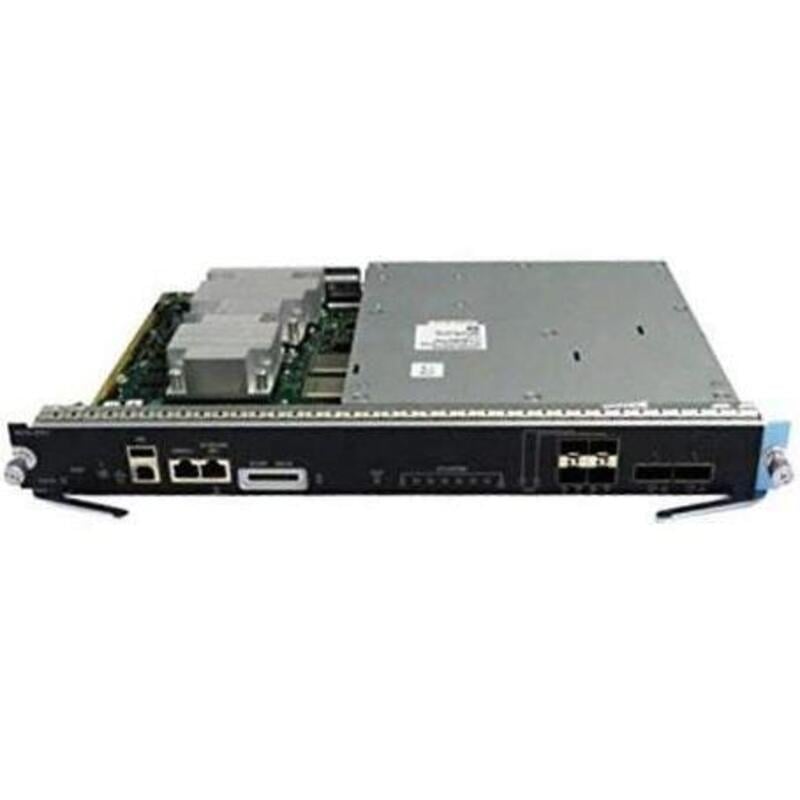


Description
Product Overview
The Cisco ASR1000-ESP5 is an Embedded Services Processor designed as part of the ASR 1000 Series. With a capacity of 5 Gigabits per second (GBPS), this processor plays a critical role in enhancing data networking capabilities, offering wired control processing for efficient network management.
Understanding Embedded Services Processors and Their Role
Embedded Services Processors (ESPs) are integral components in networking devices, enhancing their capabilities by providing specific services. In the case of the ASR1000-ESP5, this processor contributes to the ASR 1000 Series router’s ability to handle and process data efficiently.
Features of Cisco ASR1000-ESP5 Embedded Services Processor5 Gigabits Per Second (GBPS) Capacity
The ASR1000-ESP5 offers a substantial processing capacity of 5 GBPS, ensuring high-speed data handling and transfer within the network.
Data Networking
Designed for data networking, the ESP5 contributes to the router’s ability to manage and control data traffic effectively.
Wired Control Processor
As a wired control processor, it plays a crucial role in managing and directing network traffic through wired connections.
Importance of Embedded Services Processors in Networking
Embedded Services Processors contribute significantly to networking environments:
Enhanced Processing Capabilities
ESPs enhance the router’s processing capabilities, ensuring efficient handling of data traffic, routing, and network services.
Specialized Functions
ESPs often provide specialized functions, such as encryption, deep packet inspection, and other services critical for network security and optimization.
Improved Network Performance
By offloading specific functions to dedicated processors like the ASR1000-ESP5, overall network performance is improved, leading to faster and more reliable data transfer.
Benefits of Using Cisco ASR1000-ESP5 Embedded Services ProcessorHigh Processing Capacity
The ESP5’s 5 GBPS capacity ensures that the router can handle significant data loads, supporting high-speed network performance.
Scalability
The ASR 1000 Series routers, with the ASR1000-ESP5, offer scalability to accommodate growing network demands and evolving requirements.
Efficient Wired Control
As a wired control processor, the ESP5 contributes to efficient control and management of network traffic through wired connections.
Use Cases for Cisco ASR1000-ESP5 Embedded Services ProcessorEnterprise Networking
Ideal for enterprise-level networking where high-speed data transfer and efficient wired control are essential for business operations.
Service Provider Networks
Suited for service provider networks, ensuring the reliable and scalable delivery of services to end-users.
Data Centers
In data center environments, the ASR1000-ESP5 contributes to efficient data networking and control within the facility.
Load Balancing and Traffic Management
The Cisco ASR1000-ESP5 Embedded Services Processor supports advanced load balancing and traffic management features that allow you to distribute network traffic across multiple links, servers, and other resources. Here are some best practices for configuring load balancing and traffic management on the ASR1000-ESP5:
- Load Balancing Algorithms: Choose a load balancing algorithm that meets the needs of your network, such as Round Robin, Least Connections, or IP Hash.
- Health Checks: Configure health checks to monitor the status of servers and other resources in real-time, and automatically redirect traffic to healthy resources if one fails.
- Session Persistence: Configure session persistence to ensure that traffic from a single user or session is always sent to the same server, even if other servers are available.
- Quality of Service (QoS): Implement Quality of Service (QoS) to prioritize different types of traffic, such as voice and video, and ensure that critical traffic is not impacted by congestion.
- Traffic Shaping: Use traffic shaping to control the amount of traffic sent over the network and prevent oversubscription of links.
- Network Address Translation (NAT): Use Network Address Translation (NAT) to translate private IP addresses to public IP addresses and enable communication with the Internet.
- IP Multicast: Configure IP Multicast to efficiently distribute multicast traffic to multiple recipients, reducing the amount of redundant traffic sent over the network.
Managing Network Traffic
The Cisco ASR1000-ESP5 Embedded Services Processor (ESP) provides hardware acceleration and security services for the Cisco ASR 1000 Series Aggregation Services Routers. To effectively manage network traffic on the ESP5, you can use the following techniques:
- Quality of Service (QoS): You can use QoS to prioritize different types of network traffic, such as voice and video, to ensure that critical applications receive the necessary bandwidth. The ESP5 supports a range of QoS features, including Classification, Marking, Shaping, and Policing.
- Access Control Lists (ACLs): You can use ACLs to define which traffic is allowed to enter or exit the network and to control the flow of network traffic based on various criteria, such as source IP address, destination IP address, and port number.
- Load Balancing: The ESP5 supports load balancing, which allows you to distribute incoming traffic across multiple interfaces to improve network performance and availability. Load balancing can be performed based on various criteria, such as source IP address, destination IP address, and port number.
- Firewall: The ESP5 includes a firewall that protects malicious network traffic. You can use firewall rules to control the flow of network traffic based on various criteria, such as source IP address, destination IP address, and port number.
- VPN: The ESP5 supports VPN services, which allow you to securely connect remote sites or users to your network. VPN services include IPsec, SSL VPN, and Dynamic Multipoint VPN (DMVPN).
To configure these features, you will need to use the command-line interface (CLI) of the router or the Cisco Configuration Professional (CCP) graphical user interface (GUI). It is recommended to consult the Cisco ASR 1000 Series Aggregation Services Routers documentation and to seek assistance from Cisco technical support if necessary.
Improving Network Resilience
Improving the resilience of a network is crucial to ensuring the continuous availability of network services, even in the event of a failure or disruption. The Cisco ASR1000-ESP5 Embedded Services Processor supports a range of features that can help improve the resilience of your network. Here are some best practices for improving network resilience on the ASR1000-ESP5:
- Redundancy: Implement redundancy in key network components, such as switches, routers, and firewalls, to ensure that the network continues to operate even if one component fails.
- High Availability (HA) Solutions: Implement high availability (HA) solutions, such as VRRP or HSRP, to provide automatic failover to a redundant device in the event of a failure.
- Load Balancing: Implement load balancing to distribute network traffic across multiple links, servers, and other resources, reducing the impact of a failure on the network.
- Backup Links: Configure backup links, such as redundant WAN connections or leased lines, to provide alternative paths for network traffic in the event of a failure.
- Network Segmentation: Divide the network into smaller segments, each with its own security policies, to minimize the impact of a failure on the network.
- Disaster Recovery Planning: Develop and implement a disaster recovery plan to ensure that critical network services can be quickly restored in the event of a disaster.
- Monitoring and Logging: Monitor the performance and status of the network, and keep a record of security events, to quickly detect and respond to failures and other disruptions.
General Information about this Cisco ASR1000-ESP5
- Manufacturer: Cisco
- Model Number or SKU# ASR1000-ESP5
- Product Type: Control Processor
Technical Information
- Application/Usage: Data Networking
- Connectivity Technology Wired
- Remote Management Protocol SNMP, Telnet, SSH
- RAM 4 GB
Management & Protocols
- Management-
- CLI
- Telnet
- SNMP
Expansion / Connectivity
- Interfaces Management: 1 x 10Base-T/100Base-TX – RJ-45 Management: 1 x console – RJ-45 Management: 1 x auxiliary – RJ-45 4 x SFP (mini-GBIC)
- Expansion Slots 3 (total) / 3 (free) x expansion slot 1 (total) / 0 (free) x processor board
- Installed Modules Qty (Max) 1 (installed) / 4 (max)
Power
- Power Device: Internal power supply
- Power Redundancy: Yes
- Installed Qty 2 (installed) / 2 (max)
- Voltage Required AC 120/230 V (50/60 Hz)
Environmental Parameters
- Min Operating Temperature: 41 °F
- Max Operating Temperature: 104 °F
- Humidity Range Operating: 5 – 90%
Miscellaneous
- Additional Information
- Cisco IOS XE Software Release 2.1
- Compatibility
- Cisco ASR 1002 Router Chassis
In short, the Cisco ASR1000-ESP5, as part of the ASR 1000 Series Embedded Services Processors, stands as a powerful and scalable component for data networking. With a capacity of 5 GBPS, it ensures high-speed data transfer, while its role as a wired control processor contributes to efficient network management. Ideal for enterprise networking, service provider networks, and data centers, the ASR1000-ESP5 showcases Cisco’s commitment to providing robust solutions for enhanced network performance and control.