
Description
Product Overview for the EMC D4F-2SFXL2-3840 SSD
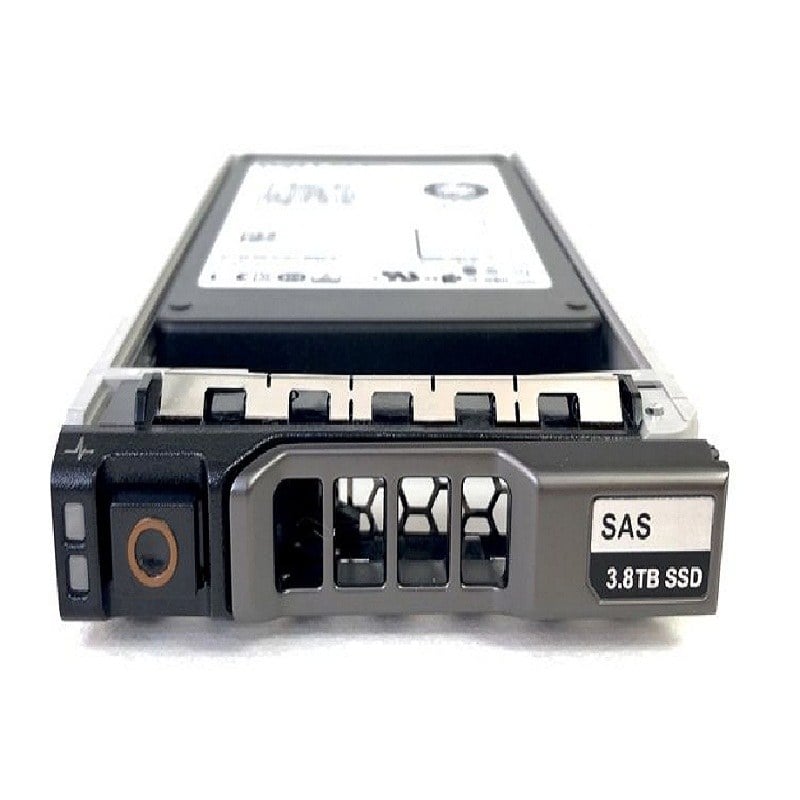
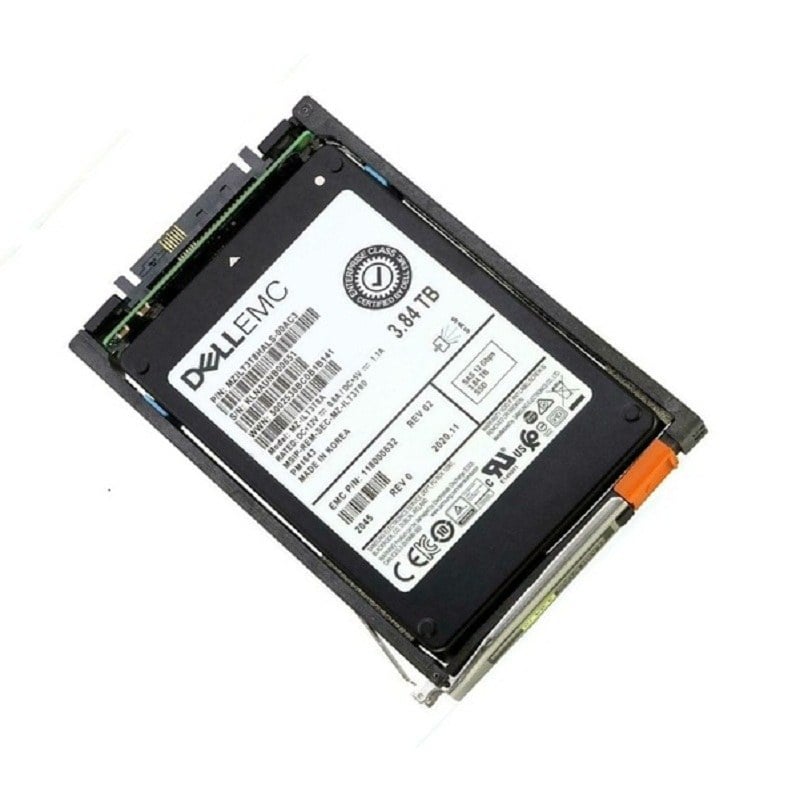
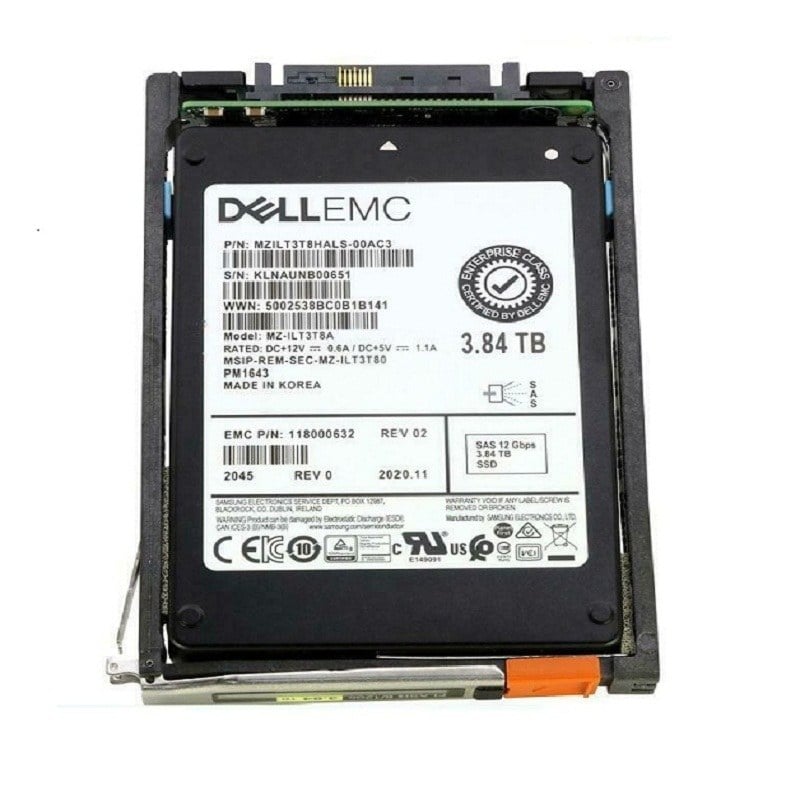
The D4F-2SFXL2-3840 520 25t Unity 2.5inch 3.84TB SAS 12GBPS Solid State Drive is a significant player. This article provides an in-depth exploration of this particular solid-state drive (SSD), breaking down its key specifications, features, and benefits. Whether you’re a tech enthusiast, a professional in the IT industry, or simply looking for a reliable SSD for your storage needs.
The D4F-2SFXL2-3840 520 25t Unity 2.5inch 3.84TB SAS 12GBPS SSD may seem like a complex jumble of letters and numbers, but each element in the model number carries important information about the drive.
- D4F: This likely represents the product family or series to which the SSD belongs. It can help you identify other drives with similar characteristics.
- 2SFXL2: This part of the model number might refer to the physical form factor and connector type of the SSD. In this case, it’s a 2.5-inch drive with a specific connector interface.
- 3840: This number signifies the capacity of the drive, which is 3.84 terabytes (TB). Capacity is a critical factor to consider when choosing an SSD, as it determines how much data you can store on the drive.
- 520: This number might indicate the read speed of the SSD. In SSD specifications, the read speed is often measured in megabytes per second (MB/s). A higher number here suggests faster data access.
- 25t: This part of the model number is less clear without additional context. It may represent specific features or variations of the SSD.
- Unity: “Unity” could be the product line or series name.
- SAS 12GBPS: This part of the model number tells us about the interface of the SSD. SAS (Serial Attached SCSI) is a high-speed interface used for connecting storage devices to servers and other computing systems. The “12GBPS” indicates the data transfer rate, which is 12 gigabits per second.
The Importance of SSDs in Modern Computing
Before diving deeper into the specifications of the D4F-2SFXL2-3840 SAS 12GBPS 520 25t Unity SSD, let’s discuss the significance of SSDs in today’s computing landscape.
- Speed and Performance: SSDs are known for their incredible speed and performance compared to traditional hard disk drives (HDDs). They can read and write data much faster, which results in quicker system boot times, application loading, and overall system responsiveness.
- Reliability: SSDs have no moving parts, which makes them more durable and less susceptible to mechanical failures. This improved reliability is crucial for both personal and enterprise-level data storage.
- Energy Efficiency: SSDs consume less power than HDDs, leading to longer battery life in laptops and reduced energy costs in data centers. This energy efficiency is a significant advantage in today’s eco-conscious world.
- Compact Form Factors: SSDs are available in various form factors, including 2.5-inch, M.2, and U.2 drives. This flexibility allows them to fit into a wide range of devices, from laptops to enterprise servers.
- Noiseless Operation: Because SSDs lack moving parts, they operate silently, contributing to a quieter computing environment.
Capacity and Storage Needs
The D4F-2SFXL2-3840 520 25t Unity SSD boasts a capacity of 3.84TB. Let’s explore why capacity is such a critical factor when choosing storage devices.
- Data Storage: The primary purpose of any storage device is to store data. Capacity determines how much data you can store on the drive. For example, a 3.84TB SSD can hold a vast amount of files, including documents, photos, videos, and applications.
- Usage Scenarios: The ideal capacity for you depends on your specific needs. For personal users, a 3.84TB SSD is more than sufficient for everyday tasks and multimedia storage. In contrast, businesses dealing with extensive data processing or large databases may require SSDs with even higher capacities.
- Future-Proofing: It’s essential to consider your future storage needs when selecting an SSD. Data accumulates over time, and what might seem like a generous capacity today could quickly fill up with increasing data requirements. Therefore, opting for a higher capacity SSD can help future-proof your storage solutions.
- Cost vs. Capacity: While higher-capacity SSDs offer more storage space, they also tend to be more expensive. It’s crucial to strike a balance between your storage requirements and budget.
Performance Metrics
Performance metrics are crucial when evaluating an SSD’s capabilities. The D4F-2SFXL2-3840 520 25t Unity SSD has several key performance metrics, including read speed, write speed, and data transfer rates.
- Read Speed: Read speed refers to how quickly the SSD can retrieve data. In this case, the “520” in the model number suggests a read speed of 520 megabytes per second (MB/s). This is a respectable speed that ensures fast data access, reducing loading times for applications and files.
- Write Speed: Write speed is equally important, as it determines how quickly you can save data to the SSD. While the write speed of the D4F-2SFXL2-3840 520 25t Unity SSD is not explicitly mentioned in the model number, it is typically correlated with the read speed. SSDs with high read speeds often have robust write speeds as well.
- Data Transfer Rate: The “SAS 12GBPS” in the model number indicates the SSD’s data transfer rate of 12 gigabits per second. This signifies a high-speed interface, making it suitable for applications and workloads that require rapid data transfer.
- Random Access Performance: SSDs excel not only in sequential data access (large, continuous chunks of data) but also in random access (small, scattered data access). They provide low latency, which is crucial for tasks like gaming, where quick data retrieval is essential.
The SAS Interface
The D4F-2SFXL2-3840 520 25t Unity SSD uses a SAS (Serial Attached SCSI) interface with a 12GBPS data transfer rate. Let’s explore why this interface choice matters.
- Enterprise-Grade Reliability: SAS interfaces are often associated with enterprise-grade storage solutions due to their robustness and reliability. They are designed for continuous operation in data centers and server environments, where reliability is paramount.
- High Data Transfer Rates: The 12GBPS data transfer rate of SAS SSDs ensures fast and efficient data transmission. This is particularly important in scenarios where large datasets need to be processed quickly, such as in enterprise servers.
General Information about this EMC D4F-2SFXL2-3840
- Manufacturer: EMC
- Part Number or SKU# D4F-2SFXL2-3840
- Device Type: Solid State Drive (SSD)
Technical Information for the 3.84TB Solid State Drive
- Capacity : 3.84TB
- Form Factor : 2.5 Inch
- Interface : SAS 12gb/s