

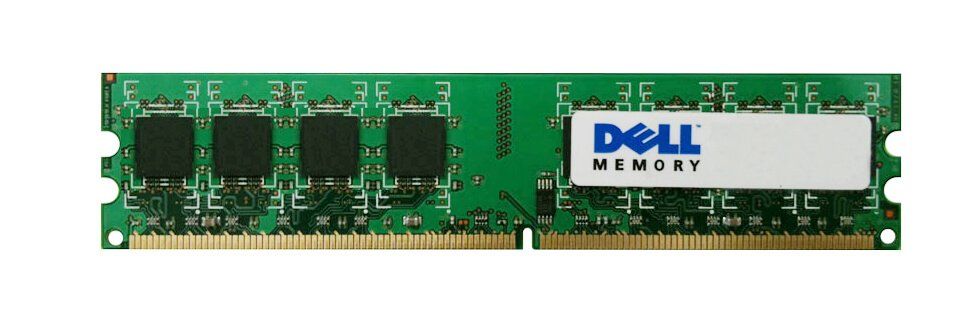

Description
How Ecc Improves System Reliability
ECC (Error Correcting Code) technology improves system reliability by detecting and correcting errors in the data stored in memory. ECC memory uses algorithms to add extra bits of information, called parity bits, to the data stored in memory. These parity bits are used to detect errors in the data and correct them when they are found.
When the memory controller reads data from the memory, it also reads the parity bits. If the parity bits indicate that an error has occurred, the memory controller can use the information in the parity bits to correct the error. This process is transparent to the system and occurs in real-time, so the corrected data is returned to the system with no delay. This ensures that the data stored in memory is always accurate, even if errors occur due to factors such as electromagnetic interference or other types of noise.
Additionally, ECC memory can detect multiple-bit errors and correct them, which is not possible with standard memory without ECC. This improves the reliability of the system by reducing the chance of data corruption and system crashes.
Moreover, ECC memory can detect and correct errors that may have gone unnoticed with non-ECC memory, thus avoiding unexpected system crashes, data loss, and other issues that can result from memory errors.
How Ecc Improves Performance
ECC (Error Correcting Code) technology can improve performance in several ways:
- Faster Data Access: ECC memory includes additional error-checking and correction capabilities, which can help to reduce the risk of data corruption and system crashes. This can lead to faster data access and processing times, as the system does not have to spend time correcting errors or dealing with corrupted data.
- Reduced System Overhead: ECC memory can help to reduce the amount of system overhead required to manage memory errors. This means that the system can devote more resources to processing data and completing tasks, which can lead to improved performance.
- Improved Memory Utilization: ECC memory can help to ensure that the memory is being used effectively and efficiently. This can lead to improved performance as the system can access and process data more quickly.
- Increased scalability: ECC memory can support larger memory configurations, meaning the system can handle more data and can be updated to handle more data in the future. This can lead to improved performance as the system can access and process more data.
It’s worth noting that the performance improvement will depend on the specific system, workloads, and the amount of memory errors that the system is experiencing. In general, ECC memory is designed to improve performance in systems that require a high level of data integrity and reliability.
How 288-Pin Design Improves Memory Performance
The 288-pin design is a feature of the DDR4 memory standard, which is the latest and fastest type of memory currently available. The DDR4 standard is an improvement over the previous DDR3 standard in several ways, one of which is the number of pins on the memory module. The DDR3 standard uses a 240-pin design, while the DDR4 standard uses a 288-pin design.
The increase in the number of pins on the memory module allows for higher data transfer rates. This is because the extra pins enable the memory controller to access more memory channels, which in turn allows for more memory to be installed on the module. Each channel can transfer data independently, so having more channels allows for more data to be transferred at the same time. This results in increased memory bandwidth, which is the amount of data that can be transferred to and from memory in a given time period.
In addition to the increased number of memory channels, the 288-pin design also allows for faster memory speeds. The DDR4 standard supports memory speeds of up to 3200 MHz, which is significantly faster than the maximum speed of 1600 MHz for DDR3. The increased speed is achieved by using a more efficient signaling method, which allows for faster data transfer between the memory controller and the memory module.
General InformationManufacturer: Dell
Manufacturer Part Number: 370-ADLI
Type: Memory (RAM)
Sub-Type: PC4-19200
Product Name: 32GB DDR4 SDRAM Memory ModuleTechnical InformationStorage Capacity: 32GB
Memory Technology: DDR4 SDRAM
Number Of Modules: 1 X 32GB
Bus Speed: 2400mhz DDR4-2400/Pc4-19200
Data Integrity Check: Ecc
Signal Processing: Registered
Cas Latency Timings: Cl17
Rank Features: 2rx4
Voltage: 1.2vCompatibility
This Product Is Compatible With The Following Systems:
Precision Workstation T7910 Xl
Precision Workstation R7910 Xl
Precision Workstation T5810 Xl
Precision Workstation T7810 Xl
Precision Workstation R7910
Precision Workstation T5810
Precision Workstation T7810
Precision Workstation T7910
Poweredge R630
Poweredge R730
Poweredge T630
Poweredge R730xd
Poweredge R430
Poweredge R530
Poweredge T430
Poweredge M630
Poweredge C4130
Poweredge Fc630
Poweredge Fc430
Poweredge Fc830
Poweredge M830
Poweredge R930
Poweredge C6320
Poweredge R830
Poweredge C6320p
Powervault Nx3330
Powervault Nx3230


