


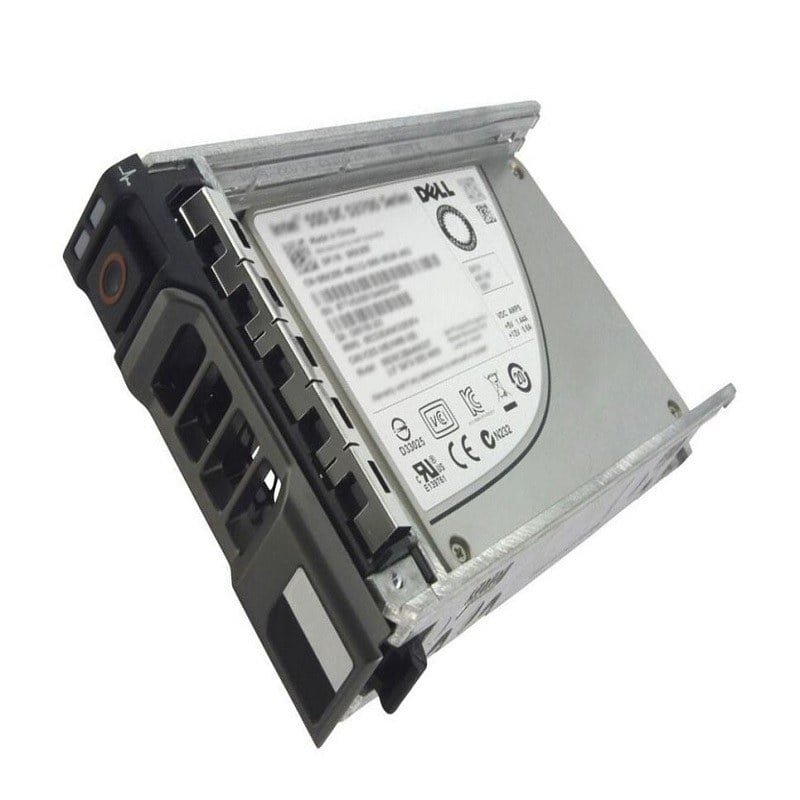


Description
Product Overview of the Dell 400-AFLH
In the ever-evolving landscape of data storage, Solid State Drives (SSDs) have emerged as powerful and efficient solutions, offering faster data access and improved reliability compared to traditional Hard Disk Drives (HDDs). Among the multitude of SSD options available in the market, the Dell 400-AFLH 400GB Multi-Level Cell (MLC) SAS 12GBPS SSD stands out as a high-performance, write-intensive storage solution. In this detailed exploration, we will delve into the key features, technology, use cases, and benefits of this SSD, shedding light on why it’s a compelling choice for those seeking robust storage solutions.
Understanding Dell 400-AFLH 400GB SAS 12GBPS SSDOverview of Dell 400-AFLH
The Dell 400-AFLH is a Solid State Drive designed to deliver exceptional performance and reliability in enterprise environments. Its notable features include a 400GB storage capacity, Multi-Level Cell (MLC) technology, and a Serial Attached SCSI (SAS) interface with a 12Gbps data transfer rate. The ‘Write Intensive’ designation further emphasizes its suitability for workloads demanding high write performance.
Multi-Level Cell (MLC) Technology
Multi-Level Cell (MLC) is a type of NAND flash memory technology used in SSDs. Unlike Single-Level Cell (SLC) which stores one bit per cell, MLC can store multiple bits (typically two) in each memory cell. This allows MLC SSDs to offer higher storage capacities at a lower cost per gigabyte, making them an attractive option for various applications.
Advantages of MLC
- Cost-Effectiveness: MLC SSDs provide a balance between performance and cost, making them suitable for a wide range of applications where affordability is a key consideration.
- Higher Density: The ability to store multiple bits in a single cell allows MLC SSDs to achieve higher storage densities, accommodating larger amounts of data in a compact form factor.
- Decent Performance: While not as fast as Single-Level Cell (SLC) SSDs, MLC SSDs still offer significantly faster read and write speeds compared to traditional Hard Disk Drives (HDDs).
SAS Interface with 12Gbps SpeedSAS Overview
The SAS (Serial Attached SCSI) interface is a high-speed, point-to-point serial protocol used for connecting storage devices, such as hard drives and SSDs, to servers and storage controllers. In the case of the Dell 400-AFLH, the SAS interface operates at a speed of 12Gbps, providing a substantial boost in data transfer rates.
Benefits of SAS
- Increased Bandwidth: The 12Gbps speed of the SAS interface translates to higher data transfer rates, reducing latency and improving overall system responsiveness.
- Reliability and Redundancy: SAS supports features like error detection and correction, ensuring data integrity. Additionally, it offers redundancy options, such as dual-port connectivity, enhancing the reliability of storage systems.
- Scalability: SAS is a scalable solution, allowing users to connect multiple drives in a daisy-chain configuration. This makes it suitable for enterprise environments with evolving storage needs.
Write Intensive Designation
Write Intensive SSDs are specifically engineered to handle workloads with a high volume of write operations. These workloads are common in enterprise environments where constant data updates, database transactions, and content generation occur. The ‘Write Intensive’ designation indicates that the Dell 400-AFLH is optimized to endure a higher number of program/erase cycles, ensuring durability in scenarios with intense write activity.
Use Cases for Write Intensive SSD
- Database Servers: In environments with heavy database usage, where frequent write operations are performed, write-intensive SSDs excel in delivering consistent performance.
- Content Creation Workstations: Workstations involved in video editing, 3D rendering, and other content creation tasks often generate substantial write traffic. Write-intensive SSDs can maintain performance under such demanding workloads.
- Financial Applications: Systems handling financial transactions and data analytics often require SSDs that can sustain high write loads. The write-intensive design is well-suited for these applications.
Performance and ReliabilityEndurance and Longevity
One of the crucial aspects of any SSD is its endurance, measured in terms of the number of program/erase (P/E) cycles it can withstand. The Dell 400-AFLH, being a write-intensive SSD, is designed to endure a higher number of P/E cycles compared to standard SSDs, ensuring longevity and reliability in environments with intensive write workloads.
Random and Sequential Performance
The SSD’s performance is not only determined by its endurance but also by its ability to handle both random and sequential read/write operations. The Dell 400-AFLH demonstrates impressive random and sequential performance, making it suitable for a variety of applications that demand quick and efficient data access.
General Information of the Dell 400-AFLH SAS-12GBPS
- Manufacturer: Dell
- Manufacturer Part Number: 5P57P
- Dell Part Number: 400-AFLH
- Product Line: Solid-State Drive
- Sub-Type: SAS-12GBPS
Technical Information 400GB SSD
- Device Type: Solid State Drive – Hot-Swap
- Capacity: 400 GB
- NAND Flash Memory Type: Multi-Level Cell (MLC)
- Form Factor: 2.5-inch
- Interface Type: SAS 12GB/S
Performance
- Drive Transfer Rate: 1.2 GBPS (External)
Expansion & Connectivity
- Interfaces: 1 x SAS 12 GB/S
- Compatible Bays: 1 x Hot-Swap – 2.5-inch
Compatibility
- PowerEdge R630
- PowerEdge R730
- PowerEdge R730XD
- PowerEdge T630
Finally, the Dell 400-AFLH 400GB Multi-Level Cell (MLC) SAS 12Gbps SSD with Write Intensive specifications brings together advanced technology, high performance, and durability. Its Multi-Level Cell design provides a balance between cost and capacity, while the SAS interface with a 12Gbps speed ensures fast and reliable data transfer. The ‘Write Intensive’ designation makes it a standout choice for enterprise applications involving heavy write workloads, offering endurance and longevity. Whether deployed in database servers, content creation workstations, or financial applications, this SSD proves to be a robust solution that aligns with the evolving storage needs of modern enterprises.


