



Description
Technical specifications
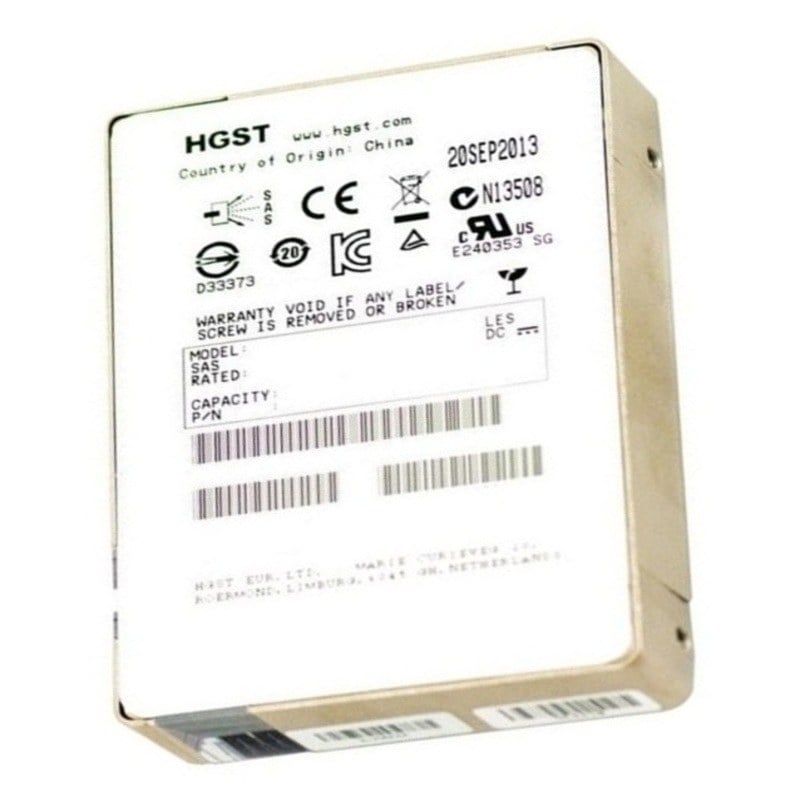
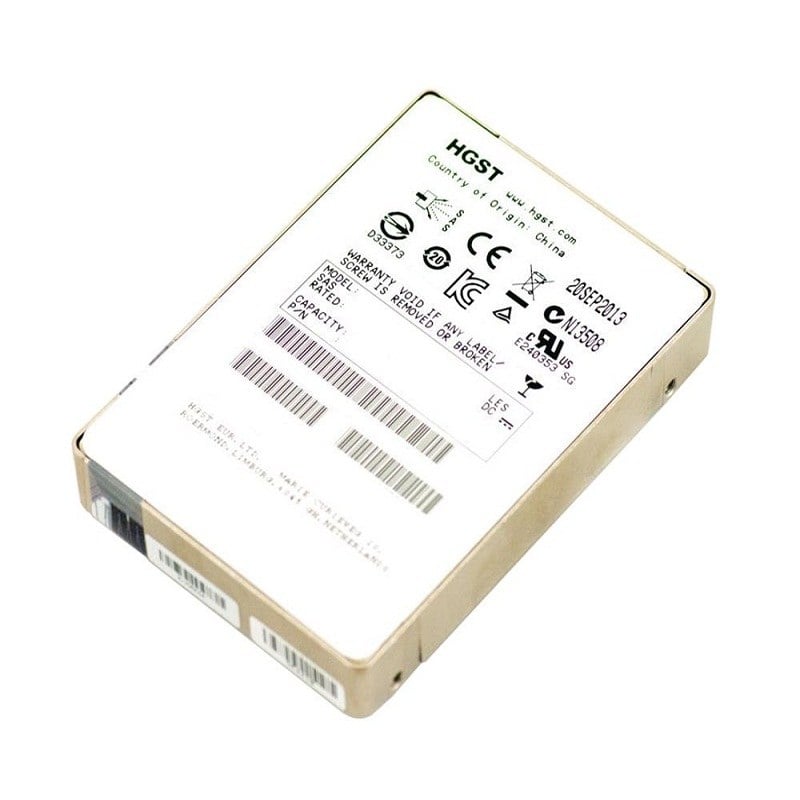
A 1.6TB SAS (Serial Attached SCSI) 12Gbps SSD (Solid State Drive) is a type of storage device that uses NAND flash memory to store data. The SAS interface is a point-to-point serial protocol that provides faster data transfer rates and improved scalability compared to the older parallel SCSI interface. The 12Gbps refers to the data transfer rate of the SAS interface, which is roughly twice as fast as the previous generation SAS interface (6Gbps).
Some of the key technical specifications of a 1.6TB SAS-12Gbps SSD include:
- Capacity: 1.6 terabytes (TB)
- Interface: SAS-12Gbps
- Form factor: 2.5 inches
- Sequential read speed: Up to 1200 MB/s
- Sequential write speed: Up to 1100 MB/s
- Random read speed: Up to 250,000 IOPS (Input/Output Operations Per Second)
- Random write speed: Up to 250,000 IOPS
- Endurance: Typically measured in terabytes written (TBW), which indicates the amount of data that can be written to the drive before failure
- Latency: Typically measured in microseconds (?s)
Note that these specifications are typical and may vary depending on the specific brand and model of the SSD.
Performance and benchmark
The performance of a 1.6TB SAS-12Gbps SSD can be measured by various benchmarking tests, which are used to evaluate the drive’s speed and performance. Some of the most commonly used benchmarks for SSDs include:
- Sequential read and write speed: This measures the drive’s ability to read and write large, sequential blocks of data. For a 1.6TB SAS-12Gbps SSD, you can expect sequential read speeds of up to 1200 MB/s and sequential write speeds of up to 1100 MB/s.
- Random read and write speed: This measures the drive’s ability to read and write small, random blocks of data. Random read and write speeds are typically measured in IOPS (Input/Output Operations Per Second). For a 1.6TB SAS-12Gbps SSD, you can expect random read speeds of up to 250,000 IOPS and random write speeds of up to 250,000 IOPS.
- Latency: This measures the amount of time it takes for the drive to respond to a read or write request. Latency is typically measured in microseconds (?s).
- Endurance: This is a measure of how long the drive will last before it fails, typically measured in terabytes written (TBW).
- Power Consumption: This is the amount of power the drive consumes, measured in watts (W).
It’s important to note that benchmark results may vary depending on the specific brand and model of the SSD, as well as the benchmarking software and test conditions used. Also, the real performance of the drive will depend on the type of workload and usage, which can have a big impact on the performance of the drive.
In general, a 1.6TB SAS-12Gbps SSD offers high performance and can be a good choice for demanding workloads such as large databases, video editing, and high-performance computing.
Additional features
In addition to capacity and performance, there are several other features that can vary depending on the specific brand and model of a 1.6TB SAS-12Gbps SSD. Some of the additional features that are commonly found in SAS-12Gbps SSDs include:
- Data Encryption: Many SSDs include built-in hardware encryption to protect data stored on the drive. This can include support for various encryption algorithms such as AES-256.
- RAID support: SAS-12Gbps SSDs can often be used in a RAID configuration to improve performance and data redundancy.
- Power Loss Protection: Some SSDs include a feature that protects data stored in the drive’s cache in the event of a power loss.
- Wear leveling: This is a technique used by the SSD’s controller to ensure that all the cells in the NAND flash memory are used evenly over time, which can help to extend the life of the drive.
- Error Correction Code (ECC): This is a technique used to detect and correct errors that may occur in the data stored on the drive.
- SMART: This is a diagnostic tool that can be used to monitor the health and status of the drive.
- Temperature sensors: Some SSDs include temperature sensors that allow the drive to monitor and adjust its performance based on the temperature of the environment in which it is operating.
- TRIM support: This is a feature that allows the operating system to inform the SSD which blocks of data are no longer in use, which can improve performance and extend the life of the drive.
It’s important to note that not all SSDs include all of these features, and that the specific features available will depend on the brand and model of the SSD.
General Information
- Manufacturer : Hitachi
- MPN : 0B32201
- Type : Internal-Solid State Drive (SSD)
- SSD Type : SAS-12GBPS
- SKU: 0B32201
Technical Information
- Interface SAS 12GB/S
- Capacity 1600GB / 1.6TB
- Form Factor 2.5-inches
- Flash Memory Technology Multi Level Cell (MLC)
- Sector Size Support 512, 520, 528, 4K
Performance
- Read throughput (Max MB/s, Sequential 64K) 1100
- Write throughput (Max MB/s, Sequential 64K) 765
- Read IOPS (Max IOPS, Random 4K) 130,000
- Write IOPS (Max IOPS, Random 4k) 100,000
Reliability
- Error Rate (Non-Recoverable, Bits Read) 1 in 10^17
- MTBF(M Hours) 2.5
- Annual Failure rate(AFR) 0.35%
- Availability (Hrs/Day x Days/wk) 24×7
- Endurance (max PB, random write) 3.6
Power
- Requirement +5 VDC (+/-5%)+12 VDC (+/-10%)
- Operating (W, Typical) 9.0 And 11.0 Idle, (W) 2.2
- Environmental (Operating)
- Case Temperature 0° to 70° C
- Shock (Half-Sine Wave) 1000G(0.5ms) 500G(2ms)
- Vibration, Random (G RMS) 2.16, All Axis (5 to 700 Hz)
Dimensions & Weight
- Height: 0.63 inch
- Width: 3.10 inch
- Depth: 5.45 inch
- Weight: 1.50 lbs


