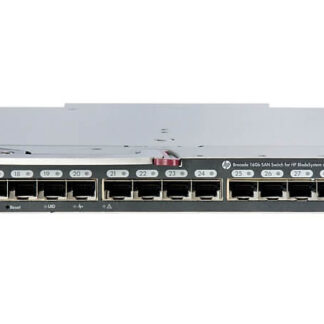


Description
Efficient Power Management
Efficient power management refers to the practices and technologies used to minimize energy consumption and reduce the environmental impact of electrical devices. In the context of the HPE Brocade 16GB/16 SAN Switch for BladeSystem C-Class, efficient power management is achieved through several key features:
- Power-saving modes: The switch includes power-saving modes that can be activated to reduce energy consumption when the network is not in use.
- Energy-efficient components: The switch is equipped with energy-efficient components, such as low-power processors and power supplies, to minimize energy consumption.
- Power monitoring and reporting: The switch provides detailed power monitoring and reporting features to help organizations understand their energy consumption and identify areas where they can improve their power management practices.
- Power-saving network design: The switch is designed to be used in an energy-efficient network architecture, helping organizations to minimize energy consumption and reduce their environmental impact.
- Energy Star certification: The switch is Energy Star certified, which means it meets strict energy-efficiency criteria set by the US Environmental Protection Agency (EPA).
By implementing these and other features, the HPE Brocade 16GB/16 SAN Switch for BladeSystem C-Class provides organizations with a highly efficient power management solution, helping them to minimize energy consumption, reduce their environmental impact, and lower their energy costs.
High Availability and Reliability
High availability and reliability are important considerations for organizations that rely on their network infrastructure for critical business operations. They refer to the ability of the network to operate without interruption and to recover quickly from failures.
High availability in a network is achieved by using redundant components and by implementing failover mechanisms. This means that if a component of the network fails, another component can automatically take over, minimizing downtime and ensuring that the network continues to operate.
Reliability refers to the ability of the network to perform its intended function without failure. This includes ensuring that data is transmitted and stored accurately and that network components operate as expected.
In the context of the HPE Brocade 16GB/16 SAN Switch for BladeSystem C-Class, high availability and reliability are achieved through several key features:
- Redundant components: The switch includes redundant power supplies, fans, and other components to ensure that the network continues to operate even if a component fails.
- Failover mechanisms: The switch is equipped with failover mechanisms that automatically switch to a redundant component if a failure occurs, minimizing downtime and ensuring that the network continues to operate.
- Load balancing: The switch is capable of load balancing traffic across multiple paths to ensure that the network operates efficiently and that data is transmitted accurately.
- Monitoring and logging: The switch provides detailed monitoring and logging features to track network performance, identify potential problems, and respond quickly to issues.
- Comprehensive support and maintenance: The switch is supported by HPE, providing organizations with access to expert support and maintenance services to help ensure that the network operates reliably and efficiently.
By implementing these and other features, the HPE Brocade 16GB/16 SAN Switch for BladeSystem C-Class provides organizations with a highly available and reliable network infrastructure that is essential for the successful operation of their businesses.
Network Data Protection
Network data protection refers to the measures taken to secure the confidentiality, integrity, and availability of data transmitted or stored on a network. The goal of network data protection is to prevent unauthorized access, theft, or damage to data and to ensure that the data can be recovered in the event of a disaster.
There are several key components of network data protection, including:
- Access control: This involves limiting who can access the network and what actions they can perform. User authentication and authorization mechanisms are used to enforce access controls.
- Encryption: Encryption is used to protect the confidentiality of data transmitted over the network by encoding it in a way that only authorized users can decode it.
- Firewalls: Firewalls are used to prevent unauthorized access to the network and prevent malicious traffic from entering the network.
- Data backup and recovery: Regular backups of data are made and stored off-site to ensure that data can be recovered in the event of a disaster.
- Monitoring and logging: Detailed monitoring and logging of network activity helps identify security threats and respond quickly to security incidents.
- Compliance with industry standards: Adherence to industry-standard security protocols, such as PCI-DSS, HIPAA, and others, helps ensure that the network meets established security requirements.
The HPE Brocade 16GB/16 SAN Switch for BladeSystem C-Class implements these and other security measures to provide robust network data protection. These measures help ensure the confidentiality, integrity, and availability of data transmitted and stored on the network, which is critical for the successful operation of businesses that rely on this data.
Main Specification about this HPE C8S45A
- Manufacturer: HPE
- Part Number or SKU # C8S45A
- Device Type: Managed Switch
Technical Information
- Number of Ports: 16
- Port Details: 16 X 16gb Fibre Channel
- Enclosure Type : Plug-in Module
- Switch Type: Fibre Channel
- Switching capacity 16 Gbit/s