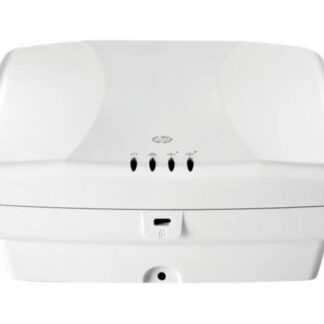


Description
Wireless Network Management
Wireless network management refers to the process of overseeing and controlling the operation of a wireless network, including the wireless access points (APs) that make up the network. The main goals of wireless network management are to ensure the network is operating efficiently, providing reliable connectivity, and maintaining security.
The management of a wireless network typically involves the following tasks:
- Monitoring: Monitoring the performance of the network, including the APs, to identify any issues or areas for improvement. This might involve monitoring metrics such as network utilization, number of connected clients, and signal strength.
- Configuration Management: Configuring and managing the settings of the APs, such as network name (SSID), security settings, and channel selection, to ensure optimal performance and security.
- Troubleshooting: Identifying and resolving issues that arise with the network, such as connectivity problems or security breaches.
- Firmware Management: Keeping the firmware of the APs up-to-date to ensure that they are secure and working optimally.
- Performance Optimization: Tuning the network to improve performance, such as adjusting the channel selection, power levels, or antenna configuration, to reduce interference and improve signal strength.
- Security Management: Implementing and enforcing security measures, such as encryption, access control, and firewalls, to protect the network from unauthorized access and attacks.
Wireless network management is critical for ensuring the reliable operation of a wireless network and providing a high-quality user experience. The complexity and scope of wireless network management can vary greatly depending on the size and complexity of the network, but it is an essential aspect of any wireless network deployment.
Traffic Prioritization
Traffic prioritization is a process of prioritizing network traffic based on specific criteria, such as the type of application, the source and destination of the traffic, or the importance of the data being transmitted. The goal of traffic prioritization is to ensure that critical network traffic is given priority over less important traffic, in order to improve network performance and reliability.
Traffic prioritization is typically implemented using Quality of Service (QoS) techniques, such as packet prioritization, traffic shaping, or rate limiting. These techniques allow network administrators to control the amount of bandwidth that is dedicated to each type of traffic, and to prioritize critical traffic over less important traffic.
For example, traffic prioritization might be used to prioritize voice and video traffic over data traffic, to ensure that these critical applications receive the necessary bandwidth and resources to operate effectively. This can help to ensure that voice and video calls are of high quality, even during periods of high network utilization.
Traffic prioritization can also be used to prioritize specific types of data, such as critical financial transactions, to ensure that they are processed quickly and securely.
Security and Encryption
Security and encryption are critical components of wireless network design, as they help to protect against unauthorized access, eavesdropping, and other security threats.
Security in wireless networks is typically achieved through the use of encryption technologies, such as Wi-Fi Protected Access (WPA) or Wi-Fi Protected Access II (WPA2), which provide secure communication between the wireless access point (AP) and the wireless clients. These technologies use encryption algorithms, such as Advanced Encryption Standard (AES), to secure the wireless traffic, making it difficult for unauthorized users to intercept or modify the data being transmitted.
In addition to encryption, other security measures can be employed to enhance the security of a wireless network, such as:
- Access control: Limiting access to the network based on the identity of the user, the type of device being used, or the time of day.
- Firewalls: Implementing firewalls to protect the network from unauthorized access and potential security threats, such as malware and viruses.
- Virtual Private Network (VPN) support: Allowing secure communication between remote users and the network through the use of a VPN.
- Intrusion detection and prevention: Monitoring network activity and identifying potential security threats, such as unauthorized access attempts, and taking action to prevent or mitigate these threats.
It is important to note that security and encryption are not a one-time setup and forget process, but require ongoing maintenance and monitoring to ensure that the network remains secure. Network administrators should regularly review and update their security policies and procedures, as well as monitor the network for any potential security threats.
By implementing strong security measures, such as encryption and access control, wireless networks can be made secure, reliable, and effective for both personal and enterprise use
Specifications:
- Manufacturer: HP
- Part Number: J9591A
- Type: Networking
- Sub-Type: Switch 24 Ports
- Device Type : Wireless Access Point
Networking
- Form Factor : External
- Connectivity Technology : Wireless
- Data Transfer Rate : 450 MBPS
- Data Link Protocol : IEEE 802.11b, IEEE 802.11a, IEEE 802.11g, IEEE 802.11n
- Remote Management Protocol : Snmp 3, Snmp 2c
- Communication Mode : Half-Duplex, Full-Duplex
- Frequency Band : 2.4 GHz, 5 GHz
- Capacity : Voip Calls : 12
- Features : Dhcp Support, Manageable, Intrusion Detection System (Ids), Mimo Technology, Wi-Fi Multimedia (Wmm) Support, Spectralink Voice Priority (Svp) Support, Quality Of Service (Qos), Multiple Ssid Support, Management Information Base (Mib), Ceiling Mountable, Wi-Fi Clear Connect, Virtual Service Community (Vsc)
- Encryption Algorithm : Md5, Aes, Ssl, Tls, Peap, Ttls, Tkip, Wpa, Wpa2, Wep
- Authentication Method : Radius, Pap, Chap, Radio Service Set Id (Ssid), Ms-Chap V.2, Extensible Authentication Protocol (Eap), Eap-Fast
- Compliant Standards : IEEE 802.3, IEEE 802.3u, IEEE 802.11, IEEE 802.1q, IEEE 802.3ab, IEEE 802.1p, IEEE 802.11b, IEEE 802.11a, IEEE 802.3af, IEEE 802.11g, IEEE 802.1x, IEEE 802.11i, Wi-Fi Certified, IEEE 802.11e, IEEE 802.11n
Expansion / Connectivity
- Interfaces : 1 X 1000base-T – Rj-45
- 6 X Antenna
- 1 X Management – Rj-45 J-45