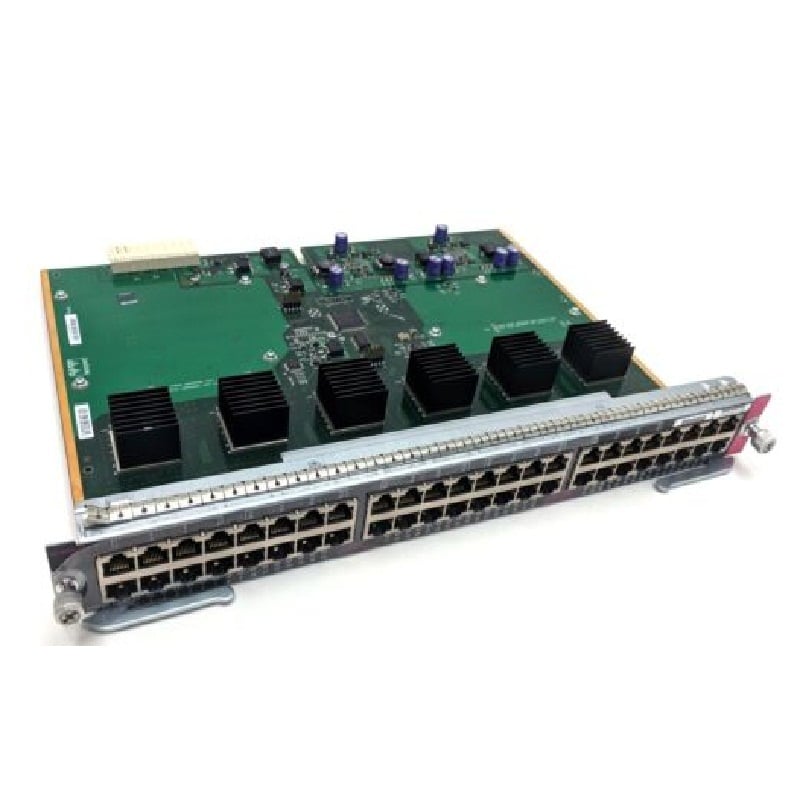


Description
Future-Proofing your Switch Infrastructure
Future-proofing your switch infrastructure refers to the ability of a network switch to meet the current and future needs of the network. This is important because networks are constantly evolving, and it is important to ensure that the switch is able to keep up with these changes and continue to support the network as it grows and evolves.
One way to future-proof your switch infrastructure is to choose a switch that supports a high number of ports. This allows for more devices to be connected to the switch, which can be useful as the number of devices on the network increases. Additionally, choosing a switch with a high number of ports can also help to ensure that there is enough bandwidth to support the growing number of devices.
Another way to future-proof your switch infrastructure is to choose a switch that supports multiple types of connectivity such as SFP, SFP+ and QSFP+ ports. These ports can be used to connect to other high-speed devices such as routers and servers, and can support data transfer rates of 10Gbps, 40Gbps and 100Gbps respectively.
Another important aspect of future-proofing your switch infrastructure is to choose a switch that supports the latest networking protocols and standards. This ensures that the switch will be able to support new technologies and applications as they become available.
Lastly, investing in a switch that has a high-performance CPU, large memory and high-speed forwarding engines can ensure that the switch can handle growing traffic loads, and can handle advanced features such as VPN, VLANs, QoS, L3 routing and more.
Integrated Management and Automation
Integrated management and automation refers to the ability of a network switch to be managed and controlled through a centralized management system, as well as the ability for the switch to automate certain tasks and functions.
Centralized management systems, such as network management software, allow network administrators to monitor and manage multiple switches from a single location. This can help to simplify network management and reduce the time and resources required to manage the network. Additionally, centralized management systems can provide advanced features such as reporting, monitoring and troubleshooting, which can help to improve the overall efficiency of the network.
Automation refers to the ability of the switch to automatically perform certain tasks and functions without the need for manual intervention. For example, a switch may be able to automatically discover and configure itself when it is connected to the network. This can help to reduce the time and resources required to set up and deploy new switches. Additionally, automation can be used to automate tasks such as monitoring and troubleshooting, which can help to improve the overall efficiency of the network.
Integrated management and automation can also include features such as automatic backups, automatic firmware upgrades, and automatic failover and redundancy. This ensures that the switch is always running at its best performance, and can help to minimize downtime in case of any failure.
Maximizing Bandwidth Utilization
Maximizing bandwidth utilization refers to the ability to effectively utilize the available bandwidth in a network. This is important because bandwidth is a limited resource, and it is important to ensure that it is being used efficiently in order to support the growing demands of a network.
One way to maximize bandwidth utilization is to use Quality of Service (QoS) to prioritize different types of traffic. QoS allows network administrators to assign different priorities to different types of traffic, such as voice, video, and data traffic. This ensures that critical traffic such as voice and video traffic are given priority over less critical traffic such as email and web browsing.
Another way to maximize bandwidth utilization is to use load balancing techniques. Load balancing allows network administrators to distribute traffic across multiple network links, which can help to ensure that no single link is overburdened. This can help to improve the overall performance of the network, and can help to ensure that bandwidth is being used efficiently.
Additionally, using network monitoring tools, to monitor the network traffic, detect bottlenecks, and troubleshoot performance issues can help to identify any bandwidth issues and take appropriate action to resolve them.
Another way to maximize bandwidth utilization is to use link aggregation, which allows multiple physical links to be bundled together to form a single logical link. This can help to increase the available bandwidth, and can help to ensure that bandwidth is being used efficiently.
Specifications:
- Manufacturer: HP
- Manufacturer Part Number: JE072-61101
- Type: Networking
- Device Type : Switch – 48 Ports
- Ports : 48 X 10/100/1000 + 4 X Sfp
- Mac Address Table Size : 8k Entries
- Routing Protocol : Static Ipv4 Routing
- Remote Management Protocol : Snmp 1, Rmon, Telnet, Snmp 3, Snmp 2c, Http, Https, Cli
- Encryption Algorithm : Ssl
- Authentication Method : Radius, Secure Shell V.2 (Ssh2)
- Features : Flow Control, Layer 3 Switching, Layer 2 Switching, Auto-Sensing Per Device, Dhcp Support, Arp Support, Vlan Support, Auto-Uplink (Auto Mdi/Mdi-X), Rapid Spanning Tree Protocol (Rstp) Support, Virtual Cable Test (Vct) Technology, Multiple Spanning Tree Protocol (Mstp) Support, Dhcp Snooping, Access Control List (Acl) Support, Quality Of Service (Qos), Jumbo Frames Support, Stp Root Guard
- Compliant Standards : Ieee 802.3, Ieee 802.3u, Ieee 802.1d, Ieee 802.1q, Ieee 802.3ab, Ieee 802.1p, Ieee 802.3x, Ieee 802.3ad (Lacp), Ieee 802.1w, Ieee 802.1x, Ieee 802.1s
- Ram : 128 Mb – Sdram
- Flash Memory : 128 Mb Flash
Expansion / Connectivity :
- Interfaces : 48 X 10base-T/100base-Tx/1000base-T – Rj-45 1 X Console – Rj-45 – Management 4 X Sfp (Mini-Gbic)
Power :
- Power Device : Power Supply
- Voltage Required : Ac 120/230 V ( 50/60 Hz )