Description
Advanced Traffic Management and Quality of Service (QoS)
Advanced Traffic Management and Quality of Service (QoS) is a critical aspect of network operations, and the HPE Aruba 7210 Wireless LAN Controller is designed to deliver robust traffic management and QoS capabilities to help ensure that your network functions optimally. The advanced traffic management features of this controller help you prioritize network traffic and allocate network resources efficiently to meet the specific needs of different applications and users.
With the ability to control the flow of data based on various parameters such as the source, destination, type of traffic, and priority, you can ensure that your most critical applications receive the bandwidth they need to function optimally, while less critical applications are given a lower priority. This helps to prevent network congestion and improves network responsiveness, even during periods of high network usage.
In addition, the HPE Aruba 7210 Wireless LAN Controller supports Quality of Service (QoS) policies that allow you to control the priority of different types of network traffic, such as voice, video, and data. This helps you ensure that real-time applications, such as voice and video, receive the necessary bandwidth and low latency to provide an excellent user experience.
Centralized User Management and Authentication
Centralized user management and authentication refer to the ability of a network administrator to manage and control access to the network and its resources for all users from a single, central location. This includes creating and maintaining user accounts, setting permissions and access levels, and enforcing password policies.
By centralizing user management and authentication, organizations can ensure that only authorized users have access to sensitive data and systems, and that their access can be easily monitored and audited. Additionally, this can streamline the process of managing user accounts and reduces the likelihood of errors or misconfigurations.
Centralized user management and authentication are often integrated with network security solutions, such as firewalls, intrusion detection systems, and VPNs, to provide a comprehensive approach to network security. By combining these features, organizations can further enhance the security of their networks and reduce the risk of data breaches and other security incidents.
Seamless Integration with Other Network Components
Seamless integration with other network components is an important aspect of wireless LAN controllers like the HPE Aruba 7210. This feature allows the controller to work in tandem with other network devices such as switches, routers, and access points to create a cohesive network infrastructure. This integration helps to streamline network administration by eliminating the need for separate management interfaces for different components. The seamless integration also helps to simplify network configuration and ensures that all network devices are working together to provide the highest level of performance and availability. Additionally, this integration can help to reduce the amount of time and effort required to deploy and manage the network, making it more cost-effective and efficient.
General Information about the HPE JW744A
- Manufacturer: HPE
- Part Number or SKU# JW744A
- Product Type : Networking
- Product Name : 2 Ports Switch
- Height (rack Units) : 1u
- Built-in Devices : Status Lcd
Networking
- Form Factor : Rack-mountable
- Connectivity Technology : Wired
- Data Link Protocol : Ethernet, Fast Ethernet, Gigabit Ethernet, 10 Gigabit Ethernet
Performance
- Firewall Throughput: 20 Gbps
- Capacity : Maximum Number Of Access Points: 512 ¦ Concurrent Devices: 16384 ¦ Virtual Interfaces (vlans): 4094 ¦ Concurrent Gre Tunnels: 8192 ¦ Maximum Raps: 512 ¦ Concurrent Tunneled Ports: 8192 ¦ Concurrent Ipsec Sessions: 16384 ¦ Concurrent Ssl Fallback Sessions: 8192 ¦ Active Firewall Sessions: 2015291
- status Indicators : Link Activity, Status
- Features : Layer 3 Switching, Vpn Support, Ipv6 Support, Ipv4 Support, Adaptive Radio Management (arm), Apprf Technology
Expansion / Connectivity
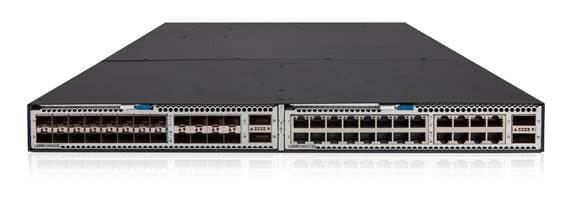
- Interfaces : 4 X 10gbase-x – Sfp+ ¦ 2 X 1000base-x ¦ 1 X Usb 2.0 ¦ 1 X Console – Rj-45 ¦ 1 X Mini-usb
Power
- Power Device : Internal Power Supply – Hot-plug
- Installed Qty : 1
- Max Supported Qty : 2
- Power Redundancy : Yes
- Voltage Required : Ac 120/230 V (50/60 Hz)
- Power Consumption Operational : 110 Watt