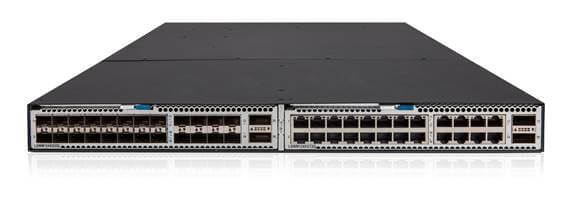


Description
Reliable High-Availability Architecture
Reliable High-Availability Architecture refers to a network design that provides continuous operation and uptime, even in the face of hardware or software failures. This can be achieved through a combination of redundant components and load balancing techniques, ensuring that if one component fails, another can take over without any disruption to the network. In the case of the HPE Aruba 7210 Wireless LAN Controller, the high-availability architecture is designed to ensure that the wireless network stays up and running even in the event of a failure. This provides peace of mind for organizations, knowing that their wireless network will remain operational and accessible to users at all times. This can be especially critical in industries such as healthcare, finance, and retail, where network downtime can result in lost revenue and negative impacts on business operations.
Optimized User Experience and Network Performance
The HPE Aruba 7210 Wireless LAN Controller is designed to provide a seamless and optimized user experience by offering advanced features that help to improve network performance. This includes features such as advanced traffic management and Quality of Service (QoS) to ensure that critical applications receive the necessary bandwidth and prioritize their traffic, thereby improving overall network performance. Additionally, the centralized user management and authentication features allow network administrators to easily manage and monitor the network, ensuring that users have secure and reliable access to the network at all times. These features, when combined with the high-availability architecture, provide a robust and reliable network solution that is designed to deliver an optimized user experience.
Wireless Network Optimization and Troubleshooting
Wireless network optimization and troubleshooting is an important aspect of managing and maintaining a robust and efficient wireless network. It involves the constant monitoring of the network performance, identifying potential issues and implementing solutions to optimize the network’s performance.
The goal of wireless network optimization is to ensure that the network is functioning at its optimal level, providing a fast and reliable connection for users. This can involve adjusting the network’s settings and configurations, fine-tuning the radio frequency (RF) parameters and optimizing the overall network design.
Troubleshooting is another important aspect of wireless network optimization. It involves identifying and resolving any issues that may arise within the network, such as connectivity problems, signal quality issues, and performance degradation. This may involve performing diagnostics and analyzing network logs to determine the root cause of the issue, and then implementing the appropriate solution to resolve it.
In order to maintain a highly available and secure wireless network, it’s important to continuously monitor and optimize the network performance. This can be achieved by using tools such as network analyzers, performance management software, and network monitoring tools. These tools can provide real-time visibility into the network performance, allowing administrators to quickly identify and resolve any issues before they escalate into major problems.
General Information about the HPE JW744A
- Manufacturer: HPE
- Part Number or SKU# JW744A
- Product Type : Networking
- Product Name : 2 Ports Switch
- Height (rack Units) : 1u
- Built-in Devices : Status Lcd
Networking
- Form Factor : Rack-mountable
- Connectivity Technology : Wired
- Data Link Protocol : Ethernet, Fast Ethernet, Gigabit Ethernet, 10 Gigabit Ethernet
Performance
- Firewall Throughput: 20 Gbps
- Capacity : Maximum Number Of Access Points: 512 ¦ Concurrent Devices: 16384 ¦ Virtual Interfaces (vlans): 4094 ¦ Concurrent Gre Tunnels: 8192 ¦ Maximum Raps: 512 ¦ Concurrent Tunneled Ports: 8192 ¦ Concurrent Ipsec Sessions: 16384 ¦ Concurrent Ssl Fallback Sessions: 8192 ¦ Active Firewall Sessions: 2015291
- status Indicators : Link Activity, Status
- Features : Layer 3 Switching, Vpn Support, Ipv6 Support, Ipv4 Support, Adaptive Radio Management (arm), Apprf Technology
Expansion / Connectivity
- Interfaces : 4 X 10gbase-x – Sfp+ ¦ 2 X 1000base-x ¦ 1 X Usb 2.0 ¦ 1 X Console – Rj-45 ¦ 1 X Mini-usb
Power
- Power Device : Internal Power Supply – Hot-plug
- Installed Qty : 1
- Max Supported Qty : 2
- Power Redundancy : Yes
- Voltage Required : Ac 120/230 V (50/60 Hz)
- Power Consumption Operational : 110 Watt