
Description
Benefits of Improved Reliability in Servers
Improved reliability in servers can provide several benefits for organizations, including:
- Reduced Downtime: Servers that are more reliable are less likely to experience unexpected downtime, which can cause disruptions to business operations and negatively impact productivity.
- Improved Performance: Reliable servers are better able to handle high workloads and provide faster response times, which can improve overall system performance.
- Cost Savings: Downtime can be costly, as it can result in lost revenue and require additional resources to troubleshoot and resolve issues. Improved reliability can help to reduce these costs.
- Better Security: Reliable servers are less likely to experience data corruption or data loss, which can help to improve security and protect sensitive information.
- Better Compliance: Organizations that are required to comply with regulations, such as HIPAA, may be required to implement measures to ensure the reliability of their servers. Improved reliability can help organizations to meet these requirements.
- Better Reputation: A reliable server can help to build trust with customers and partners, which can improve an organization’s reputation and help to attract new customers.
- Increased Efficiency: A reliable server can help to reduce the need for maintenance and downtime, which can increase the efficiency of business operations.
Reduced Downtime and Increased Availability
Reduced downtime and increased availability are key benefits of improved reliability in servers. Downtime refers to the period of time when a server is unavailable or not functioning properly, and it can have a significant impact on an organization’s operations and productivity. Increased availability, on the other hand, refers to the amount of time that a server is up and running and able to handle user requests.
When servers have improved reliability, they are less likely to experience unexpected downtime. This can help to minimize disruptions to business operations and allow organizations to continue working without interruption. Additionally, improved reliability can help to reduce the frequency and duration of planned maintenance, which can further increase the amount of time that servers are available to users.
Increased availability can also improve performance by reducing the amount of time that users have to wait for their requests to be processed. This can be particularly important for organizations that rely on servers to support mission-critical applications, such as financial transactions or medical records
Enhanced Performance with ECC Memory
Using ECC (Error-Correcting Code) memory in servers can enhance performance in several ways:
- Reduced Data Corruption: ECC memory is designed to detect and correct errors in data, which can help to reduce the likelihood of data corruption. This can prevent errors from occurring during critical operations, which can improve performance and reduce the need for data recovery.
- Increased Memory Bandwidth: ECC memory generally has a higher memory bandwidth than non-ECC memory, which can improve performance by allowing the server to access data more quickly.
- Improved System Stability: ECC memory can help to improve system stability by detecting and correcting errors before they cause the system to crash or become unstable. This can help to reduce the need for reboots and downtime, which can improve performance.
- Better Memory Utilization: ECC memory can also improve performance by allowing for better utilization of memory resources. When errors occur in non-ECC memory, the system must spend additional resources to detect and correct them. With ECC memory, errors are corrected automatically, which allows the system to use its resources more efficiently.
- Better Error Detection: ECC memory can detect more errors than non-ECC memory, which can help to ensure data integrity and improve performance.
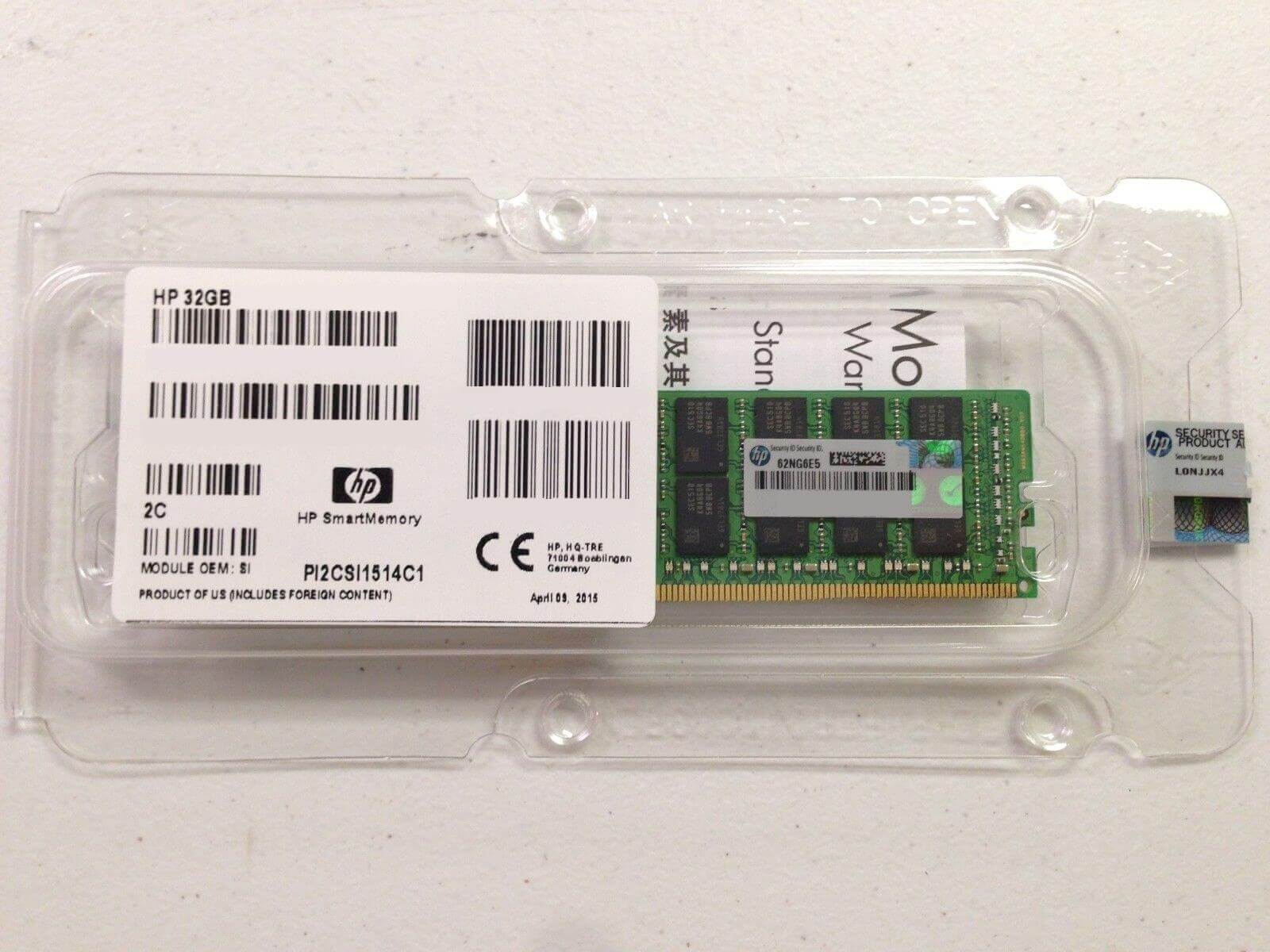
General InformationManufacturer: HPE
Manufacturer Part Number: 803668-B21
Type: Memory (RAM)
Sub-Type: PC4-17000
Product Name: 32GB DDR4 SDRAM Memory ModuleTechnical InformationStorage Capacity: 32GB
Memory Technology: DDR4 SDRAM
Number Of Modules: 1 X 32GB
Bus Speed: 2133mhz DDR4-2133/PC4-17000
Data Integrity Check: Ecc
Signal Processing: Registered , Dual Rank
Cas Latency Timings: Cl15
Component Rank: 4rx4
Cas Latency: Cl15
Pin Count: 288-Pin
Voltage: 1.20vCompatibilityHPE Apollo 4200 Gen9, 4510 Gen9, 4520 Gen9, 4530, Proliant Bl460c Gen9, Bl660c Gen9, Dl160 Gen9, Dl180 Gen9, Dl360 Gen9, Dl380 Gen9, Dl388 Gen9, Dl560 Gen9, Dl580, Dl580 Gen9, Dl80 Gen9, Ml350 Gen9, Ws460c Gen9, Xl170r Gen9, Xl190r Gen9, Xl230a Gen9, Xl250a Gen9