

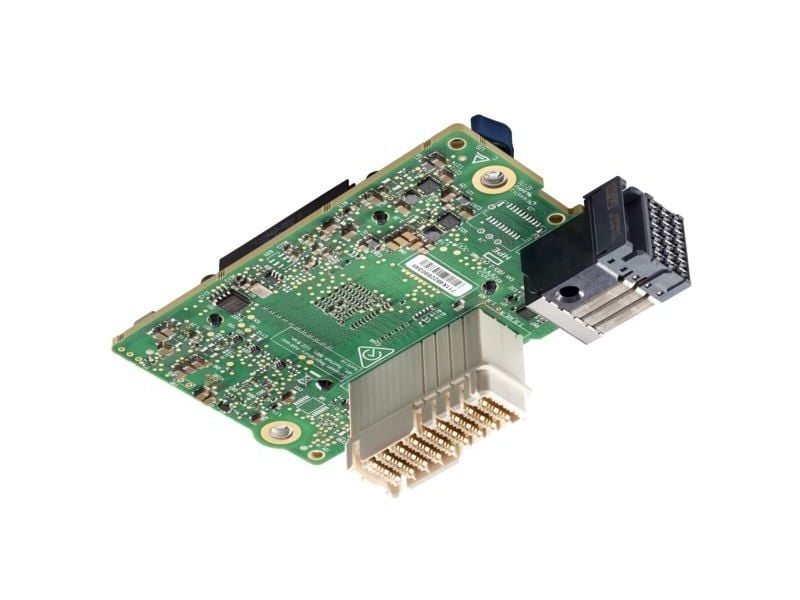

Description
Ethernet Adapter Performance
Ethernet adapter performance refers to the ability of an Ethernet adapter to transmit and receive data over a network with high speed and low latency. Some key factors that affect Ethernet adapter performance include:
- Bandwidth: Ethernet adapters are designed to support different bandwidths, such as 1Gbps, 10Gbps, 25Gbps, or 100Gbps. The higher the bandwidth, the more data the adapter can transmit and receive in a given amount of time.
- Latency: Latency refers to the time delay between when a network packet is sent and when it is received by the recipient. Lower latency is desirable because it reduces the delay in data transmission and improves the responsiveness of network applications.
- Packet Loss: Packet loss occurs when network packets are dropped during transmission, resulting in data loss and degraded network performance. Ethernet adapters with low packet loss rates are preferable for high-performance networks.
- Interrupt Coalescing: Interrupt coalescing is a feature that allows the adapter to delay interrupt signals until it has received multiple packets, reducing the overhead of handling interrupts and improving network performance.
- DMA Offloading: DMA offloading is a technique that offloads network packet processing from the CPU to the adapter, reducing CPU utilization and improving network performance.
- Network Protocol Support: Ethernet adapters can support different network protocols, such as TCP/IP or UDP. The adapter’s ability to efficiently handle network protocols can affect its performance.
- Advanced Features: Ethernet adapters may support advanced features, such as Jumbo Frames, Quality of Service (QoS), or network virtualization, which can improve network performance in specific scenarios.
Ethernet adapter performance can be measured using benchmarks such as throughput, latency, and packet loss rates. The performance of Ethernet adapters can also be affected by factors such as the quality of cabling, network topology, and other components in the network infrastructure.
Cloud Integration
Cloud integration refers to the ability of an Ethernet adapter to work seamlessly with cloud services, such as public, private, or hybrid clouds. The integration can be achieved through several ways, including:
- Virtualization: Ethernet adapters can support virtualization technologies, such as VMware or Hyper-V, allowing virtual machines (VMs) to run on cloud servers with high network performance and low latency.
- Cloud Service Providers: Ethernet adapters can support specific cloud service providers, such as Amazon Web Services (AWS), Microsoft Azure, or Google Cloud Platform, enabling easy integration with their cloud services and optimized network performance.
- APIs: Ethernet adapters can support APIs, allowing applications running in the cloud to interact with the adapter directly and control its network settings, such as bandwidth allocation or quality of service (QoS) policies.
- Network Virtualization: Ethernet adapters can support network virtualization technologies, such as VXLAN or NVGRE, allowing the creation of virtual networks in the cloud and providing secure isolation and segmentation of network traffic.
- Containerization: Ethernet adapters can support containerization technologies, such as Docker or Kubernetes, allowing network connectivity between containers running on cloud servers with high performance and low latency.
Cloud integration is important for organizations that rely on cloud services to run their applications and store their data. With the increasing adoption of cloud computing, Ethernet adapters that support cloud integration can improve network performance, reduce network latency, and provide better security and network isolation. It can also help organizations to easily migrate their applications to the cloud and integrate them with their on-premise network infrastructure.
Network Features Capabilities
Network features and capabilities refer to the functions and technologies that a network device, such as an Ethernet adapter, can perform to enhance network performance, security, and functionality. Some common network features and capabilities include:
- Quality of Service (QoS): QoS allows the adapter to prioritize certain types of network traffic over others, ensuring that critical traffic, such as voice and video, are delivered with low latency and high quality.
- Jumbo Frames: Jumbo Frames are larger than standard Ethernet frames and can improve network throughput by reducing the overhead of processing and transmitting many smaller frames.
- Link Aggregation Control Protocol (LACP): LACP enables the adapter to combine multiple network connections into a single logical connection, increasing bandwidth and providing redundancy.
- VLAN Tagging: VLAN tagging allows the adapter to distinguish and separate network traffic into different virtual LANs (VLANs) for better network segmentation and security.
- Network Virtualization: Network virtualization allows the adapter to create multiple virtual network interfaces on a single physical interface, enabling the isolation and separation of network traffic between different applications or customers.
- Remote Direct Memory Access (RDMA): RDMA enables the adapter to transfer data directly between application memory without involving the host CPU, reducing latency and improving network performance.
- Network Encryption: Network encryption provides secure communication over the network by encrypting data in transit, protecting against eavesdropping and unauthorized access.
These are just a few examples of the network features and capabilities that an Ethernet adapter can offer. Depending on the adapter’s specific model and capabilities, it may support additional features, such as network tunneling, load balancing, or advanced network monitoring and analysis tools.
General Information about the HPE 868777-001
- Manufacturer: HPE
- Part Number or SKU# 868777-001
- Product Type: Ethernet Adapter
Key Features
- Up To 200 Gb/s Of Bi-directional Ethernet Bandwidth
- Jumbo Frames• Type C Mezzanine Form Factor
- Hpe Sea Of Sensors 3d
- Tunnel Offload(geneve, Nvgre And Vxlan)
- Rdma Over Converged Ethernet (roce V2, Roce V1)
- Single-root Input/output Virtualization (sr-iov)
- Ipv6 Acceleration
- Preboot Execution Environment (pxe)
- Wake On Lan (wol)
- Checksum & Segmentation Offload
- Vmware Netqueue And Microsoft Virtual Machine Queue (vmq)
- Data Plane Development Kit (dpdk)
- Precision Time Protocol (ptp)
- Receive-side Scaling (rss)
- Receive-side Coalescing (rsc)
- Active Health Systems Support
Security Features
- Security Features:-Digitally Signed Firmware Components, Secure Firmware Loading, Secure Firmware Update,uefi Secure Boot
- Authentication Of Digitally Signed Firmware Through Chain Of Trust On The Nic
- Additional Security Features Include: Device-level Firewall, Audit Logs And Sanitization.


