


Description
Network Connectivity Protocols
Network connectivity protocols are sets of rules and standards that govern the communication between different network devices and systems. These protocols define how data is transmitted, received, and processed over a network and ensure that devices can communicate with each other regardless of their hardware or software configurations.
There are many different network connectivity protocols that are used in modern networks, including:
- Ethernet – A widely used LAN protocol that defines how data is transmitted over copper or fiber-optic cables.
- Wi-Fi – A wireless networking protocol that uses radio waves to transmit data between devices.
- TCP/IP – A suite of protocols that defines how data is transmitted over the internet and other IP-based networks.
- DNS – A protocol that translates human-readable domain names into IP addresses.
- DHCP – A protocol that assigns IP addresses to devices on a network.
- FTP – A protocol that is used for file transfer over a network.
- SMTP – A protocol that is used for sending email messages over a network.
- HTTP/HTTPS – Protocols used for web browsing and exchanging data between web servers and clients.
- SNMP – A protocol used for managing and monitoring network devices and systems.
- SSH – A protocol used for secure remote access to network devices and systems.
These are just a few examples of the many different network connectivity protocols that are used in modern networks. Each protocol serves a specific purpose and is designed to ensure that data is transmitted securely, reliably, and efficiently over a network. Understanding these protocols is essential for network administrators and IT professionals who are responsible for designing, configuring, and maintaining modern network infrastructures.
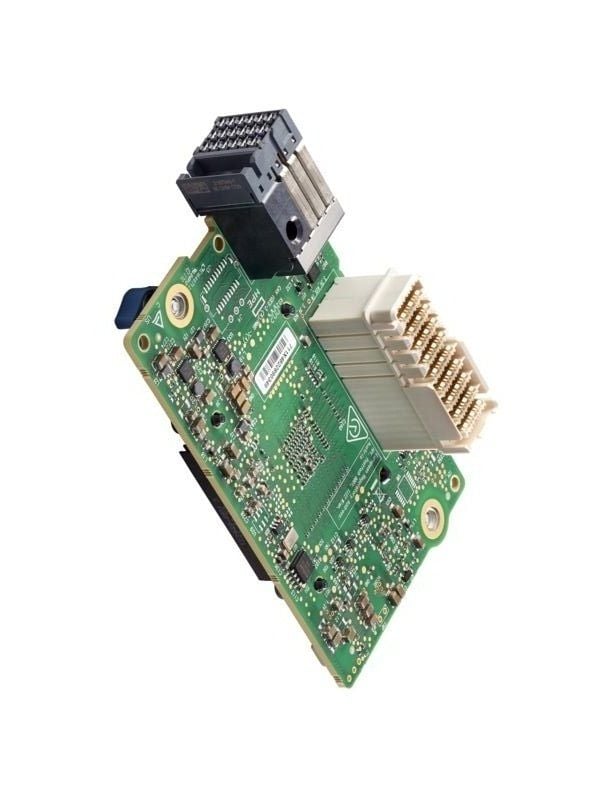
6410c Ethernet Adapter
The HPE Dual Port Synergy 6410c 25/50GB Ethernet Adapter is a high-performance network interface card designed for use in HPE Synergy blade servers and composable infrastructure solutions. The adapter provides two 25/50 Gigabit Ethernet ports that can be configured to support either 25Gbps or 50Gbps data transfer rates, depending on the requirements of the network environment.
The 6410c Ethernet Adapter is built using advanced networking technologies such as RDMA over Converged Ethernet (RoCE) and protocol offloading, which allow it to deliver low-latency, high-bandwidth connectivity with minimal CPU overhead. This makes it an ideal choice for demanding workloads such as high-performance computing, virtualization, and cloud computing.
The adapter is also designed for easy integration with other HPE Synergy components, such as the HPE Synergy 620 Gen9 Fabric Interconnect, which enables seamless connectivity to external networks and storage systems. The 6410c Ethernet Adapter is also fully compatible with a wide range of industry-standard network protocols and can be easily configured to support advanced security features such as encryption and authentication.
Security Features Options
Security features are a critical component of any network infrastructure. They are designed to protect network resources from unauthorized access, data theft, and other forms of cyber-attacks. Some common security features options include:
- Access Control – This feature enables administrators to control who can access network resources and what level of access they have. Access control can be implemented using various methods such as password authentication, biometric authentication, and multi-factor authentication.
- Firewall – A firewall is a security system that monitors and filters network traffic based on predefined rules. It helps to prevent unauthorized access to a network by blocking incoming traffic that does not meet specific criteria.
- Encryption – Encryption is a method of encoding data to prevent unauthorized access. It involves converting plain text data into a code that can only be decoded with a specific key.
- Intrusion Detection and Prevention – This feature is used to detect and prevent unauthorized access to a network. It involves monitoring network traffic for signs of malicious activity and taking appropriate action to prevent attacks.
- Virtual Private Networks (VPNs) – VPNs are used to create secure connections between remote users and corporate networks. They encrypt traffic and ensure that data transmitted between the two endpoints is secure.
- Anti-virus and Anti-malware – These are software programs designed to detect, prevent, and remove malicious software such as viruses and malware from a network.
- Network Segmentation – Network segmentation is the process of dividing a network into smaller segments or subnetworks to reduce the impact of an attack. It involves creating logical boundaries between different parts of the network and controlling access between them.
- Security Information and Event Management (SIEM) – SIEM is a security system that collects and analyzes security-related data from various sources to identify security threats and provide real-time alerts.
These are just a few examples of the many different security features that are available for modern network infrastructures. The choice of security features will depend on the specific needs and requirements of an organization and should be based on a thorough risk assessment and analysis.
General Information
- Manufacturer : HPE
- Part Number or SKU# 871365-001
- Type : Networking
- Device Type : Ethernet Adapter
Standard Features
- Up To 200 Gb/s Of Bi-directional Ethernet Bandwidth
- Jumbo Frames• Type C Mezzanine Form Factor
- Hpe Sea Of Sensors 3d
- Tunnel Offload(geneve, Nvgre And Vxlan)
- Rdma Over Converged Ethernet (roce V2, Roce V1)
- Single-root Input/output Virtualization (sr-iov)
- Ipv6 Acceleration
- Preboot Execution Environment (pxe)
- Wake On Lan (wol)
- Checksum & Segmentation Offload
- Vmware Netqueue And Microsoft Virtual Machine Queue (vmq)
- Data Plane Development Kit (dpdk)
- Precision Time Protocol (ptp)
- Receive-side Scaling (rss)
- Receive-side Coalescing (rsc)
- Active Health Systems Support
- Security Features – Digitally Signed Firmware Components, Secure Firmware Loading, Secure Firmware Update,uefi Secure Boot
- Authentication Of Digitally Signed Firmware Through Chain Of Trust On The Nic
- Additional Security Features Include: Device-level Firewall, Audit Logs And Sanitization.


