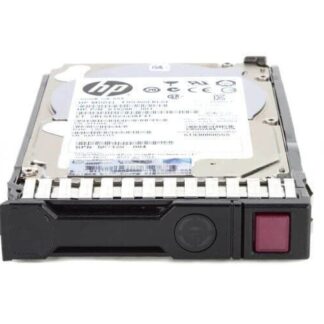


Description
Storage Capacity and Performance
Storage capacity and performance are two important considerations when it comes to data storage solutions.
Storage capacity refers to the amount of data that a storage device or system can hold. This is typically measured in units of bytes, such as kilobytes (KB), megabytes (MB), gigabytes (GB), terabytes (TB), and so on. The greater the storage capacity of a device, the more data it can hold.
Performance, on the other hand, refers to the speed and efficiency with which data can be stored and retrieved from a storage device or system. This can be measured in a variety of ways, such as the time it takes to read or write data, the data transfer rate, or the input/output operations per second (IOPS).
There are various factors that can impact storage performance, including the type of storage media (such as hard disk drives or solid-state drives), the interface used to connect to the storage device (such as SATA or USB), the operating system and file system being used, and the workload being placed on the storage system.
When selecting a storage solution, it’s important to consider both storage capacity and performance requirements, as well as factors such as reliability, cost, and ease of use. Some applications may prioritize storage capacity over performance (such as archival storage), while others may prioritize performance over capacity (such as high-performance computing or database applications).
Interface and Compatibility
An interface is a point of interaction between two or more entities, allowing them to communicate and exchange information. In the context of technology, an interface typically refers to the way in which a user interacts with a device or system, or the way in which different devices or systems communicate with each other.
For example, a computer interface might include a keyboard, mouse, and display screen that allow a user to interact with the computer. A network interface might allow different computers to communicate with each other over a network.
Compatibility, on the other hand, refers to the ability of different devices or systems to work together without issues. Compatibility can be influenced by factors such as hardware design, software design, and communication protocols.
For example, a printer may be compatible with a computer if it has the appropriate drivers and interfaces to communicate with the computer. Similarly, a computer may be compatible with a network if it has a network interface card (NIC) that is compatible with the network’s communication protocols.
In general, it’s important to consider both interface and compatibility when selecting technology solutions. Interfaces should be intuitive and easy to use, while compatibility ensures that different devices and systems can work together seamlessly. Lack of compatibility can result in data loss, security vulnerabilities, and other issues that can impact the performance and reliability of a technology solution.
Data Protection and Reliability
Here are some subheadings for the “Data Protection and Reliability” section for the MB8000GFECR HPE Hard Drive:
- Data Protection Features: Describing the data protection features of the drive, such as Advanced Data Guard and Smart Carrier.
- Error Correction: Detailing the error correction mechanisms that are built into the drive, including the use of ECC and parity.
- S.M.A.R.T. Monitoring: Explaining the S.M.A.R.T. monitoring system and how it can help to prevent data loss by identifying potential issues before they cause problems.
- MTBF and AFR: Discussing the MTBF (mean time between failures) and AFR (annualized failure rate) of the drive and how they indicate the reliability of the drive.
- Helium-Sealed Design: Describing the benefits of the helium-sealed design of the drive, such as reduced power consumption and increased reliability.
- Environmental Factors: Explaining how the drive is designed to withstand environmental factors such as shock, vibration, and temperature fluctuations, and how this affects its reliability.
Product Information
- Manufacturer: Hewlett Packard Enterprise (HPE)
- MPN: MB8000GFECR
- Type: Hard Disk Drive
- Sub-Type: SATA-6GBPS
- SKU: MB8000GFECR
Technical Information
- Capacity : 8 TB
- RPM: 8TB-7.2K
- Form Factor : 3.5 Lff
- Interface : Sata 6gb/S
- Data Transfer Rate : 600 MBPS
- Spindle Speed : 7200 RPM
- Features : Native Command Queuing (Ncq), Advanced Format 512e
- Dimensions (Wxdxh) : 4.2 In X 6.7 In X 1.1 In
- Bundled With : HP Smart Drive Carrier