

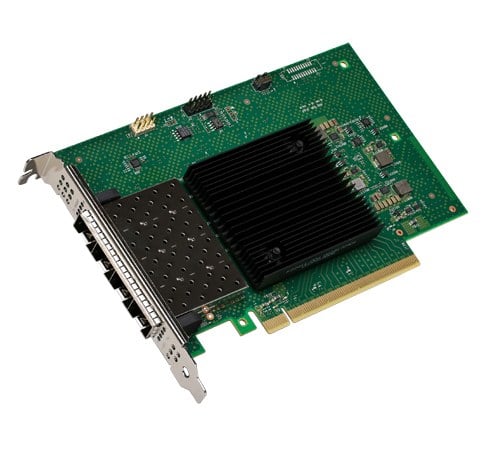

Description
Product Overview of the Intel E810XXVDA4G1P5 Quad-Port Adapter
The Intel E810XXVDA4G1P5 is a cutting-edge Quad-Port Adapter designed to meet the increasing demands of high-speed network connections. This network adapter belongs to the Peripheral Component Interconnect Express (PCI-E) family, specifically supporting the PCI-E 4.0X16 interface, and it’s equipped with 25 GBE capabilities. Additionally, it features Small Form-Factor plugable (SFP) technology and provides 28 x 2 Ethernet ports for versatile connectivity options. In this article, we will delve into the intricacies of the Intel E810XXVDA4G1P5 Quad-Port Adapter, explaining its features, benefits, and the various applications it can be used for.
Understanding the Basics Intel E810XXVDA4G1P5
The Intel E810XXVDA4G1P5 is a Quad-Port Adapter, designed to be installed on a Peripheral Component Interconnect Express (PCI-E) 4.0X16 slot. This card is a full-height expansion card that provides 25 Gigabit Ethernet (GBE) connectivity using Small Form-Factor Pluggable (SFP) transceivers. Let’s break down the key components and features of this adapter.
Key Components
- Quad-Port Design: The Intel E810XXVDA4G1P5 boasts four individual Ethernet ports, allowing for multiple high-speed connections. Each port is designed to handle data transfer efficiently.
- Peripheral Component Interconnect Express (PCI-E) 4.0X16: The adapter connects to the motherboard using a PCI-E 4.0X16 slot, ensuring high bandwidth for data transfer. The 4.0X16 specification indicates a high-speed interface, making it ideal for demanding network applications.
- Full-Height Form Factor: The card is designed as a full-height expansion card, which means it occupies a standard expansion slot on the motherboard, typically found in most desktop computers.
- 25 Gigabit Ethernet (GBE): The Intel E810XXVDA4G1P5 delivers a network speed of 25 Gigabits per second, which is significantly faster than standard Gigabit Ethernet connections. This speed is crucial for handling large data loads and supporting high-demand applications.
- Small Form-Factor Pluggable (SFP): SFP is a small transceiver module that allows for the connection of fiber-optic or copper cables to the adapter. These SFP slots are used for connecting to various network media types, enhancing the adapter’s versatility.
- 28 x 2 Ethernet Network Adapter: The card is equipped with a total of 28 Ethernet ports, with each of the four ports offering 2. This means you can connect multiple devices or networks, providing scalability and flexibility in your network setup.
Specifications and Technical Details
- Data Rate: The Intel E810XXVDA4G1P5 delivers a network speed of 25 Gigabits per second (25 Gbps). This high-speed performance ensures quick data transfer and low latency, making it suitable for data-intensive tasks.
- Full-Height Design: The full-height design of the card is a standard size for expansion cards, allowing it to be used in most desktop computers and servers.
- PCI-E 4.0X16: The adapter connects to the motherboard via a PCI-E 4.0X16 interface, which provides high bandwidth for data transfer. The 4.0X16 specification indicates the fourth generation of the PCI Express standard and 16 lanes, ensuring fast and reliable data transfer.
- Quad-Port Adapter: The card features four Ethernet ports, enabling simultaneous connections to multiple networks or devices. This configuration is advantageous for load balancing, redundancy, and improved network performance.
- Small Form-Factor Pluggable (SFP): The adapter supports SFP transceivers, which are hot-swappable modules used for connecting the card to different types of network media, including fiber-optic and copper cables. This flexibility allows for versatile network connectivity.
- 28 x 2 Ethernet Network Adapter: With a total of 28 Ethernet ports (4 ports with 2 each), the Intel E810XXVDA4G1P5 offers scalability and adaptability to diverse network configurations. This feature is especially useful in enterprise environments with evolving network requirements.
Applications and Use Cases of Intel AdapterEnterprise Networks
- Data Centers: The adapter is a valuable addition to data center infrastructure, where high-speed, low-latency connectivity is critical. Its 25 Gbps speed and multiple ports facilitate efficient data transfer and support the increasing demand for cloud services and storage.
- Virtualization: In virtualized environments, such as VMware or Hyper-V, the adapter can optimize network performance. It allows for better allocation of resources and network isolation, ensuring stable and responsive virtual machines.
- Network Segmentation: For enterprises requiring network segmentation for security or traffic management, the multiple ports on the Intel E810XXVDA4G1P5 provide an effective solution. Each port can be assigned to a specific network or VLAN, enhancing network control.
- Load Balancing: The adapter can be used for load balancing across multiple servers or devices, distributing network traffic evenly. This feature is particularly beneficial for mission-critical applications that demand high availability.
- Redundancy: Redundancy is vital for minimizing downtime in enterprise networks. The quad-port design of this adapter allows for failover configurations, ensuring uninterrupted network connectivity in case of port or cable failure.
Telecommunications
- 5G Network Infrastructure: The Intel E810XXVDA4G1P5 can be integrated into 5G network infrastructure to support the high-speed, low-latency requirements of next-generation telecommunications systems. Its 25 Gbps capability is well-suited for handling the massive data flows associated with 5G.
- Network Edge Devices: In telecommunications, the network edge is a crucial point for processing and transmitting data. This adapter can enhance the connectivity and processing capabilities of edge devices, ensuring efficient data transfer between local and cloud resources.
High-Performance Computing
- HPC Clusters: High-performance computing (HPC) clusters require high-speed, low-latency network connections to handle complex calculations and simulations. The Intel E810XXVDA4G1P5 contributes to the overall performance of HPC environments.
- Scientific Research: Scientific research institutions often rely on high-speed networks to transfer large datasets. This adapter can accelerate data transfer within research facilities, contributing to breakthroughs in various fields.
- AI and Machine Learning: AI and machine learning applications often involve vast amounts of data that require rapid processing. The high-speed network connectivity provided by the adapter is essential for efficient training and inference in AI and machine learning models.
Content Delivery Networks
- CDN Servers: Content delivery networks (CDNs) distribute content to end-users efficiently. The Intel E810XXVDA4G1P5 can be used in CDN servers to ensure fast content delivery, reducing latency for users accessing websites, videos, and other online content.
- Streaming Services: Streaming platforms benefit from high-speed network connections to deliver high-quality content without buffering. This adapter can help streaming services maintain a smooth and uninterrupted streaming experience for users.
Cloud Services
- Cloud Infrastructure: In cloud computing environments, network speed and reliability are fundamental. The Intel E810XXVDA4G1P5 can be integrated into cloud servers and data centers, providing the necessary network capabilities for cloud services and applications.
- Hybrid Cloud Connectivity: For organizations with hybrid cloud setups, the adapter enables seamless data transfer between on-premises infrastructure and the cloud, enhancing the overall efficiency of hybrid cloud configurations.
Internet Service Providers
- ISP Backbone Networks: Internet service providers (ISPs) require high-speed backbone networks to support the internet’s growing demands. The Intel E810XXVDA4G1P5 can serve as a crucial component in the backbone network, ensuring fast and reliable internet connectivity for users.
- Data Transfer: ISPs often engage in large-scale data transfer, such as updates and patches. The adapter’s high-speed capabilities streamline these operations, reducing the time required to roll out updates to subscribers.
Benefits and Advantages of Intel Quad-Port Adapter
The Intel E810XXVDA4G1P5 Quad-Port Adapter offers several notable benefits and advantages, making it a valuable addition to various networking scenarios. Let’s explore these advantages in detail.
High-Speed Connectivity
The primary advantage of this adapter is its 25 Gbps network speed. This high-speed connectivity is crucial for handling data-intensive applications, including large file transfers, video streaming, virtualization, and cloud computing. The fast data transfer rate reduces latency and ensures responsive network performance.
Scalability
The adapter’s 28 Ethernet ports (4 ports with 2 each) provide scalability and flexibility for network expansion. This scalability is valuable for enterprises and data centers that need to adapt to evolving network requirements and accommodate more devices and users.
Versatility
With support for Small Form-Factor pluggable (SFP) transceivers, the adapter can connect to a variety of network media types, including fiber-optic and copper cables. This versatility allows it to adapt to different network infrastructure setups, making it a versatile choice for diverse applications.
Load Balancing and Redundancy
The quad-port design of the Intel E810XXVDA4G1P5 enables load balancing, ensuring that network traffic is distributed evenly across multiple ports. Load balancing improves network performance and minimizes the risk of network congestion. Additionally, the multiple ports support redundancy configurations, enhancing network reliability.
Enhanced Virtualization
In virtualized environments, the adapter contributes to optimized network performance. It allows for better resource allocation, network isolation, and efficient virtual machine management. These advantages are crucial for organizations relying on virtualization technologies.
Reduced Downtime
The adapter’s redundancy and failover capabilities contribute to minimizing network downtime. In mission-critical applications, any network interruption can lead to significant losses. The Intel E810XXVDA4G1P5 ensures uninterrupted network connectivity, reducing the risk of downtime.
Future-Proofing
As technology advances, network demands increase. The Intel E810XXVDA4G1P5 is designed to meet the requirements of modern and future network applications. By investing in this adapter, organizations can future-proof their network infrastructure, ensuring that it can handle upcoming challenges and demands.
Broad Applicability
The adapter’s compatibility with various network environments, including enterprise networks, telecommunications, high-performance computing, content delivery networks, cloud services, and internet service providers, underscores its broad applicability. It can seamlessly integrate into a wide range of networking scenarios.
Support for Emerging Technologies
The Intel E810XXVDA4G1P5 is well-suited for emerging technologies such as 5G, artificial intelligence, and edge computing. Its high-speed connectivity and reliability make it a valuable component in modern technology ecosystems.
Challenges and Considerations
While the Intel E810XXVDA4G1P5 Quad-Port Adapter offers numerous benefits, there are also some challenges and considerations to keep in mind when implementing this technology.
Cost
High-speed networking components, including 25 Gbps adapters, can be relatively expensive. Organizations need to weigh the cost of the adapter against the potential benefits it brings to their network infrastructure.
Compatibility
It’s essential to ensure that the adapter is compatible with the existing network infrastructure, including the motherboard, operating system, and other network devices. Compatibility issues can lead to complications during installation and setup.
Power Consumption
High-speed network adapters may consume more power compared to lower-speed alternatives. This can have implications for power usage and cooling requirements in data center environments.
Complexity
Configuring and managing a network with multiple ports and redundancy features can be complex. Proper planning and network management expertise are necessary to make the most of the adapter’s capabilities.
Future-Proofing
While the adapter is designed to meet the demands of modern networks, technology evolves rapidly. Organizations should continuously assess their network infrastructure to ensure it remains up to date.
General Information about the Intel E810XXVDA4G1P5
- Manufacturer: Intel
- Model Number or SKU# E810XXVDA4G1P5
- Product Type: Network Adapter
Technical information of the Intel Quad-Port Adapter
- Form Factor: Plug-in Card – Full-height
- Interface (BUS) Type: PCI Express 4.0 X16
- PCI Specification Revision: Pcie 3.0, Pcie 4.0
- Ports: 25 Gigabit Sfp28 X 2
- Connectivity Technology: Wired
- Data Link Protocol: Gigabit Ethernet, 10 Gigabit Ethernet, 25 Gigabit Ethernet
- Network / Transport Protocol: Iscsi, Iwarp, Nfs
- Features: Rdma Support, Virtual Machine Device Queues (vmdq), Single Root I/o Virtualization (sr-iov), Data Direct I/o Technology (ddio), Rdma Over Converged Ethernet V2, Flexible Port Partitioning (FPP), INTELLIGENT Offloads, On-chip Qos And Traffic Management
- Interfaces: 2 X 1 Gigabit Ethernet/10gb Ethernet/25gb Ethernet – Sfp28
In summary, the Intel E810XXVDA4G1P5 is a powerful and adaptable network adapter that empowers your network infrastructure with the speed and capacity required to meet the demands of today’s data-intensive applications and services. Whether you are a large enterprise, a data center operator, or a cloud service provider, this Quad-Port Adapter can be a valuable addition to your network hardware arsenal, ensuring seamless and high-speed data connectivity.


