

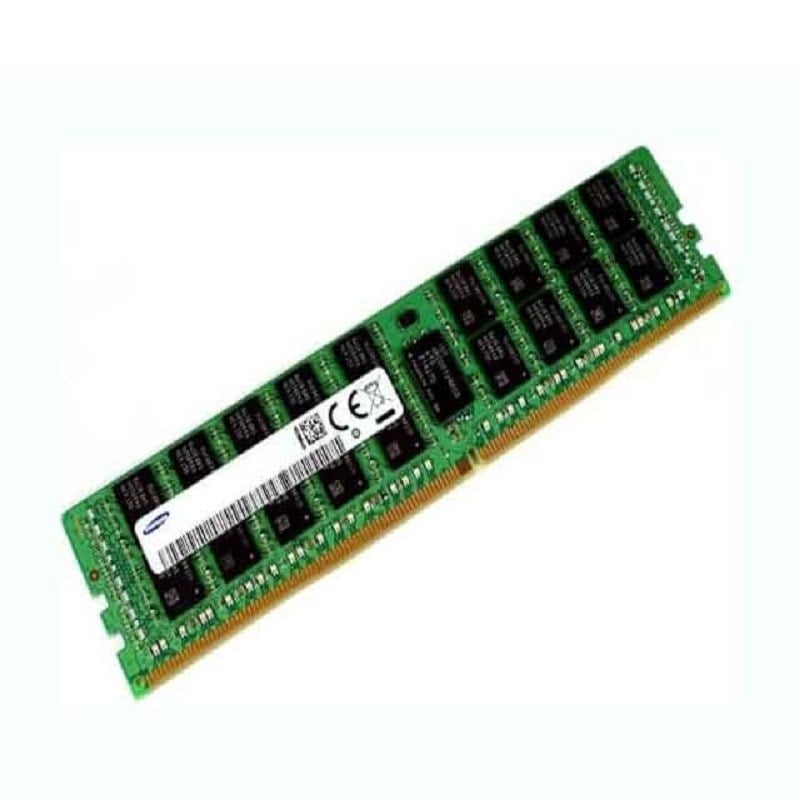


Description
Product Overview of the Samsung M393A4G40AB3-CWE Ram
In the ever-evolving landscape of computer hardware, memory modules play a crucial role in determining the overall performance of a system. One such component that has gained prominence is the HP M393A4G40AB3-CWE 32 Gigabytes (GB) DDR4 Memory Module. In this comprehensive exploration, we will delve into the intricate details of this memory module, unraveling its specifications, features, and the impact it can have on server performance.
Unveiling the Basics: HP M393A4G40AB3-CWE
At the core of this memory module is the acronym DDR4, which stands for Double Data Rate 4. It signifies a significant advancement over its predecessors, providing higher data transfer rates and improved efficiency. The specific model under scrutiny here is the M393A4G40AB3-CWE, a 32GB module designed for server applications.
DDR4: The Technological Leap
DDR4 represents the fourth generation of DDR Synchronous Dynamic Random Access Memory (SDRAM). The transition from DDR3 to DDR4 brings forth several enhancements, including increased data transfer rates, lower power consumption, and improved overall performance.
Unraveling the Technicalities: Key Specifications
To comprehend the capabilities of the HP M393A4G40AB3-CWE, we must dissect its key specifications.
Capacity: 32 Gigabytes (GB)
The 32GB capacity signifies the amount of data that can be stored in this memory module. For server applications where multitasking and handling large datasets are common, a higher capacity is imperative.
Speed: 3200 Megahertz (MHz)
The speed, measured in megahertz (MHz), indicates how quickly the memory module can transfer data. In the case of the M393A4G40AB3-CWE, the impressive speed of 3200MHz ensures swift data access and retrieval.
CAS Latency (CL): CL22
CAS Latency is a critical factor that influences the overall speed of the memory module. The CL22 specification of the HP module signifies the number of clock cycles it takes to access the requested data, with lower values being more desirable.
Form Factor: 288-Pin 1.2V Load-Reduced DIMM
The form factor of a memory module determines its physical dimensions and how it connects to the motherboard. The M393A4G40AB3-CWE adopts a 288-pin design, adhering to the Load-Reduced DIMM standard. This configuration is common in server environments, where reliability and stability are paramount.
Voltage: 1.2V
Operating at a voltage of 1.2V, this DDR4 module strikes a balance between energy efficiency and performance. Lower voltage not only reduces power consumption but also contributes to heat management, crucial in server setups.
Impact on Server Performance: Why it Matters
Understanding the technical specifications is just one facet. The real question is, how does the HP M393A4G40AB3-CWE impact server performance?
Enhanced Multitasking
With a substantial capacity of 32GB, this memory module empowers servers to handle multiple tasks simultaneously. In scenarios where large datasets need to be processed, having an ample amount of RAM is indispensable.
Speed for Data-Intensive Operations
The 3200MHz speed ensures that data-intensive operations, such as database queries or virtual machine management, are executed swiftly. Reduced latency, as indicated by the CL22 specification, further contributes to a seamless computing experience.
Reliability in Server Environments
The 288-pin 1.2V Load Reduced DIMM design is tailored for server environments. It ensures a stable connection to the motherboard, reducing the risk of connectivity issues that can hamper server reliability.
Future-Proofing with DDR4
As technology advances, the relevance of DDR4 memory modules, such as the HP M393A4G40AB3-CWE, remains steadfast. While DDR5 is on the horizon, DDR4 continues to be a reliable choice for various applications, especially in server environments where stability and compatibility are paramount.
32GB Memory Capacity
Firstly, the M393A4G40AB3-CWE module has a capacity of 32GB. This means it can store up to 32 gigabytes of data at any given time. For a server, this is a significant amount of memory and is ideal for running multiple applications and handling large amounts of data. The more memory a server has, the better it can perform.
PC4-25600 DDR4 SDRAM
- Next, the memory module is labeled as PC4-25600 DDR4 SDRAM. This is a technical specification that describes the type of memory and its speed. DDR4 stands for Double Data Rate 4 and is the fourth generation of DDR memory technology. It is the current standard for server memory and offers faster speeds, lower power consumption, and higher densities than previous generations.
- The PC4-25600 label refers to the module’s maximum transfer rate, which is 25,600MB/s or 25.6GB/s. This is the theoretical maximum speed at which data can be transferred in and out of the memory module. The higher the transfer rate, the faster the memory can operate.
3200MHz Speed
The M393A4G40AB3-CWE memory module runs at a speed of 3200MHz, which is relatively fast. The MHz rating refers to the frequency at which the memory operates, and the higher the frequency, the faster the memory can operate. This speed rating is important because it affects the overall performance of the server. The faster the memory can operate, the faster the server can perform.
CL22 Latency
Latency is another technical specification that affects memory performance. It refers to the time it takes for the memory to respond to a request for data. The CL22 label on the M393A4G40AB3-CWE module means that it has a CAS Latency of 22. The lower the CL number, the better the performance. However, lower latency typically comes at a higher cost, so there is a trade-off to be considered.
288-Pin Load-Reduced DIMM
The M393A4G40AB3-CWE memory module has 288 pins, which is a standard specification for DDR4 memory. The Load-Reduced DIMM label means that the module uses a Load-Reduced DIMM architecture. This architecture allows for higher memory capacities and faster data rates than other types of DIMMs. It achieves this by reducing the electrical load on the memory controller, allowing for more modules to be used in a server.
1.2V Voltage
Finally, the memory module operates at a voltage of 1.2V. This is a relatively low voltage and helps to reduce power consumption and heat generation. Lower power consumption is important for servers, as they typically run 24/7 and can consume a significant amount of electricity.
Product Information about the Samsung M393A4G40AB3-CWE
- Manufacturer: Samsung
- Model Number or SKU# M393A4G40AB3-CWE
- Type: Memory (RAM)
- RAM -Type: PC4-25600
Technical InformationBus Speed: Enhancing Performance
The Bus Speed, measured at 3200MHz, refers to the speed at which data travels between the RAM and the rest of the computer. In simpler terms, it determines how quickly your computer can access and transfer information stored in the RAM.
Data Integrity Check: ECC for Reliability
Data Integrity Check is crucial for ensuring the accuracy of data stored in the RAM. Here, ECC (Error-Correcting Code) technology plays a vital role. It automatically detects and corrects errors in the data, enhancing the overall reliability of the memory module.
Signal Processing: The Role of Registered Memory
Signal Processing is a critical aspect of memory functionality. In this context, the RAM module utilizes Registered signal processing. Registered memory provides stability and reliability by managing signals more effectively, contributing to the overall efficiency of the RAM.
CAS Latency Timings: Understanding Cl22
CAS Latency (Column Address Strobe Latency) Timings, denoted as Cl22, represent the time it takes for the RAM to respond to a request. A lower CAS Latency value, such as Cl22, indicates faster response times and improved performance.
Rank Features: 1Rx4 Explained
Rank Features, specified as 1Rx4, provide insights into the organization of memory within the module. In simple terms, 1Rx4 indicates a single rank module with four memory banks. This configuration influences how data is stored and accessed, impacting the RAM’s overall performance.
Form Factor: 288-Pin LRDIMM for Compatibility
The Form Factor, described as 288-pin LRDIMM, refers to the physical design and connector specifications of the RAM module. Understanding the form factor is crucial for ensuring compatibility with your computer’s motherboard. In this case, the 288-pin design and LRDIMM (Load-Reduced DIMM) technology contribute to the module’s compatibility and efficiency.
In general, and decoding the specifications of a RAM module, such as Bus Speed, Data Integrity Check, Signal Processing, CAS Latency Timings, Rank Features, and Form Factor, is vital for making informed decisions when upgrading or building a computer. These technical details impact the overall performance, reliability, and compatibility of the RAM, influencing the efficiency of your computer system as a whole.


