

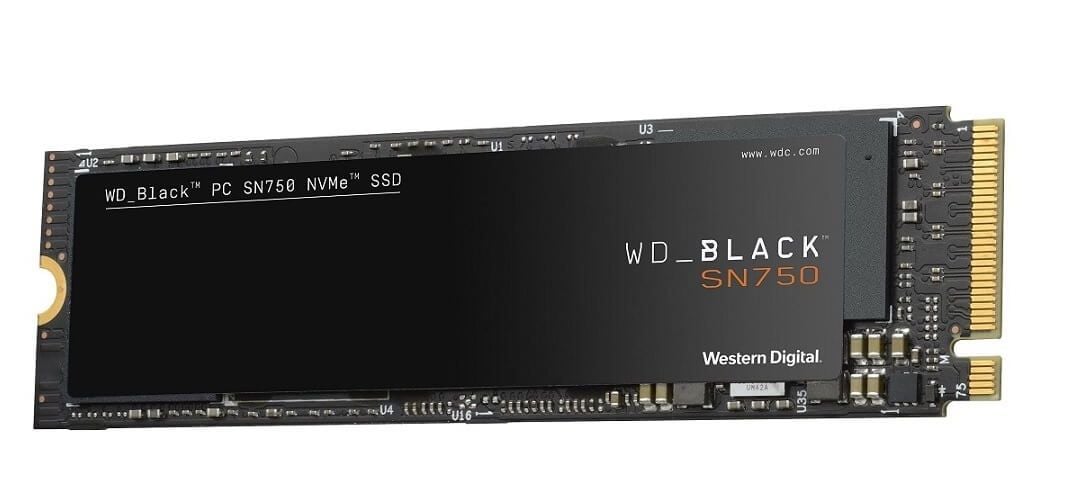


Description
High-speed Data Transfer with PCI-E 3.0 x4 Interface
PCI Express (PCIe) 3.0 x4 interface is a high-speed interface for data transfer between a computer’s motherboard and peripheral devices, such as graphics cards, solid-state drives (SSDs), and network cards. The “3.0” part of the name refers to the third generation of the PCIe standard, which was introduced in 2010 and offers improved performance compared to earlier generations. The “x4” part of the name refers to the number of data lanes used in the interface, which is four in this case.
With four data lanes, a PCIe 3.0 x4 interface can provide up to 4 GB/s of bandwidth in each direction, allowing for fast data transfer rates between the motherboard and the connected device. This makes it well-suited for demanding applications such as gaming, video editing, and high-speed data storage.
It’s important to note that the actual data transfer rate will depend on several factors, such as the speed of the processor and the speed of the device connected to the interface. Additionally, the bandwidth of a PCIe 3.0 x4 interface can be reduced if it’s used in a system with multiple devices that share the same interface. However, for most applications, a PCIe 3.0 x4 interface provides ample bandwidth for high-speed data transfer.
Large-scale Data Storage with 1TB Capacity
Large-scale data storage refers to a storage system that can accommodate a large amount of data, typically measured in terabytes (TB) or petabytes (PB). A storage system with 1TB capacity is considered to be a large-scale storage solution, as it can store a substantial amount of data.
Such storage solutions can be in the form of internal or external hard drives, solid-state drives (SSDs), network-attached storage (NAS) devices, or storage area networks (SANs). They are typically used in businesses, data centers, or other organizations that need to store, manage, and access large amounts of data.
The advantage of large-scale data storage is that it can help organizations store, manage, and access large amounts of data in an efficient and cost-effective manner. It also enables organizations to store data for long periods of time and retrieve it as needed, making it ideal for backup and disaster recovery purposes.
In conclusion, a 1TB capacity storage solution can provide large-scale data storage for organizations, allowing them to store, manage, and access a large amount of data efficiently and cost-effectively.
Easy Installation with M.2 2280 Form Factor
The M.2 2280 form factor is a type of solid-state drive (SSD) that is designed to provide high-speed data storage and easy installation. The M.2 form factor is a compact, low-profile design that is becoming increasingly popular in modern computing systems. The “2280” part of the name refers to the physical size of the drive, which is 22 millimeters wide and 80 millimeters long.
One of the benefits of the M.2 2280 form factor is that it’s easy to install. Unlike traditional 2.5-inch SSDs, which require cables and a separate mounting bracket, M.2 2280 drives can be installed directly onto the motherboard using an M.2 slot. This not only saves space inside the computer case, but also eliminates the need for additional cables and connectors, making installation quick and simple.
In addition to ease of installation, M.2 2280 drives offer several other advantages, including high data transfer speeds, low power consumption, and improved reliability compared to traditional hard drives. They are also compatible with a wide range of systems, making them a versatile option for a variety of applications.
In conclusion, the M.2 2280 form factor provides a compact and easy-to-install solution for high-speed data storage, making it an attractive option for users who need a reliable and high-performing SSD.
General Information
- Manufacturer: Western Digital (WD)
- Manufacturer Part Number : WDS100T3X0C
- Type : Solid State Drive (SSD)
- Sub Type : SATA-6GBPS
Key Features
- Storage Capacity : 1 TB
- Enclosure : Internal
- Form Factor : M.2 2280
- Mttf : Up To 1.75m Hours
- Interface : Pci Express 3.0 X4 (Nvme)
Performance
- Sequential Read : Up To 3470 Mbps
- Sequential Write : Up To 3000 Mbps
- Random Read : Up To 515k Iops
- Random Write : Up To 560k Iops
- Endurance : 600 Tbw


