

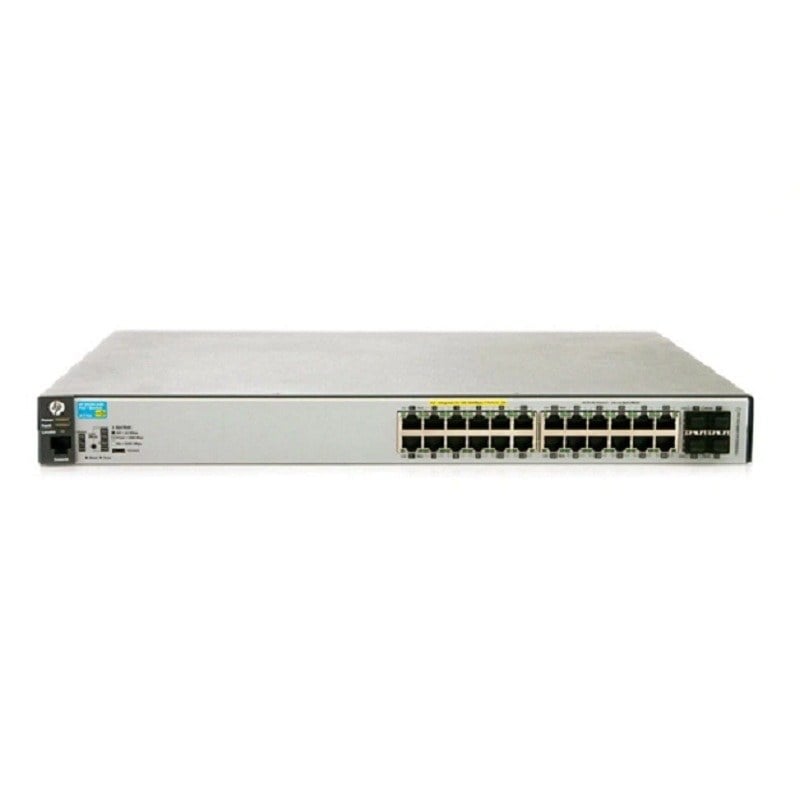
Description
Managed Switch Capabilities
A managed switch is a type of network switch that provides additional capabilities beyond those of an unmanaged switch. It offers advanced features and configuration options that enable network administrators to manage and control the switch remotely, monitor network traffic, and enforce security policies.
Managed switch capabilities typically include:
- Remote Management: Network administrators can remotely access and configure the switch from a central location, reducing the need for physical access to the switch.
- Network Monitoring: The switch can provide detailed information about network traffic, such as traffic patterns, utilization rates, and error rates.
- Quality of Service (QoS): The switch can prioritize network traffic based on criteria such as IP address, port number, or protocol type to ensure that critical applications receive the necessary bandwidth.
- VLAN Configuration: The switch can be configured to segment the network into multiple virtual LANs (VLANs) to improve security, reduce network congestion, and simplify network management.
- Link Aggregation: The switch can be configured to aggregate multiple physical links into a single logical link to increase bandwidth and provide redundancy.
- Access Control Lists (ACLs): The switch can be configured to control and restrict access to network resources based on specific conditions, such as source IP address, port number, or protocol type.
- Security: The switch can provide security features, such as firewalls, intrusion detection and prevention (IDP), and data encryption, to protect the network from unauthorized access and malicious traffic.
Access Control Lists (ACLs)
The JL263A HPE Aruba 2930F 24G PoE+ 24 Ports Rack-Mountable Managed Switch supports Access Control Lists (ACLs) to control network traffic and improve security. Here are the key features and capabilities of ACLs on this switch:
- ACL types: The switch supports standard ACLs (SACLs) and extended ACLs (EACLs).
- ACL rules: ACLs allow you to define rules that permit or deny traffic based on various criteria, such as source/destination IP address, protocol, port number, and more.
- ACL filtering: The switch supports inbound and outbound ACL filtering on Layer 2 and Layer 3 interfaces.
- ACL configuration: You can configure ACLs using the CLI (Command Line Interface) or the Web-based graphical user interface (GUI).
- ACL logging: You can configure the switch to log ACL matches, which can help with troubleshooting and auditing.
- ACL groups: You can create ACL groups to simplify ACL configuration and management.
- ACL application: ACLs can be used to protect network resources and limit unauthorized access to specific services or applications.
- ACL performance: The switch hardware is optimized for ACL processing, which helps to ensure high performance even when applying complex ACL rules.
Advanced Security Features
Advanced security features refer to a set of security technologies and functions that are designed to protect a network from various types of threats. These features are typically implemented in network devices such as switches, routers, and firewalls, and they provide an additional layer of protection beyond the basic security measures.
Some of the common advanced security features include:
- Access Control Lists (ACLs) – To control and restrict access to network resources based on specific conditions, such as source IP address, port number, or protocol type.
- Virtual Private Network (VPN) – To securely connect remote users and networks over the public internet.
- Intrusion Detection and Prevention (IDP) – To detect and prevent unauthorized access and malicious activities, such as malware attacks and network intrusions.
- Firewall – To protect the network from unauthorized access and malicious traffic by enforcing security policies and rules.
- Data Encryption – To protect sensitive information from being intercepted and read by unauthorized users.
- 802.1x Authentication – To authenticate network users and devices before allowing them access to the network.
- Network Segmentation – To logically separate different parts of the network, such as guest networks and corporate networks, to enhance security and manageability.
- Advanced Threat Detection – To detect and prevent advanced threats, such as zero-day exploits, and APT attacks.
Main Information about the HPE JL263A
- Manufacturer: HPE
- Part Number or SKU# JL263A
- Product Model: 2930F 24G PoE+ 4SFP+ TAA-compliant
- Product Name: Aruba 2930F 24G PoE+ 4SFP+ TAA-compliant Switch
- Product Type: Layer 3 Switch
Interfaces / Ports
- Total Number of Network Ports 24
- Uplink Port Yes
- Modular Yes
- Stack Port Yes
- Port/Expansion Slot Details 24 x Gigabit Ethernet Network
- Port/Expansion Slot Details 4 x 10 Gigabit Ethernet Expansion Slot
Media & Performance
- Media Type Supported Twisted Pair
- Media Type Supported Optical Fiber
- Ethernet Technology 10 Gigabit Ethernet
- Ethernet Technology Gigabit Ethernet
- Network Technology 10GBase-X
- Network Technology 10/100/1000Base-T
I/O Expansions
- Number of Total Expansion Slots 4
- Expansion Slot Type SFP+
- Shared SFP Slot No
- Number of SFP+ Slots 4


