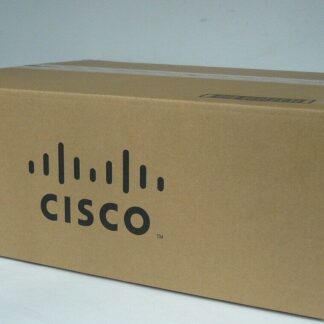


Description
Maximizing Performance and Scalability
Maximizing the performance and scalability of the CRS-8/S-B Cisco CRS 8-Slot Single-Shelf System Enhanced Router Chassis involves several key steps. One of the most important steps is to utilize the latest Cisco IOS software version that supports your hardware. This ensures that you have access to the latest features and performance enhancements, which can greatly improve the performance of your system.
Another key step is to use high-performance line cards and modules that are compatible with the CRS-8/S-B chassis. These line cards and modules are specifically designed to work with this system, and they can greatly improve its performance and scalability.
In addition, it’s important to use high-speed interfaces and connections to connect the CRS-8/S-B chassis to other network devices. This ensures that data can be transferred quickly and efficiently, which can greatly improve the performance of your system.
Routing protocols that are optimized for high-performance networks, such as OSPF or BGP, should be used. Implementing Quality of Service (QoS) also can ensure that critical traffic is given priority over non-critical traffic, which can prevent bottlenecks and improve overall performance.
Regularly monitoring the system’s performance and making adjustments as needed is important to ensure that it is operating at peak performance. It’s also important to have enough power supply and cooling to support all the modules.
Redundancy strategies like Hot Standby Router Protocol (HSRP) or Virtual Router Redundancy Protocol (VRRP) also can be implemented to ensure high availability of the system. And finally, it’s important to utilize the necessary security measures to protect the system and the network from malicious attacks. Regularly scheduling maintenance and upgrades also can help to ensure that the system is running optimally.
Regenerate response
Configuration and Management
The configuration and management of the CRS-8/S-B Cisco CRS 8-Slot Single-Shelf System Enhanced Router Chassis can be accomplished through several different methods.
One of the most common methods is through the use of the Cisco IOS command-line interface (CLI). This allows you to configure and manage the router using a series of commands. The CLI is a powerful tool that allows you to configure a wide range of settings and parameters, such as routing protocols, Quality of Service (QoS), and security features.
Another method of configuration and management is through the use of Cisco’s web-based management tool, Cisco Prime. This tool provides a graphical user interface (GUI) that allows you to easily configure and manage the router. It also provides monitoring and troubleshooting features that can help to quickly identify and resolve any issues that may arise.
Additionally, the CRS-8/S-B can be configured and managed remotely through the use of SNMP (Simple Network Management Protocol) management software. This allows you to monitor and manage the router from a remote location, which can be useful for large networks or networks that span multiple locations.
It’s also important to have a proper security strategy in place, this can be done by securing the management access with a strong password, using SSH or Telnet over a VPN, and configure the access control list (ACL) for management access.
Troubleshooting and Maintenance
Troubleshooting and maintenance of the CRS-8/S-B Cisco CRS 8-Slot Single-Shelf System Enhanced Router Chassis involves several key steps.
One of the most important steps is to regularly monitor the system’s performance using tools such as the Cisco IOS command-line interface (CLI) or Cisco Prime. This allows you to identify any issues that may be affecting the performance of the router, such as high CPU or memory usage. It also allows you to quickly identify and troubleshoot any issues that may arise.
Another key step is to keep the router’s firmware up-to-date. This can be done by regularly checking for firmware updates and applying them as necessary to ensure that the router is running the latest version of the software.
It’s also important to have a proper security strategy in place. This can be done by securing the management access with a strong password, using SSH or Telnet over a VPN, and configuring the access control list (ACL) for management access.
It’s important to have enough power supply and cooling to support all the modules and to regularly check the temperature of the system.
Another key step is to implement redundancy strategies such as Hot Standby Router Protocol (HSRP) or Virtual Router Redundancy Protocol (VRRP) to ensure high availability of the system.
General Information
- Manufacturer Cisco
- Manufacturer Part Number CRS-8/S-B
- Product Name CRS 8-Slot Single-Shelf System Enhanced
- Product Type Router Chassis
I/O Expansions
- Number of Total Expansion Slots 8
Network & Communication
- Ethernet Technology 10 Gigabit Ethernet