


Description
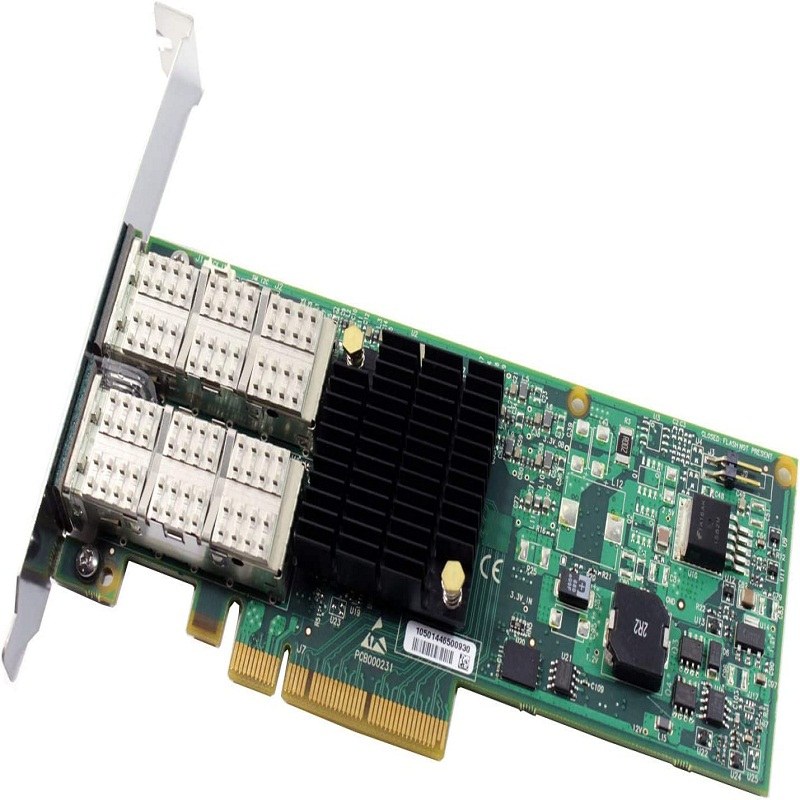
PCI Express Interface
PCI Express (Peripheral Component Interconnect Express) is a high-speed serial computer expansion bus standard used to connect peripheral devices to the motherboard of a computer. It is commonly used to connect network interface cards, graphics cards, and other high-speed devices that require fast data transfer rates.
The PCI Express interface provides a dedicated point-to-point communication channel between the device and the computer’s central processing unit (CPU). It consists of several lanes, each of which can transmit data in both directions simultaneously. The number of lanes determines the bandwidth available for data transfer, with each lane providing a maximum data transfer rate of 985 megabytes per second (MB/s) in each direction.
The most common PCI Express lane configurations are x1, x4, x8, and x16, which provide one, four, eight, and sixteen lanes respectively. The higher the number of lanes, the greater the bandwidth available for data transfer.
PCI Express 2.0 is the second generation of the PCI Express standard and provides double the bandwidth of the original PCI Express, with each lane providing a maximum data transfer rate of 2 gigabytes per second (GB/s) in each direction. PCI Express 3.0 and 4.0 are subsequent generations of the standard and offer even higher bandwidths.
Configuration and Management
The HPE 2 Ports 10GBPS PCI Express 2.0 X8 570FLB Server Network Adapter can be configured and managed using various tools and methods, including:
- HPE Intelligent Provisioning: The network adapter can be configured using HPE Intelligent Provisioning, which is an embedded utility that provides a simplified way to configure and deploy servers. The adapter can be configured during the server deployment process using the Intelligent Provisioning interface.
- HPE Systems Insight Manager: The network adapter can be managed using HPE Systems Insight Manager, which is a management tool that provides a single interface for managing servers, storage, and other infrastructure components. The adapter can be monitored for performance, configuration, and status using the Systems Insight Manager interface.
- HPE OneView: The network adapter can be managed using HPE OneView, which is a management platform that provides a unified view of the entire infrastructure. OneView allows administrators to automate server deployment, configuration, and management tasks, including the configuration of the network adapter.
- Command Line Interface (CLI): The network adapter can be configured and managed using a CLI, which provides access to various configuration and management commands. The CLI can be accessed using a terminal emulator such as PuTTY.
- Simple Network Management Protocol (SNMP): The network adapter supports SNMP, which allows remote monitoring and management of the adapter using SNMP-compliant management tools.
- Firmware updates: The network adapter firmware can be updated using various methods, including the HPE Service Pack for ProLiant (SPP), which is a comprehensive collection of firmware, drivers, and system software for HPE servers.
Security Features
The HPE 2 Ports 10GBPS PCI Express 2.0 X8 570FLB Server Network Adapter provides several security features to help protect the network and the server against unauthorized access and malicious attacks. Some of these features include:
- Secure Boot: The network adapter supports Secure Boot, which ensures that only authorized firmware is loaded during the boot process, preventing the loading of malicious or unauthorized firmware.
- Secure Firmware Updates: The adapter supports secure firmware updates, which use digital signatures to verify the authenticity of the firmware before it is installed, preventing the installation of tampered firmware.
- MAC Address Lockdown: The network adapter supports MAC Address Lockdown, which allows the administrator to restrict the adapter to accept network traffic only from a specific MAC address or range of MAC addresses.
- VLAN Tagging: The adapter supports VLAN tagging, which allows the administrator to segment the network into different virtual LANs, improving network security and manageability.
- Jumbo Frames: The adapter supports jumbo frames, which allow the transmission of larger data packets than the standard Ethernet frame size. This can improve network efficiency and reduce the processing overhead on the server.
- Network Authentication: The adapter supports network authentication protocols such as 802.1X and RADIUS, which allow users to authenticate before accessing the network.
- Network Encryption: The adapter supports network encryption protocols such as IPSec, which can encrypt network traffic, ensuring that sensitive data is not intercepted or compromised.
General Information
- Manufacturer: HPE
- Part Number or SKU#718939-B21
- Type: Networking
- Sub-Type: PCI
- Device Type : Network Adapter
- Interface (Bus) Type : Pci Express 2.0 X8
Networking
- Connectivity Technology : Wired
- Data Link Protocol : Gige, 10 Gige
- Data Transfer Rate : 10 Gbps
.jpg)


