

Description
High-Performance Networking
High-Performance Networking refers to the use of advanced technologies, techniques and hardware to create a fast, reliable and efficient computer network. It is designed to handle large amounts of data, support multiple users and applications, and provide low latency and high throughput. High-performance networking solutions can improve productivity, reduce downtime and increase overall network efficiency. It is commonly used in data centers, cloud computing, enterprise environments, and other demanding network applications where high network performance is critical.Streamline Your Network
“Streamline Your Network” refers to the process of simplifying, organizing, and optimizing a computer network to increase its efficiency, reduce complexity and improve its overall performance. This involves various strategies, such as consolidating network devices, reducing the number of network hops, optimizing network traffic flow, and automating network management tasks. The goal of streamlining a network is to improve network reliability, reduce downtime, and simplify network administration, while also improving network performance and scalability. By streamlining a network, organizations can improve their overall IT infrastructure and better meet the demands of their users and applications.Maximize Network Efficiency
“Maximize Network Efficiency” refers to the process of making the best use of available resources in a computer network to improve its performance and reliability. This can involve various strategies, such as optimizing network design, reducing network congestion, improving network security, and automating network management tasks. The goal is to ensure that the network is running at peak efficiency, providing fast and reliable access to network resources, and delivering high-quality user experiences. By maximizing network efficiency, organizations can improve their overall IT infrastructure, reduce costs, and better meet the demands of their users and applications.Advanced Switching Capabilities
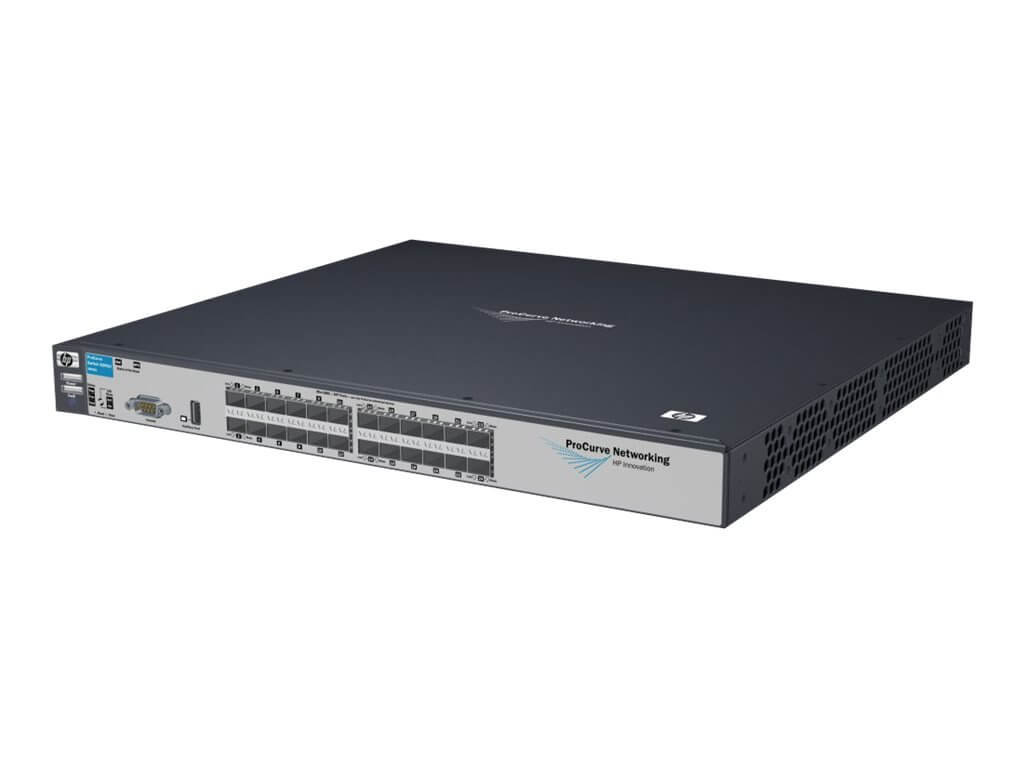
The advanced switching capabilities of the HP ProCurve E6200yl-24G refer to its ability to handle multiple network traffic types and protocols, provide high performance and reliability, and support advanced network management features. This switch is equipped with layer-3 management capabilities, allowing it to route traffic between subnets and handle IP addresses efficiently.
Additionally, the HP ProCurve E6200yl-24G supports Mini GBIC modules, providing increased connectivity options for your network. This allows you to upgrade your network with new technologies as needed without having to replace the switch entirely. The switch also supports advanced features such as Quality of Service (QoS), Virtual LAN (VLAN), and Link Aggregation Control Protocol (LACP), allowing you to optimize your network for performance, security, and scalability.
Main Specification about the HP J8992A
- Manufacturer: HP
- Part Number or SKU # J8992A
- Device Type: Ethernet Switch
Technical Information
- Description: 1 x Expansion Slot
- Expansion Slot Type: SFP
- Form Factor: Rack-mountable
- Input Voltage: 110 V AC, 220 V AC
- Layer Supported: 4
- Manageable: Yes
- Management Port: Yes
- Alt Part No: J8992A
- Model: 6200yl-24G-mGBIC
- Product Type: Layer 3 Switch
- Number Of SFP Slots: 24
- Number Of Total Expansion Slots: 25
- Port/Expansion Slot Details: 24 x Gigabit Ethernet Expansion Slot
- Stack Port: Yes
Management
- Telnet
- SMON
- sFlow
- SNMPv1/v2c/v3
- IEEE 802.1p CoS
- IEEE 802.1Q VLAN tagging
- ProCurve Manager Plus
- ProCurve Manager
- Command-line interface
- Web browser
- Configuration menu
- Out-of-band management
- RMON: 1 (statistics), 2 (history), 3 (alarm) and 9 (events)