


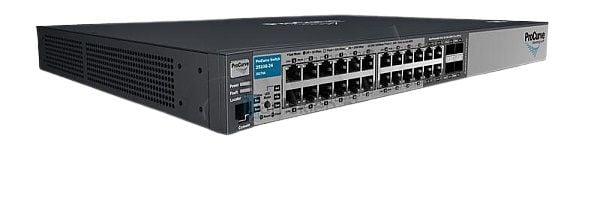
Description
Advanced Traffic Management
Advanced Traffic Management refers to the set of features and technologies that enable network administrators to effectively monitor, manage and prioritize the flow of network traffic. This can help ensure that critical network applications receive the bandwidth and resources they need, while non-critical traffic is relegated to a lower priority.
Advanced Traffic Management can help improve network performance and reliability by preventing network congestion, reducing network downtime and improving application response times. Some common tools used for Advanced Traffic Management include Quality of Service (QoS), rate limiting, congestion control, and traffic shaping.
QoS allows administrators to assign priority levels to different types of network traffic based on their importance. For example, traffic from a voice-over-IP (VoIP) phone system might be assigned a higher priority than email traffic, to ensure that phone calls are not disrupted by a high volume of email traffic.
Rate limiting restricts the rate at which traffic is transmitted to prevent network congestion and excessive bandwidth usage. Congestion control algorithms monitor network conditions and dynamically adjust traffic flow to ensure that the network does not become congested. Traffic shaping adjusts the rate of traffic transmission to match the capacity of the network, improving overall performance and reducing the risk of congestion.
Scalable and Networking
Scalable and Networking refers to the ability of a network infrastructure to grow and accommodate increasing demands on capacity, performance, and functionality. The goal of scalable and networking is to ensure that a network can support new services, users, and devices while maintaining or improving network performance.
Scalability is critical for businesses and organizations that want to grow and take advantage of new technology. It is important that the network is designed to accommodate growth and can be easily expanded or upgraded as needed. A scalable network infrastructure can help businesses respond quickly to new demands and opportunities.
Scalable networking involves the use of technology and architecture that allows networks to expand without the need for major overhauls. This includes the use of modular components, redundant components, and virtualization technology. A scalable network should also have the ability to accommodate different types of devices and services.
One key aspect of scalable networking is the use of switching technology. Switches allow multiple devices to connect to the network and share resources. They also play a critical role in maintaining network performance as the network grows. Scalable switches allow for the addition of new ports, line cards, and other components to support increased demand.
Another key aspect of scalable networking is the use of software-defined networking (SDN) and network function virtualization (NFV). These technologies allow network administrators to manage network functions and services in a flexible and scalable manner. This can help organizations reduce costs, improve network performance, and quickly respond to changing demands.
Enhanced Network Security
Network security is a critical aspect of any organization’s information technology infrastructure. This is why it’s essential to have a secure network that protects against unauthorized access, data theft, and other cybersecurity threats. An enhanced network security system provides organizations with the necessary tools and technologies to ensure their networks are secure.
One key component of enhanced network security is the use of firewalls. Firewalls can prevent unauthorized access to a network by monitoring and controlling incoming and outgoing network traffic. They also provide a layer of protection against various cyber attacks, such as malware and viruses.
Another important aspect of enhanced network security is the use of encryption. Encryption helps protect sensitive data as it is transmitted over the network, preventing unauthorized access to sensitive information. This is especially important for organizations that handle sensitive information such as financial data, personal information, and other confidential data.
Access control is also critical for enhanced network security. Organizations can control who has access to specific network resources by implementing access control systems such as role-based access control (RBAC) and identity and access management (IAM) solutions. These solutions help to ensure that only authorized individuals have access to sensitive data and resources.
Moreover, organizations can also implement network segmentation, which divides their network into smaller sub-networks. This helps to reduce the risk of a security breach, as a security breach in one sub-network would not necessarily compromise the entire network.
Main Specification about the HPE J9145-69001
- Manufacturer: HPE
- Part Number or SKU # J9145-69001
- Device Type: Managed Switch
Processor
- Processor : 2 X Arm Arm1156t2-S : 515 Mhz
Memory
- Ram : 512 Mb Sdram
- Flash Memory : 1 Gb Flash
Networking
- Ports Qty : 24 X Ethernet 10base-T, Ethernet 100base-Tx, Ethernet 1000base-T
- Max Units In A Stack : 16
- Data Transfer Rate : 1 Gbps
- Data Link Protocol : Ethernet, Fast Ethernet, Gigabit Ethernet
- Routing Protocol : Rip-1, Rip-2, Static Ip Routing
- Remote Management Protocol : Snmp 1, Rmon 1, Rmon 2, Rmon 3, Rmon 9, Telnet, Snmp 3, Snmp 2c, Http, Ssh
- Connectivity Technology : Wired
- Communication Mode : Half-Duplex, Full-Duplex
- Switching Protocol : Ethernet
- Mac Address Table Size : 2k Entries
- Status Indicators : Link Activity, Port Transmission Speed
Features
- Flow Control, Auto-Sensing Per Device, Dhcp Support, Auto-Negotiation, Bootp Support, Arp Support, Vlan Support, Auto-Uplink (Auto Mdi/Mdi-X), Port Mirroring, Manageable, Ipv6 Support, Quality Of Service (Qos), Jumbo Frames Support
- Compliant Standards : Ieee 802.3, Ieee 802.3u, Ieee 802.1d, Ieee 802.1q, Ieee 802.3ab, Ieee 802.1p, Ieee 802.3x, Ieee 802.3ad (Lacp), Ieee 802.1w, Ieee 802.1x, Ieee 802.1s
Expansion / Connectivity
- Expansion Slots Total (Free) : 4 ( 4 ) X Sfp (Mini-Gbic)
- Interfaces : 24 X Network – Ethernet 10base-T/100base-Tx/1000base-T – Rj-45 1 X Management – Console – Rj-45
Power
- Power Device : Power Supply – Internal
- Voltage Required : Ac 120/230 V ( 50/60 Hz )
- Power Consumption Operational : 82 Watt


