

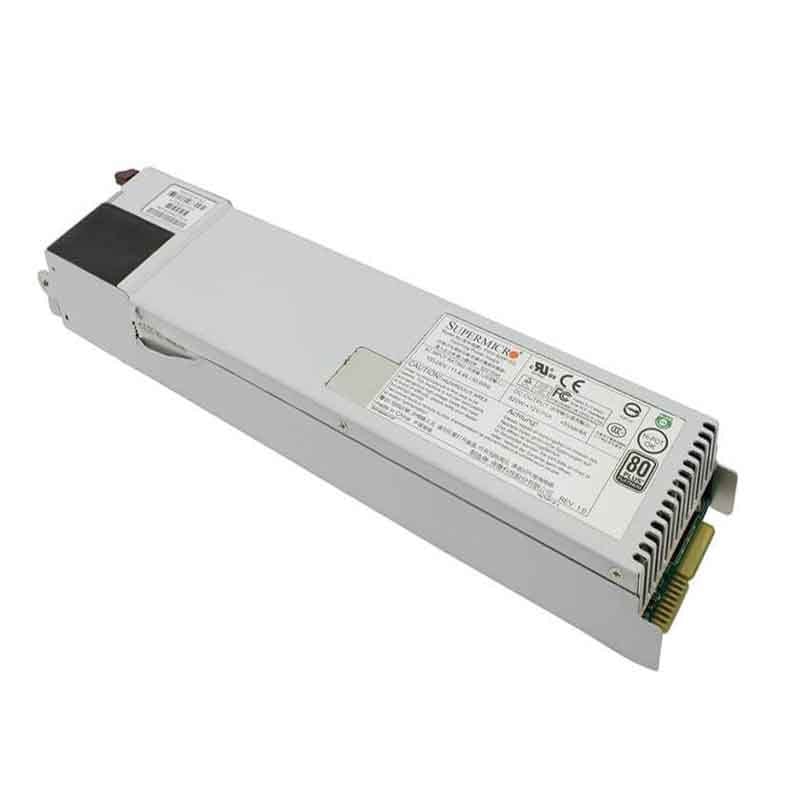
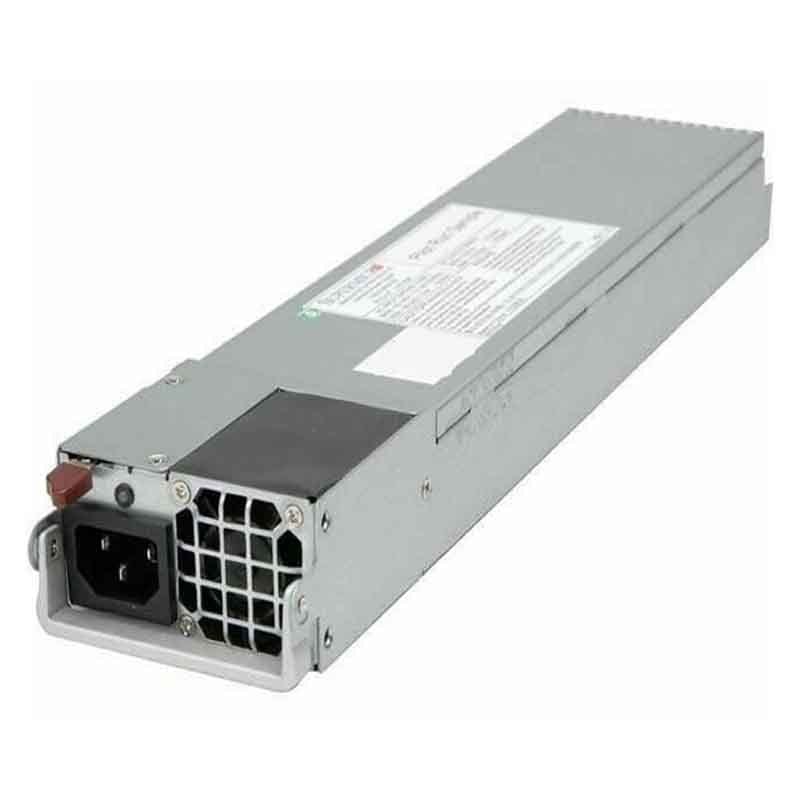
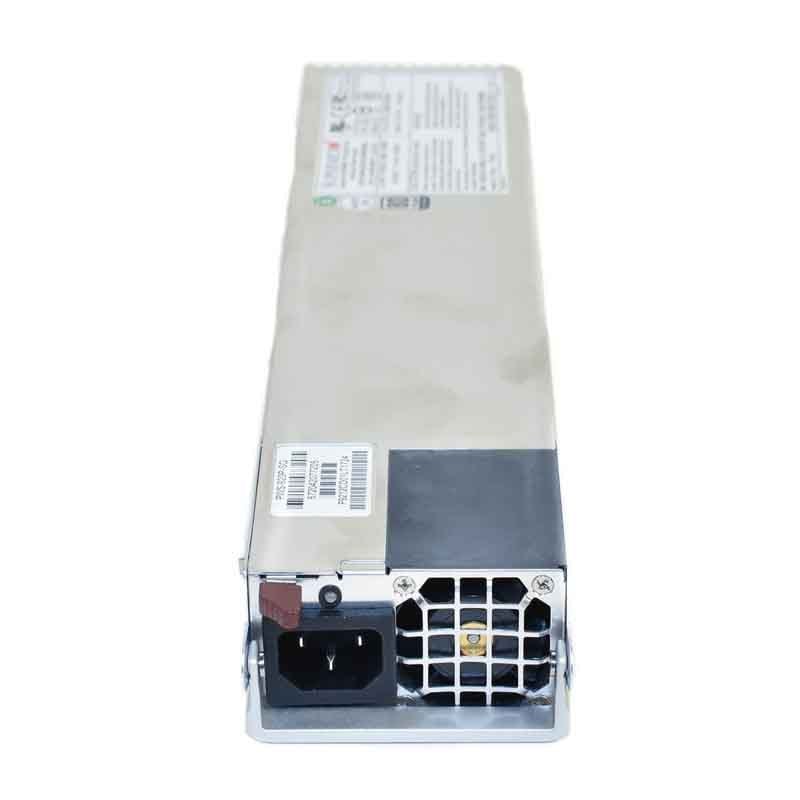
Description
High Efficiency and Reliability
The PWS-920P-SQ Supermicro 920 Watt 1u Redundant Power Supply is designed for high efficiency and reliability in a compact 1U form factor.
Efficiency: The power supply is rated at 92% efficiency, which means that 92% of the power it receives is converted into usable power for the system. This results in less wasted energy and lower operating costs.
Reliability: The redundant power supply design means that there are two power supplies included in the unit, providing a backup in case one fails. This increases the overall reliability of the system, as there is less chance of a power outage causing downtime. Additionally, the power supply is built with high-quality components and undergoes rigorous testing to ensure that it can withstand the demands of a high-performance system.
Compactness: The 1U form factor makes it a perfect fit for space-constrained environments such as data centers, where rack space is at a premium. The compact design also makes it easy to install and maintain, as it takes up minimal space.
Output Voltage and Current Capabilities
Output voltage and current capabilities refer to the maximum amount of voltage and current that a device, such as a power supply or amplifier, is able to produce and deliver to a load. The output voltage and current capabilities are determined by the design and components of the device, and are typically specified in the product’s technical specifications.
The output voltage capability of a device is the maximum voltage that it can produce and deliver to a load. For example, a power supply may have an output voltage capability of 12 volts. This means that it can provide a maximum of 12 volts to a load, such as a circuit or device.
The output current capability of a device is the maximum amount of current that it can produce and deliver to a load. For example, a power supply may have an output current capability of 1 amp. This means that it can provide a maximum of 1 amp of current to a load.
It is important to note that the output voltage and current capabilities of a device are not always the same, and that the device may be able to produce different levels of voltage and current depending on the load it is connected to. Additionally, the output voltage and current capabilities may be affected by the input voltage and current, as well as by the device’s internal components and design.
Technical Specifications and Features
Output voltage refers to the voltage level at which a device or circuit is able to provide power to another device or circuit. This can be measured in various units, such as volts (V), millivolts (mV), or microvolts (µV). The output voltage can be adjustable or fixed, depending on the device or circuit.
Current capabilities refer to the amount of current that a device or circuit is able to provide. This can be measured in units such as amperes (A) or milliamperes (mA). The current capabilities can be limited by the device or circuit design and may be affected by factors such as temperature, voltage, and load.
Some examples of technical specifications and features for output voltage and current capabilities include:
- Output voltage range: This specifies the minimum and maximum voltage levels that a device or circuit can provide. For example, a power supply may have an output voltage range of 0-30 V.
- Output voltage accuracy: This specifies the deviation of the output voltage from the desired level. For example, a power supply may have an output voltage accuracy of ±1%.
- Output voltage stability: This specifies how well the output voltage maintains a constant level over time. For example, a power supply may have an output voltage stability of 0.1% over 8 hours.
- Output current range: This specifies the minimum and maximum current levels that a device or circuit can provide. For example, a power supply may have an output current range of 0-3 A.
- Output current accuracy: This specifies the deviation of the output current from the desired level. For example, a power supply may have an output current accuracy of ±2%.
- Output current stability: This specifies how well the output current maintains a constant level over time. For example, a power supply may have an output current stability of 0.2% over 8 hours.
- Output power capability: This specifies the maximum output power that a device or circuit can provide. For example, a power supply may have an output power capability of 90 watts.
- Output impedance: This specifies the resistance to current flow in the output circuit. A lower output impedance can result in a more stable output voltage and current.
- Output ripple and noise: This specifies the deviation of the output voltage and current from a smooth, steady level. A lower ripple and noise level can result in a cleaner output signal.
General Information PWS-920P-SQ Supermicro:
- Manufacturer : Supermicro Computer, Inc
- MPN: PWS-920P-SQ
- Manufacturer Website Address http://www. Supermicro.com
- Product Type: Power Supply
- Sub-Type: Switching Power Supply
- Hot-pluggable: Yes
- Watt:920
- SKU: PWS-920P-SQ
Miscellaneous
- Compatibility For System
Power Description:
- Input Power Range: 100-240V
- Line Frequency: 50-60Hz


