

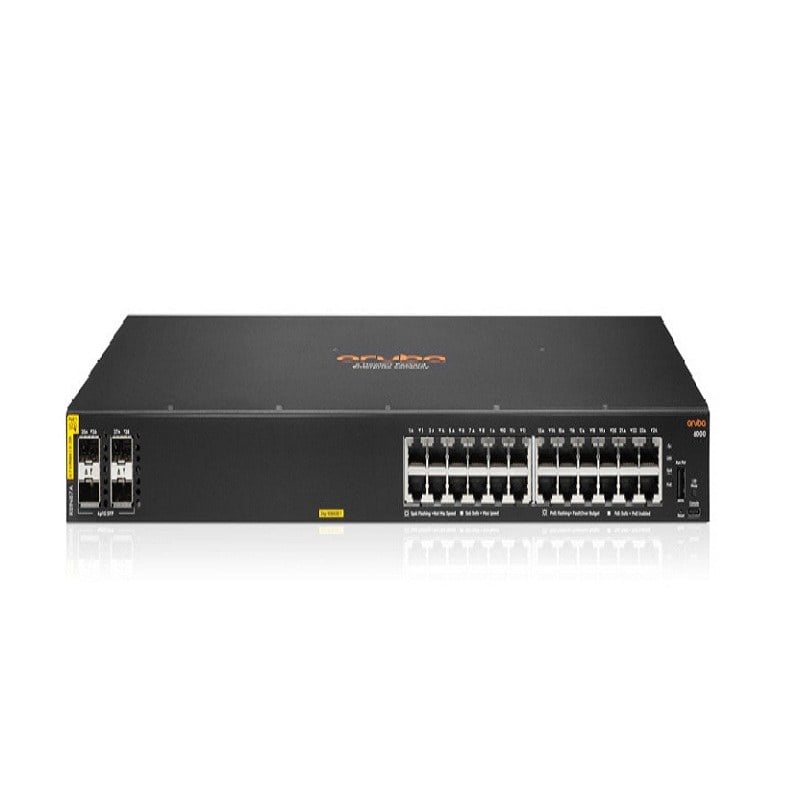


Description
Cost-Effective Networking
Cost-effective networking refers to a network design and deployment approach that balances the need for network performance, reliability, and security with cost considerations. The goal of cost-effective networking is to implement a network infrastructure that meets the needs of the organization while minimizing unnecessary expenses and maximizing return on investment (ROI).
Cost-effective networking can be achieved by carefully evaluating the organization’s networking requirements and selecting the right hardware, software, and services to meet those needs. For example, using switches with a large number of Gigabit Ethernet ports, such as the HPE R8N87A Aruba 6000 Switch, can help to minimize the cost of network expansion by reducing the need for additional switches. Similarly, using network security technologies, such as firewalls and virtual private networks (VPNs), can help to reduce the risk of security breaches, which can be both expensive and disruptive.
Cost-effective networking also involves ongoing network management and maintenance activities, such as monitoring network performance, troubleshooting issues, and updating network software and hardware. By automating these activities whenever possible, organizations can reduce the time and resources needed for network management, which can also help to reduce costs.
In conclusion, cost-effective networking involves a combination of careful planning, selecting the right hardware and software, and ongoing network management to balance the need for network performance, reliability, and security with cost considerations. The HPE R8N87A Aruba 6000 Switch can help organizations to achieve cost-effective networking by providing a flexible and scalable solution for enterprise networking.
Monitoring and Management
Monitoring and management refer to the processes of monitoring and managing the performance, status, and health of a network. These processes are crucial for ensuring that the network is operating efficiently, reliably, and securely.
Network monitoring involves the use of tools and techniques to monitor network performance and identify potential issues, such as congestion, slow response times, and security threats. Network monitoring tools can provide real-time and historical data on network traffic, device performance, and other key metrics, allowing network administrators to quickly detect and resolve problems.
Network management involves the use of tools and techniques to configure, manage, and maintain the network, including tasks such as updating software, managing device configurations, and setting policies for network usage. Network management tools can automate many routine tasks, freeing up network administrators to focus on more strategic tasks.
The HPE R8N87A Aruba 6000 Switch provides advanced monitoring and management capabilities to help organizations manage their network effectively. For example, the switch supports network monitoring tools, such as Simple Network Management Protocol (SNMP), which provides real-time and historical data on network performance and health. Additionally, the switch supports network management tools, such as a web-based graphical user interface (GUI), which allows administrators to manage the switch from a central location, reducing the time and effort required for routine tasks.
In conclusion, monitoring and management are critical components of a well-designed network, providing the visibility and control needed to ensure that the network is operating effectively and efficiently. The HPE R8N87A Aruba 6000 Switch provides advanced monitoring and management capabilities to help organizations achieve a more efficient and cost-effective network.
24 Gigabit Ethernet Ports
24 Gigabit Ethernet Ports refer to the number of physical ports on a network switch that are capable of supporting Gigabit Ethernet, which is a type of high-speed networking technology. The term “Gigabit” refers to the data transfer speed of 1 gigabit per second, which is roughly 10 times faster than Fast Ethernet (100 Mbps).
Each of the 24 Gigabit Ethernet ports on the HPE R8N87A Aruba 6000 Switch can be used to connect devices such as servers, desktops, laptops, storage devices, and other networking devices that support Gigabit Ethernet. These ports allow for fast and efficient data transfer, which is important for applications that require high bandwidth, such as video conferencing, online gaming, and large data transfers.
Having 24 Gigabit Ethernet ports provides the flexibility to connect a large number of devices to the network, which can be especially useful for small and medium-sized businesses. The HPE R8N87A Aruba 6000 Switch also supports advanced networking features such as Quality of Service (QoS), network security, and network management, making it a versatile and cost-effective choice for enterprise networking.
General Information about the HPE R8N87A
- Manufacture: HPE
- Part Number or SKU# R8N87A
- Product Type: Stackable Switch
Technical Information for this HPE 24 Ports
- Enclosure Type: Side To Side Airflow Rack-mountable 1u
- Ethernet Technology: Gigabit Ethernet
- Ports : 24 X 10/100/1000 (poe+) + 4 X Gigabit Sfp
- Power Over Ethernet (poe): Poe
- Poe Budget: 370 W
Performance
- Packet Buffer Size: 12.38 Mb ¦ Throughput: 41.6 Mpps ¦ Switching Capacity: 56 Gbps ¦ Latency (1 Gbps): 1.5 ?s
- Capacity : Switched Virtual Interfaces (svis): 16 ¦ Arp Entries: 1024 ¦ Ipv4 Routes (unicast): 512 ¦ Ipv6 Routes (unicast): 512 ¦ Igmp Groups: 512 ¦ Mld Groups: 512 ¦ Ipv4 Acl Entries (ingress): 256 ¦ Ipv6 Acl Entries (ingress): 128 ¦ Mac Acl Entries (ingress): 256
- Mac Address Table Size : 8192 Entries
- Jumbo Frame Support : 9198 Bytes
- Routing Protocol : Igmpv2, Igmpv3
- Remote Management Protocol : Snmp 1, Snmp 3, Snmp 2c, Http, Https, Radius
- Encryption Algorithm : Ssl
- Authentication Method : Secure Shell (ssh), Radius, Tacacs+, Secure Shell V.2 (ssh2)
Features
- Flow Control, Bootp Support, Arp Support, Vlan Support, Diffserv Support, Ipv6 Support, Sntp Support, Sflow, Multiple Spanning Tree Protocol (mstp) Support, Trivial File Transfer Protocol (tftp) Support, Access Control List (acl) Support, Mld Snooping, Trusted Platform Module (tpm), Fanless, Lacp Support, Lldp Support, Dhcp Client, Management Information Base (mib), Neighbor Discovery Protocol (ndp), Snmp Support, Internet Control Message Protocol (icmp), Dns Client, Lldp-med, User Datagram Protocol (udp), Rapid Reconfiguration Of Spanning Tree (rstp), Ipv6 Addressing
- Compliant Standards : Ieee 802.3, Ieee 802.1d, Ieee 802.1q, Ieee 802.3ab, Ieee 802.1p, Ieee 802.3af, Ieee 802.3x, Ieee 802.3ad (lacp), Ieee 802.1w, Ieee 802.1s, Ieee 802.3at, Ieee 802.3az
Processor/Memory
- Processor : 1 X Arm A9: 1.016 Ghz
- Ram : 4 Gb Ddr3 Sdram
- Flash Memory : 16 Gb
Expansion & Connectivity
- Interfaces :
- 24 X 10/100/1000 Base-t Rj-45 Poe Class 4 – 370 W
- 4 X Gigabit Lan Sfp
- 1 X Usb Type A
- 1 X Usb-c Console
Power
- Power Device : Internal Power Supply
- Voltage Required : Ac 100-240 V (50/60 Hz)
- Power Consumption Operational : 32.7 Watt


